FCRA Liability Harmonization Act
Summary
What This Bill Does
The FCRA Liability Harmonization Act narrows class-action damages under the Fair Credit Reporting Act. For willful violations, it removes the existing punitive damages paragraph, caps individual costs and reasonable attorney fees at the lesser of $100,000 or 40 percent of damages, and creates a class-action rule under which courts may not apply a minimum damage amount to each class member. Total class recovery, excluding attorney fees, cannot exceed the lesser of $500,000 or 1 percent of the defendant's net worth, and class costs and reasonable attorney fees are capped at the lesser of $100,000, 40 percent of damages, or the lower of $100,000 or 40 percent of actual damages. For negligent violations, attorney fees are capped at the lesser of $100,000 or 40 percent of actual damages, and class recovery is limited to actual damages with total recovery capped at the lesser of $500,000, 1 percent of net worth, or the costs and attorney-fee cap. The practical effect is to reduce aggregate class-action exposure for credit reporting defendants and reduce fee leverage for consumer plaintiffs' lawyers.
Who Benefits and How
Consumer reporting agencies benefit because class-action statutory damages and attorney-fee exposure are capped. Businesses using consumer reports benefit from lower FCRA class-action settlement pressure. FCRA defendants benefit because willful and negligent class recoveries are limited to $500,000 or 1 percent of net worth. Defense attorneys benefit from clearer damages ceilings when advising credit-reporting defendants.
Who Bears the Burden and How
Consumers in FCRA class actions bear the burden because per-member minimum statutory damages are removed and aggregate recovery is capped. Consumer protection attorneys bear reduced attorney-fee leverage from the $100,000 or 40 percent caps. Federal courts must apply more detailed damages, net-worth, actual-damages, and fee-cap calculations. Consumer advocacy organizations may lose deterrence from large FCRA class-action exposure.
Key Provisions
- Amends FCRA willful noncompliance liability by removing a punitive damages paragraph and capping fees.
- Provides that courts may not apply a minimum damages amount for each member of a willful-violation class.
- Caps willful class recovery at the lesser of $500,000 or 1 percent of defendant net worth.
- Caps willful class costs and reasonable attorney fees at the lower of $100,000 or 40 percent of damages.
- Caps negligent-violation attorney fees and class recovery using actual damages, net worth, and fee limits.
Evidence Chain:
This summary is generated from the full bill text using AI analysis. Expand "Detailed Analysis" below for identified beneficiaries/burden bearers with clause-level evidence links.
At a Glance
What This Bill Does
Caps Fair Credit Reporting Act class-action liability and attorney-fee exposure for willful and negligent violations by removing per-class-member minimum statutory damages, limiting class recovery to the lesser of $500,000 or 1 percent of net worth, and capping costs and reasonable attorney fees at the lower of $100,000 or 40 percent of damages.
Key Policy Areas
Consumer Credit, Civil Liability, Class Actions
Primary Purpose
Caps Fair Credit Reporting Act class-action liability and attorney-fee exposure for willful and negligent violations by removing per-class-member minimum statutory damages, limiting class recovery to the lesser of $500,000 or 1 percent of net worth, and capping costs and reasonable attorney fees at the lower of $100,000 or 40 percent of damages.
Policy Domains
Resolution provisions
Identified Gains
- Consumer reporting agencies
- Businesses using consumer reports
- FCRA defendants
- Defense attorneys
Identified Costs
- Consumers in FCRA class actions
- Consumer protection attorneys
- Federal courts
- Consumer advocacy organizations
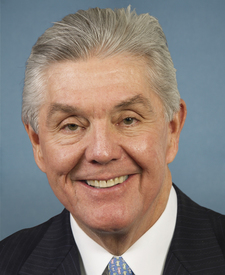
Sponsors
Legislative Progress
ReportedOrdered to be Reported (Amended) by the Yeas and Nays: …
Committee Consideration and Mark-up Session Held
Introduced in House
Mr. Loudermilk (for himself, Mrs. Wagner, Mr. Fitzgerald, Mr. Meuser, …
Referred to the Committee on Financial Services, and in addition …
Stakeholder Effects
cui bono?How this legislation distributes effects. Mention counts reflect frequency, not effect magnitude.
Consumer protection attorneys, Defense attorneys, FCRA defendants
Positive-direction: Defense attorneys, FCRA defendants
Negative-direction: Consumer protection attorneys
Businesses using consumer reports, Consumer reporting agencies
Bill Structure & Actor Mappings
Who is "The Secretary" in each section?
We use a combination of our own taxonomy and classification in addition to large language models to assess meaning and potential beneficiaries. High confidence means strong textual evidence. Always verify with the original bill text.
Learn more about our methodology