To amend the Head Start Act to protect Head Start from proposals to eliminate the program and restore the Head Start program’s regional offices, and for other purposes.
Analysis under review: This bill has generated analysis that may be too generic or incomplete. Clause-level evidence remains available below.
Summary
What This Bill Does
The Every Child Deserves a Head Start Act of 2025 amends the Head Start Act to formally establish the Office of Head Start within the Administration for Children and Families. It mandates that the Office maintain the organizational structure, staffing levels, and functions that were in place immediately before January 20, 2025 (the date of the new presidential administration). The bill codifies 12 regional offices - 10 geographic regions plus Region XI for American Indian and Alaska Native grants and Region XII for Migrant and Seasonal Head Start grants. It prohibits the Secretary of HHS from modifying the structure, functions, or responsibilities of the Office or reducing staffing levels. Any proposed changes require 60 days notice to Congressional committees and public disclosure.
Who Benefits and How
- Head Start program staff at the central and regional offices have their positions protected from elimination or restructuring
- Head Start grant recipient agencies maintain their established oversight, monitoring, and technical assistance relationships through preserved regional offices
- Children and families served by Head Start retain access to the full range of health, educational, nutritional, and social services
- American Indian, Alaska Native, and migrant/seasonal farmworker communities retain dedicated regional offices (XI and XII) focused on their specific needs
- State Collaboration grant programs maintain their regional office liaisons and management relationships
Who Bears the Burden and How
- The Secretary of HHS loses flexibility to reorganize, restructure, or reduce the Office of Head Start
- The executive branch faces constraints on its ability to consolidate or streamline the ACF bureaucracy
- Federal taxpayers bear the cost of maintaining staffing levels at pre-January 2025 levels regardless of changing needs
Key Provisions
- Establishes Section 640A of the Head Start Act codifying the Office of Head Start
- Requires reinstatement or retention of the pre-January 20, 2025 organizational structure
- Mandates staffing at or above pre-January 20, 2025 full-time equivalent levels
- Prohibits the Secretary from modifying structure, functions, or reducing employment levels
- Requires 60-day advance notice to Congress before proposing any structural changes
- Preserves 12 regional offices with their pre-existing functions and staffing
Evidence Chain:
This summary is generated from the full bill text using AI analysis. Expand "Detailed Analysis" below for primary purpose and policy domains.
At a Glance
What This Bill Does
Codifies the Office of Head Start within the Administration for Children and Families, mandating the preservation of its pre-January 20, 2025 organizational structure, staffing levels, regional offices, and functions to protect the program from executive branch restructuring or elimination.
Key Policy Areas
{'domain': 'Child Welfare', 'evidence': 'Protects the Head Start program serving eligible children with cognitive, social, and emotional development services since 1965'}, {'domain': 'Education', 'evidence': 'Preserves the learning environment supporting children growth in language, literacy, mathematics, science, and other domains'}, {'domain': 'Government Organization', 'evidence': 'Codifies the Office of Head Start structure including central office and 12 regional offices into the Head Start Act'}, {'domain': 'Federal Workforce', 'evidence': 'Mandates full-time equivalent staffing levels not less than those in place before January 20, 2025'}
Primary Purpose
Codifies the Office of Head Start within the Administration for Children and Families, mandating the preservation of its pre-January 20, 2025 organizational structure, staffing levels, regional offices, and functions to protect the program from executive branch restructuring or elimination.
Policy Domains
Sponsors

Legislative Progress
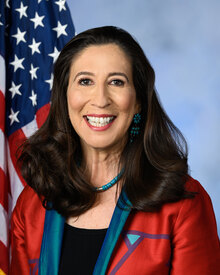
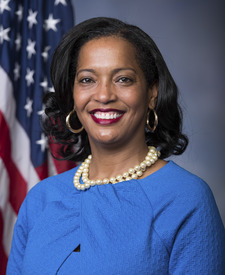
IntroducedMs. Leger Fernandez (for herself, Mrs. Hayes, and Mr. Carson) …
Stakeholder Effects
cui bono?How this legislation distributes effects. Mention counts reflect frequency, not effect magnitude.
Congressional oversight committees, Office of Head Start employees, Office of Head Start staff (central and regional)
Positive-direction: Congressional oversight committees, Office of Head Start employees, Office of Head Start staff (central and regional)
Negative-direction: Secretary of HHS / Executive Branch, Secretary of Health and Human Services
American Indian, Alaska Native, and migrant/seasonal farmworker communities, Children and families served by Head Start, General public
Head Start agencies and grantees, Head Start grant recipient agencies
Bill Structure & Actor Mappings
Who is "The Secretary" in each section?
Key Definitions
Terms defined in this bill
We use a combination of our own taxonomy and classification in addition to large language models to assess meaning and potential beneficiaries. High confidence means strong textual evidence. Always verify with the original bill text.
Learn more about our methodology