Official Time Reporting Act
Summary
What This Bill Does
This bill creates a detailed annual reporting system for federal employee official time, which is paid duty time used by employees serving as labor representatives for non-agency business or employee-representation work. By March 31 each year, the OPM Director, in consultation with OMB, must submit a public report to the House Oversight and Government Reform Committee and the Senate Homeland Security and Governmental Affairs Committee covering the most recently completed fiscal year.
Agency heads must submit required information to OPM by December 31 each year. If an agency's average aggregate official-time rate increased from the prior fiscal year, the agency head must explain the increase. OPM reports must include total official time, average time per bargaining-unit employee, number of bargaining-unit employees, agency official-time rates, dues withheld through payroll systems, types and purposes of official-time activities, operational effects, employees granted official time, full-time official-time users, federal compensation and fringe-benefit costs, travel or per diem costs, and agency rooms or spaces used for official-time activity including fair market value of free or discounted use. OPM must report data in aggregate and by agency, compare to prior-year data after the first report, and issue guidance within 180 days.
Who Benefits and How
Congressional oversight committees benefit from annual, agency-level data on official time, dues withholding, costs, activities, and space use. Government transparency advocates benefit because OPM must publish the report publicly. Agency labor-relations managers benefit from standardized reporting formats and clearer definitions. Federal taxpayers benefit from visibility into compensation, fringe benefits, travel, per diem, and space costs tied to official time. OPM analysts benefit from explicit authority to collect agency data and publish comparisons.
Who Bears the Burden and How
Agency heads must collect and submit official-time information by December 31 each year. OPM workforce policy staff must issue guidance, collect agency submissions, analyze year-over-year comparisons, and publish reports by March 31. OMB staff must consult on the annual report. Federal employee unions may face more public scrutiny of official-time use, dues withholding, and office-space arrangements. Agency payroll and labor-relations staff must track bargaining-unit employees, official-time rates, payroll deductions, costs, and explanations for increases.
Key Provisions
- Requires OPM to submit and publish an annual official-time report by March 31.
- Requires agency heads to submit official-time data to OPM by December 31.
- Requires agency explanations when average aggregate official-time rates increase.
- Requires reporting on hours, bargaining units, dues withholding, costs, activities, full-time official-time users, operational effects, and space use.
- Requires OPM to provide aggregate, agency-level, and year-over-year comparison data.
- Requires OPM guidance to agencies within 180 days of enactment.
Evidence Chain:
This summary is generated from the full bill text using AI analysis. Expand "Detailed Analysis" below for identified beneficiaries/burden bearers with clause-level evidence links.
At a Glance
What This Bill Does
Requires annual OPM public reporting on federal employees' official time, agency submissions by December 31, explanations for increases in agency official-time rates, detailed reporting on hours, bargaining units, dues withholding, costs, activities, space use, and year-over-year comparisons, plus OPM guidance within 180 days.
Key Policy Areas
Federal Workforce, Labor, Government Transparency
Primary Purpose
Requires annual OPM public reporting on federal employees' official time, agency submissions by December 31, explanations for increases in agency official-time rates, detailed reporting on hours, bargaining units, dues withholding, costs, activities, space use, and year-over-year comparisons, plus OPM guidance within 180 days.
Policy Domains
House resolution provisions
Identified Gains
- Congressional oversight committees
- Government transparency advocates
- Agency labor-relations managers
- Federal taxpayers
- OPM analysts
Identified Costs
- Agency heads
- OPM workforce policy staff
- OMB staff
- Federal employee unions
- Agency payroll staff
- Agency labor-relations staff
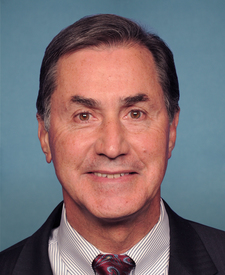
Sponsors




Legislative Progress
ReportedOrdered to be Reported (Amended) by the Yeas and Nays: …
Committee Consideration and Mark-up Session Held
Ms. Foxx (for herself, Mr. Comer, and Mr. Palmer) introduced …
Referred to the House Committee on Oversight and Government Reform.
Introduced in House
Stakeholder Effects
cui bono?How this legislation distributes effects. Mention counts reflect frequency, not effect magnitude.
Bill Structure & Actor Mappings
Who is "The Secretary" in each section?
- "omb"
- → Office of Management and Budget
- "opm"
- → Office of Personnel Management
We use a combination of our own taxonomy and classification in addition to large language models to assess meaning and potential beneficiaries. High confidence means strong textual evidence. Always verify with the original bill text.
Learn more about our methodology