Preventing Illegal Laboratories and Protecting Public Health Act of 2025
Summary
What This Bill Does
The Preventing Illegal Laboratories and Protecting Public Health Act creates new tracking and evaluation duties for dangerous biological agents and high-containment laboratories. HHS, acting through the Administration for Strategic Preparedness and Response, must develop an initial list of highly pathogenic agents within six months, update it annually, and consult CDC, NIH, DHS, USDA, Interior, DOD, and other agencies while considering the CDC-NIH Biosafety in Microbiological and Biomedical Laboratories manual and NIH recombinant or synthetic nucleic acid guidelines. Covered distributors, including repositories or biobanks that transfer highly pathogenic agents for value or without value, must maintain electronic logbooks of sales, leases, loans, and other transfers. The bill preserves the Federal Select Agent Program rather than superseding it. Separately, the National Security Advisor must identify a single federal entity to oversee periodic strategic evaluations of high-containment laboratories, covering number, location, mission, capacity, physical security, aggregate risk, expansion risk, oversight needs, and national standards. That entity must report to the President and Congress, recommend oversight improvements, and study the feasibility of publicly releasing high-containment laboratory information such as location, ownership, biosafety level, agency role, pathogens, licensing, certification, violations, and disciplinary actions.
Who Benefits and How
Public health agencies benefit from better visibility into transfers of highly pathogenic agents and high-containment laboratory capacity. Biosafety regulators benefit from an ASPR-maintained agent list and a single-entity strategic evaluation process. Communities near high-containment laboratories benefit if evaluations identify physical security, oversight, and aggregate risk gaps. Researchers using legitimate repositories benefit from clearer logbook rules that preserve the Federal Select Agent Program.
Who Bears the Burden and How
Covered distributors of pathogenic agents must keep electronic transfer logbooks in the format HHS requires. ASPR biosecurity staff must create and annually update the agent list and administer distributor requirements. High-containment laboratory operators may face additional evaluation, standards, reporting, and possible public-information scrutiny. National Security Council staff must identify the oversight entity and coordinate cross-agency laboratory evaluation work.
Key Provisions
- Requires HHS through ASPR to maintain and annually update a list of highly pathogenic agents.
- Requires covered distributors to keep electronic logbooks for sales, leases, loans, and other transfers.
- Requires consultation with CDC, NIH, DHS, USDA, Interior, DOD, and other relevant agencies.
- Preserves the Federal Select Agent Program.
- Requires identification of one federal entity for periodic strategic evaluations of high-containment laboratories.
- Requires reports on laboratory capacity, security, risks, oversight, standards, and public-information feasibility.
Evidence Chain:
This summary is generated from the full bill text using AI analysis. Expand "Detailed Analysis" below for identified beneficiaries/burden bearers with clause-level evidence links.
At a Glance
What This Bill Does
Requires HHS through ASPR to maintain a highly pathogenic agent list, require covered distributors to keep electronic transfer logbooks, and coordinate with CDC, NIH, DHS, USDA, Interior, and DOD, while separately requiring a federal strategic evaluation of high-containment laboratories and a feasibility study on public laboratory information.
Key Policy Areas
Biosecurity, Public Health, Laboratory Safety
Primary Purpose
Requires HHS through ASPR to maintain a highly pathogenic agent list, require covered distributors to keep electronic transfer logbooks, and coordinate with CDC, NIH, DHS, USDA, Interior, and DOD, while separately requiring a federal strategic evaluation of high-containment laboratories and a feasibility study on public laboratory information.
Policy Domains
Resolution provisions
Identified Gains
- Public health agencies
- Biosafety regulators
- Communities near high-containment laboratories
- Researchers using repositories
Identified Costs
- Covered distributors of pathogenic agents
- ASPR biosecurity staff
- High-containment laboratory operators
- National Security Council staff
Sponsors
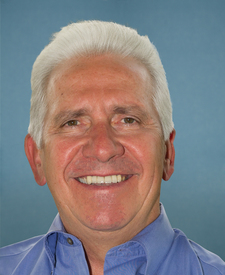

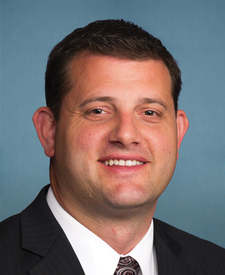


Legislative Progress
In CommitteeMr. Costa (for himself and Mr. Valadao) introduced the following …
Referred to the House Committee on Energy and Commerce.
Introduced in House
Stakeholder Effects
cui bono?How this legislation distributes effects. Mention counts reflect frequency, not effect magnitude.
Biosafety regulators, Communities near high-containment laboratories, Public health agencies
ASPR biosecurity staff, National Security Council staff
High-containment laboratory operators, Researchers using repositories
Positive-direction: Researchers using repositories
Negative-direction: High-containment laboratory operators
Bill Structure & Actor Mappings
Who is "The Secretary" in each section?
We use a combination of our own taxonomy and classification in addition to large language models to assess meaning and potential beneficiaries. High confidence means strong textual evidence. Always verify with the original bill text.
Learn more about our methodology