Hiring Preference for Veterans and Americans With Disabilities Act
Summary
What This Bill Does
The Hiring Preference for Veterans and Americans With Disabilities Act gives election administrators explicit permission to prefer certain applicants when hiring election workers. State and local jurisdictions may give preference to veterans and people with disabilities, defined as impairments that substantially limit major life activities. They also may prefer nonresident military spouses or dependents who qualify as absent uniformed services voters, and may not refuse to hire those military spouses or dependents solely because they do not maintain a residence in the state or local jurisdiction. The bill does not require jurisdictions to adopt a preference, but it removes ambiguity that might otherwise discourage hiring these groups for election administration roles.
Who Benefits and How
Veterans seeking election work benefit because states and localities may give them a hiring preference. People with disabilities seeking election work benefit from explicit permission for a disability hiring preference. Nonresident military spouses benefit because they cannot be rejected solely for lacking local residence. Election offices benefit from a broader pool of workers for polling places, ballot processing, and election administration.
Who Bears the Burden and How
State election officials must apply any preference consistently with the new definitions and nonresident military family rule. Local election administrators must avoid rejecting covered military spouses or dependents solely because of residence. Election worker hiring managers may need to update application screening and onboarding instructions. Applicants outside the preference groups may face more competition where jurisdictions choose to use the preference.
Key Provisions
- Provides that jurisdictions may prefer veterans when hiring election workers.
- Provides that jurisdictions may prefer individuals with disabilities when hiring election workers.
- Provides that jurisdictions may prefer nonresident military spouses and dependents.
- Prohibits refusing to hire covered nonresident military family members solely for lack of residence.
- Defines disability and nonresident military spouse or dependent for the hiring rule.
Evidence Chain:
This summary is generated from the full bill text using AI analysis. Expand "Detailed Analysis" below for identified beneficiaries/burden bearers with clause-level evidence links.
At a Glance
What This Bill Does
Clarifies that state and local jurisdictions may prefer veterans, individuals with disabilities, nonresident military spouses, and nonresident military dependents when hiring election workers, and bars refusal to hire covered nonresident military family members solely because they lack local residence.
Key Policy Areas
Elections, Veterans, Disability
Primary Purpose
Clarifies that state and local jurisdictions may prefer veterans, individuals with disabilities, nonresident military spouses, and nonresident military dependents when hiring election workers, and bars refusal to hire covered nonresident military family members solely because they lack local residence.
Policy Domains
Resolution provisions
Identified Gains
- Veterans seeking election work
- People with disabilities seeking election work
- Nonresident military spouses
- Election offices
Identified Costs
- State election officials
- Local election administrators
- Election worker hiring managers
- Applicants outside preference groups
Sponsors

Legislative Progress
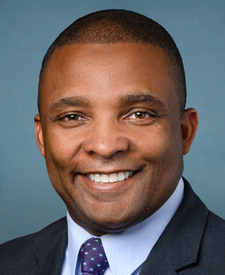
In CommitteeMr. Evans of Colorado (for himself and Mr. Davis of …
Referred to the House Committee on House Administration.
Introduced in House
Stakeholder Effects
cui bono?How this legislation distributes effects. Mention counts reflect frequency, not effect magnitude.
Local election administrators, State election officials
People with disabilities seeking election work
Bill Structure & Actor Mappings
Who is "The Secretary" in each section?
We use a combination of our own taxonomy and classification in addition to large language models to assess meaning and potential beneficiaries. High confidence means strong textual evidence. Always verify with the original bill text.
Learn more about our methodology