School Food Modernization Act
Summary
What This Bill Does
The School Food Modernization Act invests in school meal facilities, equipment, and workforce training. It adds a National School Lunch Act section 27 defining eligible entities as local educational agencies, school food authorities, Tribal organizations, and consortia, and defining infrastructure as food storage facilities, kitchens, food service facilities, cafeterias, dining rooms, and food preparation facilities. USDA must issue loan guarantees to eligible lenders for construction, remodeling, expansion, or durable equipment purchases that help provide healthy school meals, with preferences for substantial or disproportionate infrastructure or equipment need, Rural Development oversight procedures, an 80 percent principal cap, fees to cover guarantee costs, and $10 million annually for fiscal years 2026 through 2031. USDA must also award state-administered grants for infrastructure and durable equipment, with $35 million annually for fiscal years 2026 through 2031 and up to 5 percent for technical assistance. A new section 21A creates competitive grants for nonprofit organizations, higher education institutions, career and technical education schools, or consortia to train school food service personnel on nutrition standards, efficiency, and school lunch and breakfast operations. Those grants may cover up to 80 percent of costs, require matching support, and receive $10 million annually for fiscal years 2026 through 2031. USDA must report annually on implementation and, within 18 months, study how State administrative expense funds support school nutrition training and technical assistance.
Who Benefits and How
School food authorities benefit from loan guarantees and grants for kitchens, cafeterias, storage, serving equipment, and food preparation facilities. Local educational agencies benefit from financing support for school meal infrastructure and durable equipment over $500. Tribal organizations benefit because they are eligible for school meal infrastructure financing and grants. School food service personnel benefit from third-party training and technical assistance tied to nutrition standards and program efficiency.
Who Bears the Burden and How
USDA Food and Nutrition Service staff must administer infrastructure grants, training grants, annual reports, and the State administrative expense study. USDA Rural Development staff must oversee loan-guarantee procedures and project or purchase oversight. State agencies must administer equipment and infrastructure grants and may face scrutiny over State administrative expense fund use. Eligible third-party training institutions must provide matching support and meet USDA criteria for training capacity, curricula, and delivery.
Key Provisions
- Establishes school meal infrastructure loan guarantees for construction, remodeling, expansion, and durable equipment.
- Provides an 80 percent loan-guarantee cap, need-based preferences, USDA oversight, and $10 million annually for fiscal years 2026 through 2031.
- Creates state-administered infrastructure and equipment grants authorized at $35 million annually for fiscal years 2026 through 2031.
- Creates competitive third-party training grants for school food service personnel authorized at $10 million annually.
- Requires annual implementation reports on the new sections.
- Requires an 18-month study and report on State administrative expense funds for school nutrition training and technical assistance.
Evidence Chain:
This summary is generated from the full bill text using AI analysis. Expand "Detailed Analysis" below for identified beneficiaries/burden bearers with clause-level evidence links.
At a Glance
What This Bill Does
Creates USDA loan guarantees and grants for school meal infrastructure and durable equipment, funds third-party training and technical assistance for school food service personnel, requires implementation reports, and requires a study on State administrative expense funds for nutrition workforce training.
Key Policy Areas
School Meals, Nutrition, Education
Primary Purpose
Creates USDA loan guarantees and grants for school meal infrastructure and durable equipment, funds third-party training and technical assistance for school food service personnel, requires implementation reports, and requires a study on State administrative expense funds for nutrition workforce training.
Policy Domains
Resolution provisions
Identified Gains
- School food authorities
- Local educational agencies
- Tribal organizations
- School food service personnel
Identified Costs
- USDA Food and Nutrition Service staff
- USDA Rural Development staff
- State agencies
- Eligible third-party training institutions
Sponsors
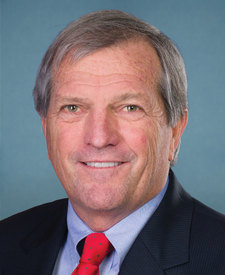




Legislative Progress
In CommitteeReferred to the Subcommittee on Nutrition and Foreign Agriculture.
Mr. DeSaulnier (for himself and Mr. Thompson of Pennsylvania) introduced …
Referred to the Committee on Education and Workforce, and in …
Introduced in House
Stakeholder Effects
cui bono?How this legislation distributes effects. Mention counts reflect frequency, not effect magnitude.
Eligible third-party training institutions, Local educational agencies, School food authorities
Tribal organizations, USDA Food and Nutrition Service staff, USDA Rural Development staff
Positive-direction: Tribal organizations
Negative-direction: USDA Food and Nutrition Service staff, USDA Rural Development staff
State agencies
State agencies faces effects in multiple directions
Bill Structure & Actor Mappings
Who is "The Secretary" in each section?
We use a combination of our own taxonomy and classification in addition to large language models to assess meaning and potential beneficiaries. High confidence means strong textual evidence. Always verify with the original bill text.
Learn more about our methodology