Studying NEPA’s Impact on Projects Act
Summary
What This Bill Does
The Studying NEPA's Impact on Projects Act rewrites NEPA section 201 to create an annual reporting system for environmental-review litigation and environmental impact statements. Beginning by July 1, 2026, each lead agency must submit to the Council on Environmental Quality data on every civil action alleging that an agency action violated NEPA during the prior June-to-June reporting period. The data must identify defendant agencies, plaintiffs, courts, appeals, alleged legal bases disaggregated by covered sector, litigation status, outcomes, remands, settlements, pending cases, and fee awards.
The same reports must track environmental impact statement length, appendix and citation length, counts by agency and subagency, trends in page counts, and data before and after the Fiscal Responsibility Act of 2023. Agencies must estimate EIS preparation costs, including full-time-equivalent personnel hours, contractor costs, direct costs, cooperating-agency costs, participating-agency costs, project-sponsor costs, and supervised contractor costs where practicable. They also must report 10-year timelines for major federal actions, including application submission, scoping, notice of intent, public EIS release, record of decision, and notice to proceed. CEQ must publish the resulting information and submit it to House Natural Resources, Senate Energy and Natural Resources, and Senate Environment and Public Works committees.
Who Benefits and How
House Natural Resources Committee staff, Senate Energy and Natural Resources Committee staff, Senate Environment and Public Works Committee staff, permitting-reform policymakers, project developers, mining companies, energy producers, broadband providers, manufacturing companies, surface transportation sponsors, renewable-energy developers, water-resources project sponsors, and other covered sectors benefit because the reports expose where NEPA lawsuits, document length, costs, and timelines are concentrated. The data can support oversight, future permitting legislation, and project-planning decisions.
Who Bears the Burden and How
Council on Environmental Quality staff, federal lead agencies, agency NEPA offices, subagency permitting teams, project sponsors preparing EIS documents under agency supervision, cooperating agencies, participating agencies, and environmental-litigation data managers bear reporting burdens because they must collect case information, page counts, cost estimates, timeline milestones, sector classifications, court outcomes, settlements, and fee-award data every year.
Key Provisions
- Requires each lead agency to submit annual NEPA civil-action data to the Council on Environmental Quality.
- Requires litigation data on plaintiffs, defendant agencies, courts, appeals, legal bases, outcomes, settlements, remands, pending cases, and fee awards.
- Requires reporting on environmental impact statement length, appendix length, agency counts, subagency counts, and post-Fiscal Responsibility Act trends.
- Requires EIS cost estimates covering personnel hours, contractors, cooperating agencies, participating agencies, and project sponsors where practicable.
- Requires 10-year timeline reporting from permit application through notice to proceed for major federal actions.
- Requires CEQ publication and congressional reporting with covered-sector disaggregation.
Evidence Chain:
This summary is generated from the full bill text using AI analysis. Expand "Detailed Analysis" below for identified beneficiaries/burden bearers with clause-level evidence links.
At a Glance
What This Bill Does
Requires lead federal agencies to submit annual NEPA litigation, environmental-impact-statement, cost, and timeline data to the Council on Environmental Quality, and requires public reporting to congressional committees with sector-by-sector detail.
Key Policy Areas
Environmental Review, Permitting, Infrastructure, Government Oversight
Primary Purpose
Requires lead federal agencies to submit annual NEPA litigation, environmental-impact-statement, cost, and timeline data to the Council on Environmental Quality, and requires public reporting to congressional committees with sector-by-sector detail.
Policy Domains
Substantive provisions
Identified Gains
- House Natural Resources Committee staff
- Senate Energy and Natural Resources Committee staff
- Senate Environment and Public Works Committee staff
- Permitting-reform policymakers
- Project developers
- Mining companies
- Energy producers
- Broadband providers
- Manufacturing companies
- Surface transportation sponsors
- Renewable-energy developers
- Water-resources project sponsors
Identified Costs
- Council on Environmental Quality staff
- Federal lead agencies
- Agency NEPA offices
- Subagency permitting teams
- Project sponsors preparing EIS documents
- Cooperating agencies
- Participating agencies
- Environmental-litigation data managers
Sponsors



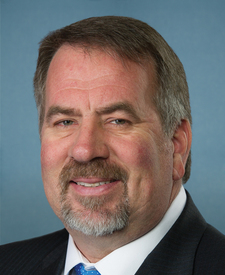

Legislative Progress
Passed HouseReceived; read twice and referred to the Committee on Environment …
Passed House (inferred from eh version)
Received in the Senate and Read twice and referred to …
Motion to reconsider laid on the table Agreed to without …
On motion to suspend the rules and pass the bill, …
Passed/agreed to in House: On motion to suspend the rules …
DEBATE - The House proceeded with forty minutes of debate …
Considered under suspension of the rules. (consideration: CR H5086-5088)
Mr. Crank moved to suspend the rules and pass the …
Additional sponsors: Mr. Mann, Mr. Edwards, Mr. Fulcher, Mr. LaMalfa, …
Stakeholder Effects
cui bono?How this legislation distributes effects. Mention counts reflect frequency, not effect magnitude.
Council on Environmental Quality, Federal lead agencies, House Committee on Natural Resources
Positive-direction: House Committee on Natural Resources, Senate Committee on Energy and Natural Resources
Negative-direction: Council on Environmental Quality, Federal lead agencies
Conventional energy production industry, Pipelines industry
Electricity transmission industry, Water resources industry
Ports and waterways industry, Surface transportation industry
Infrastructure sectors (14 covered sectors)
Bill Structure & Actor Mappings
Who is "The Secretary" in each section?
- "ceq"
- → Council on Environmental Quality
- "eis"
- → environmental impact statement
- "nepa"
- → National Environmental Policy Act
We use a combination of our own taxonomy and classification in addition to large language models to assess meaning and potential beneficiaries. High confidence means strong textual evidence. Always verify with the original bill text.
Learn more about our methodology