Repeal the Smith-Mundt Modernization Act of 2013
Summary
What This Bill Does
The Repeal the Smith-Mundt Modernization Act of 2013 rewrites the United States Information and Educational Exchange Act and USAGM authorities to limit domestic dissemination of government-produced public diplomacy materials. State and USAGM may prepare and disseminate information abroad about the United States through media and information centers, but the bill bars using social media accounts, websites, or podcasts other than official State or USAGM platforms for foreign dissemination. Materials must be available in English for examination by U.S. press representatives and Members of Congress after release abroad, but generally may not be disseminated domestically. State, USAGM, and component network funds may not be used to influence public opinion or propagandize in the United States. The Archivist receives the materials, keeps them for public examination only after 20 years in a non-reproduction format, and may release copies only after rights, licensing, and cost-recovery fee requirements are met. The bill also creates a USAGM domestic distribution ban, preserves factual information about agency operations, protects Mutual Educational and Cultural Exchange Act programs, and permits USAGM employees to respond to public inquiries.
Who Benefits and How
U.S. press organizations benefit from an explicit right to examine English-language materials released abroad. Members of Congress benefit because they can examine materials and use them for official oversight. Domestic audiences benefit from a statutory ban on using State Department or USAGM funds to propagandize in the United States. National Archives users benefit from a delayed archival access process after 20 years.
Who Bears the Burden and How
State Department public diplomacy staff must restrict domestic dissemination and limit online foreign dissemination to official platforms. USAGM network staff must avoid domestic program-material distribution except through the statutory exceptions. Archivist of the United States staff must custody materials, issue regulations, enforce rights and fee requirements, and manage delayed public access. Researchers and media users bear reproduction limits, rights-clearance burdens, and 20-year waiting periods for archival releases.
Key Provisions
- Amends Smith-Mundt section 501 to authorize foreign dissemination while barring most domestic distribution.
- Prohibits State Department, USAGM, and component network funds from influencing U.S. public opinion.
- Requires English-language examination access for U.S. press representatives and Members of Congress.
- Requires the Archivist to hold materials and allow public examination only after 20 years in a non-reproduction format.
- Requires release regulations, rights and license clearance, cost-recovery fees, and National Archives Trust Fund deposit.
- Provides exceptions for factual operational information, congressional oversight, exchange programs, and public inquiries.
Evidence Chain:
This summary is generated from the full bill text using AI analysis. Expand "Detailed Analysis" below for identified beneficiaries/burden bearers with clause-level evidence links.
At a Glance
What This Bill Does
Restores a domestic distribution ban for State Department and USAGM program materials by rewriting Smith-Mundt dissemination rules, limiting domestic access to examination and delayed archival review, barring domestic propaganda funding, and preserving factual operational responses and exchange programs.
Key Policy Areas
Foreign Affairs, Government Information, Media
Primary Purpose
Restores a domestic distribution ban for State Department and USAGM program materials by rewriting Smith-Mundt dissemination rules, limiting domestic access to examination and delayed archival review, barring domestic propaganda funding, and preserving factual operational responses and exchange programs.
Policy Domains
Resolution provisions
Identified Gains
- U.S. press organizations
- Members of Congress
- Domestic audiences
- National Archives users
Identified Costs
- State Department public diplomacy staff
- USAGM network staff
- Archivist staff
- Researchers seeking program materials
Sponsors
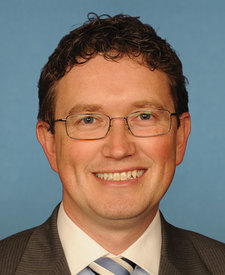

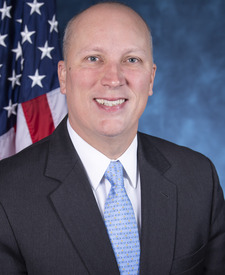
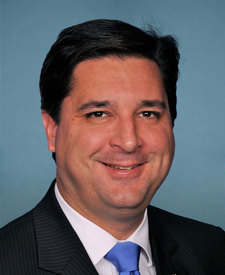
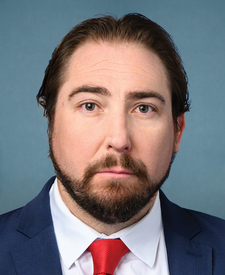
Legislative Progress
In CommitteeMr. Massie (for himself and Mr. Perry) introduced the following …
Referred to the House Committee on Foreign Affairs.
Introduced in House
Stakeholder Effects
cui bono?How this legislation distributes effects. Mention counts reflect frequency, not effect magnitude.
U.S. press organizations, USAGM network staff
Positive-direction: U.S. press organizations
Negative-direction: USAGM network staff
Archivist staff, State Department public diplomacy staff
Bill Structure & Actor Mappings
Who is "The Secretary" in each section?
We use a combination of our own taxonomy and classification in addition to large language models to assess meaning and potential beneficiaries. High confidence means strong textual evidence. Always verify with the original bill text.
Learn more about our methodology