Non-Domiciled CDL Integrity Act
Summary
What This Bill Does
This bill tightens commercial driver's license eligibility rules. It amends 49 U.S.C. 31311 so a state may issue a commercial driver's license only to an individual domiciled in that state, unless the applicant fits a narrow foreign-driver exception or a United States territory exception. A foreign-jurisdiction applicant must have lawful immigration status, must be connected to an employment-based visa category, and must have that status confirmed by the state before issuance, transfer, renewal, or upgrade. The license can last only up to one year or the end of the authorized stay, whichever comes first.
The bill also adds documentation duties for states. States must keep the records used to confirm lawful status for at least two years and provide those records to the Secretary of Transportation within 48 hours when requested. For U.S. territories, the bill requires proof of United States citizenship or lawful permanent resident status before issuing a commercial driver's license.
Who Benefits and How
DOT safety regulators benefit because states must provide records within 48 hours, giving the Department of Transportation faster access to immigration-status documentation during oversight. State licensing agencies benefit from clearer statutory authority to deny nondomiciled commercial driver's license applications that do not meet the exception. Motor carriers that rely on verified commercial drivers benefit from reduced licensing uncertainty. Public road users benefit from tighter screening around commercial driver's license issuance and renewal.
Who Bears the Burden and How
Foreign commercial driver's license applicants must prove lawful immigration status, show an employment-based visa connection, and accept shorter license terms. State motor vehicle administrators must verify status before issuance, transfer, renewal, or upgrade, retain records for at least two years, and respond to DOT record requests within 48 hours. U.S. territory licensing offices must require proof of citizenship or lawful permanent residence. Employers sponsoring commercial drivers face additional compliance work because a driver's license term may expire with the authorized stay.
Key Provisions
- Requires states to limit commercial driver's licenses to domiciled applicants unless a statutory exception applies.
- Adds lawful-status, employment-visa, and verification conditions for foreign commercial driver's license applicants.
- Limits covered foreign-driver commercial driver's licenses to one year or the end of authorized stay.
- Requires states to retain verification records for at least two years and provide them to DOT within 48 hours.
- Requires U.S. territories to verify citizenship or lawful permanent residence before issuing commercial driver's licenses.
Evidence Chain:
This summary is generated from the full bill text using AI analysis. Expand "Detailed Analysis" below for identified beneficiaries/burden bearers with clause-level evidence links.
At a Glance
What This Bill Does
Requires states to issue, transfer, renew, or upgrade commercial driver's licenses only for domiciled applicants, with limited foreign-driver and territory exceptions tied to verified lawful status, visa connection, license-duration limits, record retention, and 48-hour record production to DOT.
Key Policy Areas
Transportation Safety, Immigration, State Licensing
Primary Purpose
Requires states to issue, transfer, renew, or upgrade commercial driver's licenses only for domiciled applicants, with limited foreign-driver and territory exceptions tied to verified lawful status, visa connection, license-duration limits, record retention, and 48-hour record production to DOT.
Policy Domains
House resolution provisions
Identified Gains
- Department of Transportation safety regulators
- State licensing agencies
- Motor carriers using verified commercial drivers
- Public road users
Identified Costs
- Foreign commercial driver's license applicants
- State motor vehicle administrators
- U.S. territory licensing offices
- Employers sponsoring commercial drivers
Sponsors
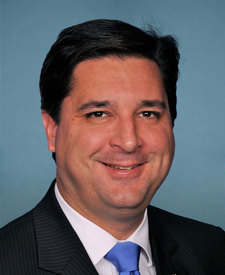


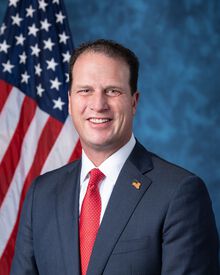

Legislative Progress
ReportedCommittee Consideration and Mark-up Session Held
Ordered to be Reported (Amended) by the Yeas and Nays: …
Subcommittee on Highways and Transit Discharged
Referred to the Subcommittee on Highways and Transit.
Introduced in House
Referred to the House Committee on Transportation and Infrastructure.
Mr. Rouzer introduced the following bill; which was referred to …
Stakeholder Effects
cui bono?How this legislation distributes effects. Mention counts reflect frequency, not effect magnitude.
Foreign-domiciled commercial driver's license applicants
State driver licensing agencies verifying status and retaining records
Federal commercial motor vehicle safety regulators monitoring non-domiciled CDLs
Bill Structure & Actor Mappings
Who is "The Secretary" in each section?
- "dot"
- → Department of Transportation
- "states"
- → State commercial driver's license agencies
- "secretary"
- → Secretary of Transportation
We use a combination of our own taxonomy and classification in addition to large language models to assess meaning and potential beneficiaries. High confidence means strong textual evidence. Always verify with the original bill text.
Learn more about our methodology