To require the reporting of certain terms of service of social media companies for purposes of limiting the online presence of terrorist organizations.
Summary
What This Bill Does
Requires large social media companies to publish terrorism-related terms of service information, submit triannual enforcement reports to the Attorney General, and face civil penalties for noncompliance, with related intelligence and GAO reporting and a five-year sunset.
Who Benefits and How
Users, researchers, law enforcement, and policymakers could gain more transparency about how large platforms address foreign terrorist organizations and Specially Designated Global Terrorists online.
Who Bears the Burden and How
Large social media companies would face new publication, reporting, data-disaggregation, and penalty exposure. DOJ, DNI, and GAO would need to maintain repositories and produce assessments and reports.
Key Provisions
- Requires covered social media companies to publish terms of service, contact information, flagging processes, response commitments, and action categories for covered terrorist organizations and designees.
- Requires triannual electronic reports to the Attorney General with detailed data on flagged, actioned, viewed, shared, appealed, removed, demonetized, and deprioritized content.
- Requires DOJ to publish submitted reports in a searchable public repository.
- Authorizes civil penalties of up to $5 million per violation per day for noncompliance, omissions, or misrepresentations.
- Requires a National Intelligence Estimate and two GAO implementation reports.
- Defines actioned, content, social media platform, social media company, and terms of service; preserves First Amendment and privacy protections.
Evidence Chain:
This summary is generated from the full bill text using AI analysis. Expand "Detailed Analysis" below for identified beneficiaries/burden bearers.
At a Glance
What This Bill Does
Requires large social media companies to publish terrorism-related terms of service information, submit triannual enforcement reports to the Attorney General, and face civil penalties for noncompliance, with related intelligence and GAO reporting and a five-year sunset.
Key Policy Areas
Technology, National Security, Government Operations, Civil Rights
Primary Purpose
Requires large social media companies to publish terrorism-related terms of service information, submit triannual enforcement reports to the Attorney General, and face civil penalties for noncompliance, with related intelligence and GAO reporting and a five-year sunset.
Policy Domains
Main Provisions
Identified Gains
Contextual inference, no direct clause citation- Users, researchers, policymakers, and law enforcement seeking terrorism-related platform transparency
- The public affected by terrorist organization activity on large social media platforms
Contextual inference, no direct clause citation
Identified Costs
Contextual inference, no direct clause citation- Large social media companies subject to publication, reporting, and penalty requirements
- DOJ, DNI, and GAO officials implementing repositories, assessments, and reports
Contextual inference, no direct clause citation
Sponsors
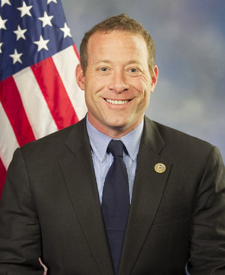
Josh Gottheimer
D-NJ | Primary Sponsor

Legislative Progress
IntroducedMr. Gottheimer (for himself and Mr. Bacon) introduced the following …
Stakeholder Effects
cui bono?How this legislation distributes effects. Mention counts reflect frequency, not effect magnitude.
Large social media companies subject to terrorism-related publication, reporting, and penalty requirements
Users, researchers, and policymakers accessing public data on terrorism-related platform enforcement
Foreign terrorist organizations and Specially Designated Global Terrorists using large social media platforms
DOJ, DNI, and GAO officials maintaining repositories and producing assessments and reports
Bill Structure & Actor Mappings
Who is "The Secretary" in each section?
- "dni"
- → Director of National Intelligence
- "attorney_general"
- → Attorney General
- "comptroller_general"
- → Comptroller General of the United States
Key Definitions
Terms defined in this bill
Content removed, demonetized, or deprioritized, or a user banned or demonetized, due to a terms-of-service violation.
A covered website or app with user-generated content and at least 25 million unique monthly U.S. users for most recent months.
Platform policies specifying permitted behavior and activity that may cause a user or content to be actioned.
We use a combination of our own taxonomy and classification in addition to large language models to assess meaning and potential beneficiaries. High confidence means strong textual evidence. Always verify with the original bill text.
Learn more about our methodology