Auto Theft Prevention Act
Summary
What This Bill Does
The Auto Theft Prevention Act creates a Justice Department grant program aimed at auto theft and stolen vehicle trafficking. Within 60 days, the COPS Office Director must establish a program that grants money to state attorneys general based on each state's prior-year auto theft level. State attorneys general must pass at least 50 percent through competitive subgrants to local law enforcement agencies in high-theft localities, reserve at least 25 percent for state law enforcement agencies, and may allocate the balance to state or local agencies. Funds can buy law enforcement vehicles and license plate readers, pay subscription and data-storage fees, hire officers and support staff, cover overtime and additional compensation, provide training, support joint task forces, fund data collection and research, and cover up to 5 percent administrative costs. The bill authorizes $30 million annually for fiscal years 2026 through 2030 and separately amends COPS grant law to make auto theft and stolen vehicle trafficking eligible uses.
Who Benefits and How
Local law enforcement agencies benefit because at least half of each state grant must flow to competitive local subgrants focused on high-theft areas. State law enforcement agencies benefit because at least 25 percent of each state grant is reserved for state-level auto theft work. Communities with high auto theft benefit from equipment, staffing, training, task forces, and data resources aimed at stolen vehicle trafficking. Auto theft victims benefit if grant-funded enforcement reduces theft rings and improves vehicle recovery.
Who Bears the Burden and How
COPS Office grant staff must stand up the program within 60 days and administer $30 million annual authorizations. State attorneys general must allocate grants by statutory percentages and prioritize high-theft localities. Local police grant managers must handle applications, license plate reader fees, staffing, overtime, training, task forces, and reporting. Federal taxpayers fund the annual authorization and grant administration.
Key Provisions
- Establishes a COPS Office auto theft prevention grant program within 60 days.
- Provides grants to state attorneys general based on prior-year state auto theft levels.
- Requires at least 50 percent local subgrants and at least 25 percent state law enforcement allocation.
- Authorizes equipment, license plate readers, hiring, overtime, training, task forces, data collection, research, and limited administration.
- Authorizes $30 million annually for fiscal years 2026 through 2030.
- Amends existing COPS grant authority to include auto theft and stolen vehicle trafficking uses.
Evidence Chain:
This summary is generated from the full bill text using AI analysis. Expand "Detailed Analysis" below for identified beneficiaries/burden bearers with clause-level evidence links.
At a Glance
What This Bill Does
Creates a $30 million annual COPS Office auto theft prevention grant program for fiscal years 2026 through 2030 and adds auto theft and stolen vehicle trafficking uses to existing COPS grant authority.
Key Policy Areas
Law Enforcement, Auto Theft, Federal Grants
Primary Purpose
Creates a $30 million annual COPS Office auto theft prevention grant program for fiscal years 2026 through 2030 and adds auto theft and stolen vehicle trafficking uses to existing COPS grant authority.
Policy Domains
Resolution provisions
Identified Gains
- Local law enforcement agencies
- State law enforcement agencies
- Communities with high auto theft
- Auto theft victims
Identified Costs
- COPS Office grant staff
- State attorneys general
- Local police grant managers
- Federal taxpayers
Sponsors
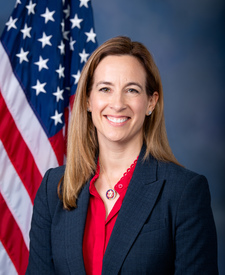


Legislative Progress
In CommitteeMs. Sherrill (for herself and Mr. Bacon) introduced the following …
Referred to the House Committee on the Judiciary.
Introduced in House
Stakeholder Effects
cui bono?How this legislation distributes effects. Mention counts reflect frequency, not effect magnitude.
Local law enforcement agencies, State law enforcement agencies
Bill Structure & Actor Mappings
Who is "The Secretary" in each section?
We use a combination of our own taxonomy and classification in addition to large language models to assess meaning and potential beneficiaries. High confidence means strong textual evidence. Always verify with the original bill text.
Learn more about our methodology