Improving Access to Institutional Mental Health Care Act
Summary
What This Bill Does
The Improving Access to Institutional Mental Health Care Act removes the Medicaid institution for mental diseases exclusion from the definition of medical assistance. Current Medicaid law generally excludes payment for services furnished to many patients in institutions for mental diseases, with age-based exceptions. This bill strikes that exclusion language, removes related references to people who are 65 or older in several Medicaid provisions, and applies the amendments to items and services furnished on or after October 1, 2025. The practical effect is to make Medicaid coverage available for institutional mental health services that previously fell outside federal Medicaid payment rules.
Who Benefits and How
Medicaid beneficiaries needing inpatient psychiatric care benefit because more institution for mental diseases services can qualify as medical assistance. Adults under age 65 with serious mental illness benefit because the bill removes the age-based Medicaid exclusion barrier. Psychiatric hospitals benefit because Medicaid payment could become available for covered items and services furnished to eligible patients. State Medicaid programs benefit from clearer federal authority to cover institutional mental health services.
Who Bears the Burden and How
CMS Medicaid staff must update federal guidance, claims rules, and state-plan review practices for IMD services. State Medicaid agencies must adjust coverage, payment, managed-care, and oversight systems by the October 1, 2025 effective date. Federal taxpayers bear higher Medicaid spending if more institutional mental health services receive federal matching funds. State budget officials may face higher Medicaid costs depending on enrollment, utilization, and federal matching rates.
Key Provisions
- Amends Social Security Act section 1905(a) to remove the institution for mental diseases exclusion from medical assistance.
- Repeals related Medicaid age-65 institutional mental health references.
- Provides an October 1, 2025 effective date for items and services furnished on or after that date.
- Expands Medicaid payment potential for institutional mental health care.
Evidence Chain:
This summary is generated from the full bill text using AI analysis. Expand "Detailed Analysis" below for identified beneficiaries/burden bearers.
At a Glance
What This Bill Does
Removes the Medicaid exclusion for items and services furnished to patients in institutions for mental diseases, deletes related age-65 language, and applies the change to services furnished on or after October 1, 2025.
Key Policy Areas
Medicaid, Mental Health, Health Care
Primary Purpose
Removes the Medicaid exclusion for items and services furnished to patients in institutions for mental diseases, deletes related age-65 language, and applies the change to services furnished on or after October 1, 2025.
Policy Domains
Resolution provisions
Identified Gains
Contextual inference, no direct clause citation- Medicaid beneficiaries needing inpatient psychiatric care
- Adults under age 65 with serious mental illness
- Psychiatric hospitals
- State Medicaid programs
Contextual inference, no direct clause citation
Identified Costs
Contextual inference, no direct clause citation- CMS Medicaid staff
- State Medicaid agencies
- Federal taxpayers
- State budget officials
Contextual inference, no direct clause citation
Sponsors
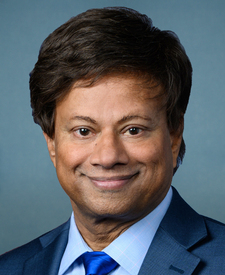
Legislative Progress
In CommitteeMr. Thanedar introduced the following bill; which was referred to …
Referred to the House Committee on Energy and Commerce.
Introduced in House
Bill Structure & Actor Mappings
Who is "The Secretary" in each section?
We use a combination of our own taxonomy and classification in addition to large language models to assess meaning and potential beneficiaries. High confidence means strong textual evidence. Always verify with the original bill text.
Learn more about our methodology