Water Preservation and Affordability Act of 2025
Summary
What This Bill Does
The Water Preservation and Affordability Act updates Clean Water Act financing rules. It defines resource preservation technique to include water reuse, recapture, conservation, energy efficiency, stormwater runoff mitigation, sustainable project planning, sustainable construction, and other environmentally innovative approaches. It replaces older green-project wording in the Clean Water State Revolving Fund with this broader term and requires treatment works loan recipients seeking repair, replacement, or expansion assistance to evaluate and use resource preservation techniques to the maximum extent practicable. It also reauthorizes funding for related Clean Water Act programs, including $40 million for each of fiscal years 2026 through 2031 for section 222 and $50 million annually for section 223 as printed in the bill.
Who Benefits and How
Municipal wastewater utilities benefit because Clean Water financing can support water reuse, recapture, conservation, stormwater, energy-efficiency, and sustainable construction techniques. Clean Water State Revolving Fund borrowers benefit from clearer eligibility for resource preservation techniques in treatment works projects. State water financing agencies benefit from a broader statutory category for green and innovative infrastructure uses. Stormwater project developers benefit because runoff mitigation is explicitly included as a resource preservation technique.
Who Bears the Burden and How
Treatment works loan recipients must evaluate and use resource preservation techniques to the maximum extent practicable. EPA water infrastructure staff must apply the new definition and administer reauthorized funding. State revolving fund managers must update project review criteria and financing guidance. Federal taxpayers fund the reauthorized Clean Water Act appropriations.
Key Provisions
- Defines resource preservation technique to include water efficiency, reuse, recapture, conservation, energy efficiency, stormwater, sustainable design, and innovation.
- Amends Clean Water State Revolving Fund provisions to use resource preservation techniques.
- Requires treatment works loan recipients to evaluate and use resource preservation techniques where practicable.
- Authorizes $40 million annually for fiscal years 2026 through 2031 for one Clean Water Act program.
- Authorizes $50 million annually for the related section 223 program as printed in the bill.
Evidence Chain:
This summary is generated from the full bill text using AI analysis. Expand "Detailed Analysis" below for identified beneficiaries/burden bearers with clause-level evidence links.
At a Glance
What This Bill Does
Expands Clean Water Act water-infrastructure financing around resource preservation techniques, requires treatment works loan recipients to evaluate and use those techniques where practicable, and authorizes $40 million annually for one program and $50 million annually for another.
Key Policy Areas
Water Infrastructure, Clean Water, Federal Grants
Primary Purpose
Expands Clean Water Act water-infrastructure financing around resource preservation techniques, requires treatment works loan recipients to evaluate and use those techniques where practicable, and authorizes $40 million annually for one program and $50 million annually for another.
Policy Domains
Resolution provisions
Identified Gains
- Municipal wastewater utilities
- Clean Water State Revolving Fund borrowers
- State water financing agencies
- Stormwater project developers
Identified Costs
- Treatment works loan recipients
- EPA water infrastructure staff
- State revolving fund managers
- Federal taxpayers
Sponsors

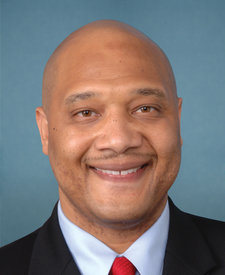



Legislative Progress
In CommitteeReferred to the Subcommittee on Water Resources and Environment.
Mrs. Sykes (for herself and Mr. Bresnahan) introduced the following …
Referred to the House Committee on Transportation and Infrastructure.
Introduced in House
Stakeholder Effects
cui bono?How this legislation distributes effects. Mention counts reflect frequency, not effect magnitude.
Municipal wastewater utilities, Treatment works loan recipients
Positive-direction: Municipal wastewater utilities
Negative-direction: Treatment works loan recipients
Clean Water State Revolving Fund borrowers, Stormwater project developers
Bill Structure & Actor Mappings
Who is "The Secretary" in each section?
We use a combination of our own taxonomy and classification in addition to large language models to assess meaning and potential beneficiaries. High confidence means strong textual evidence. Always verify with the original bill text.
Learn more about our methodology