Taiwan and American Space Assistance Act of 2025
Summary
What This Bill Does
The Taiwan and American Space Assistance Act of 2025 directs U.S. civil space agencies to seek expanded cooperation with Taiwan. Within 90 days, NASA, coordinating with the Commerce Secretary through NOAA and with the State Secretary, must seek to engage Taiwan on civilian space activities. NASA and NOAA may identify and pursue mutually beneficial initiatives in satellite programs, space exploration, atmospheric and weather programs, personnel exchanges with the Taiwan Space Agency, commercial space, and atmospheric and weather technology and services. The cooperation must be consistent with the Taiwan Relations Act and export regulations and must protect sensitive information, intellectual property, trade secrets, and U.S. economic interests. Within 270 days and annually for five years, NASA, NOAA, and State must report to the appropriate congressional committees on implementation, including activities conducted and other required information.
Who Benefits and How
Taiwan Space Agency staff benefit from potential personnel exchanges and cooperation with NASA and NOAA. U.S. commercial space companies benefit if agency cooperation opens mutually beneficial commercial space and weather technology activities. Weather and atmospheric researchers benefit from expanded NASA-NOAA-Taiwan collaboration on data and programs. Congressional space and foreign affairs committees benefit from annual implementation reports for five years.
Who Bears the Burden and How
NASA international program staff must seek engagement with Taiwan within 90 days and report annually. NOAA weather program staff must coordinate satellite, atmospheric, and weather cooperation and reporting. State Department Taiwan policy staff must coordinate cooperation consistent with the Taiwan Relations Act. Export control compliance staff must protect sensitive information, intellectual property, trade secrets, and U.S. economic interests.
Key Provisions
- Requires NASA, NOAA, and State to seek expanded civilian space cooperation with Taiwan within 90 days.
- Authorizes work on satellite programs, space exploration, atmospheric and weather programs, personnel exchanges, commercial space, and weather technology.
- Requires consistency with the Taiwan Relations Act and export regulations and protection of sensitive information and intellectual property.
- Requires a 270-day report and annual implementation reports for five years.
Evidence Chain:
This summary is generated from the full bill text using AI analysis. Expand "Detailed Analysis" below for identified beneficiaries/burden bearers with clause-level evidence links.
At a Glance
What This Bill Does
Requires NASA, in coordination with NOAA and State, to seek expanded civilian space cooperation with Taiwan within 90 days, including satellite, space exploration, atmospheric, weather, personnel exchange, commercial space, and weather technology activities, subject to the Taiwan Relations Act, export regulations, and protections for sensitive information, intellectual property, trade secrets, and U.S. economic interests.
Key Policy Areas
Space, Taiwan, Foreign Affairs
Primary Purpose
Requires NASA, in coordination with NOAA and State, to seek expanded civilian space cooperation with Taiwan within 90 days, including satellite, space exploration, atmospheric, weather, personnel exchange, commercial space, and weather technology activities, subject to the Taiwan Relations Act, export regulations, and protections for sensitive information, intellectual property, trade secrets, and U.S. economic interests.
Policy Domains
Resolution provisions
Identified Gains
- Taiwan Space Agency staff
- U.S. commercial space companies
- Weather researchers
- Congressional space committees
Identified Costs
- NASA international program staff
- NOAA weather program staff
- State Department Taiwan policy staff
- Export control compliance staff
Sponsors




Legislative Progress
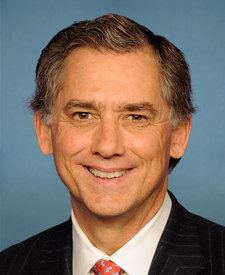
In CommitteeMr. Hill of Arkansas (for himself, Mr. Amo, Ms. Salazar, …
Referred to the Committee on Science, Space, and Technology, and …
Introduced in House
Stakeholder Effects
cui bono?How this legislation distributes effects. Mention counts reflect frequency, not effect magnitude.
NASA international program staff, NOAA weather program staff, State Department Taiwan policy staff
Bill Structure & Actor Mappings
Who is "The Secretary" in each section?
We use a combination of our own taxonomy and classification in addition to large language models to assess meaning and potential beneficiaries. High confidence means strong textual evidence. Always verify with the original bill text.
Learn more about our methodology