To advance a comprehensive, long-term United States strategy and policy for the Pacific Islands, and for other purposes.
Analysis under review: This bill has generated analysis that may be too generic or incomplete. Clause-level evidence remains available below.
Summary
What This Bill Does
The BLUE Pacific Act (Boosting Long-term U.S. Engagement in the Pacific Act) establishes a comprehensive U.S. foreign policy framework for deepened engagement with 14 Pacific Island nations. The bill aims to counter China's growing influence in the region by strengthening diplomatic ties, providing development assistance, expanding security cooperation, and investing in infrastructure across the Pacific Islands.
Who Benefits and How
Pacific Island nations are the primary beneficiaries, receiving development assistance across multiple areas including public health infrastructure, education, climate resilience, digital connectivity, and security cooperation. These nations gain access to training programs, technical assistance, and infrastructure investments worth up to $270 million per year. U.S. government agencies like USAID and the State Department benefit from increased staffing and expanded mandates. U.S. defense contractors, telecommunications companies, and commercial interests benefit from expanded programs in security assistance, digital infrastructure investment, and new trade opportunities. The Peace Corps receives support for program expansion across the region.
Who Bears the Burden and How
U.S. taxpayers bear the primary financial burden, with the bill authorizing $270 million per year for eight years (fiscal years 2026-2033) to fund these programs. Federal agencies face extensive new reporting requirements, with mandatory strategies, assessments, and reports due to Congress on tight timelines. Chinese state-owned enterprises and allies face increased competition as the bill explicitly aims to counter their influence in the region.
Key Provisions
- Requires a comprehensive "Strategy for Pacific Islands Partnership" to be submitted every 4 years starting January 2027
- Authorizes increased staffing at State Department, USAID, Treasury, and the Development Finance Corporation for Pacific Islands work
- Creates the "Pacific Islands TRADES Program" for workforce development through scholarships and training
- Establishes programs for public health capacity building, media freedom, educational exchanges, and digital infrastructure
- Extends diplomatic immunities to the Pacific Islands Forum and creates a senior State Department official for Compact of Free Association administration
- Mandates security cooperation including maritime security, law enforcement training, and transnational crime prevention
- Requires coordination with allies including Australia, New Zealand, Japan, South Korea, Taiwan, and European partners
Evidence Chain:
This summary is generated from the full bill text using AI analysis. Expand "Detailed Analysis" below for identified beneficiaries/burden bearers.
At a Glance
What This Bill Does
Establishes a comprehensive U.S. foreign policy framework for deeper engagement with Pacific Island nations through diplomatic, economic, security, humanitarian, and development assistance programs.
Who Benefits
- Pacific Island nations (receive development assistance, infrastructure investment, capacity building)
- U.S. defense contractors (security assistance programs)
- U.S. telecommunications and technology companies (digital infrastructure investment)
Who Bears Costs
- U.S. taxpayers ($270 million per year authorized for 8 years)
- Federal agencies (extensive reporting requirements)
- Chinese state-owned enterprises and allies (competition for influence)
Key Policy Areas
Foreign Policy, International Development, National Security, Trade, Climate Resilience, Public Health, Education, Digital Infrastructure, Maritime Security
Primary Purpose
Establishes a comprehensive U.S. foreign policy framework for deeper engagement with Pacific Island nations through diplomatic, economic, security, humanitarian, and development assistance programs.
Policy Domains
Legislative Strategy
"Expand U.S. diplomatic, economic, and security presence in the Pacific Islands to counter strategic competition from China and strengthen regional alliances."
Identified Gains
- Pacific Island nations (receive development assistance, infrastructure investment, capacity building)
- U.S. defense contractors (security assistance programs)
- U.S. telecommunications and technology companies (digital infrastructure investment)
- U.S. trade and commercial interests (expanded market access)
- USAID and State Department (increased staffing and budget)
- Peace Corps (program expansion)
Identified Costs
- U.S. taxpayers ($270 million per year authorized for 8 years)
- Federal agencies (extensive reporting requirements)
- Chinese state-owned enterprises and allies (competition for influence)
Sponsors

Legislative Progress
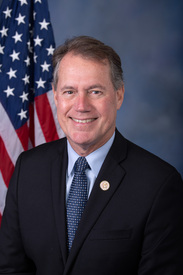
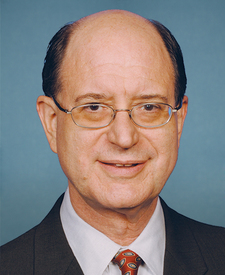
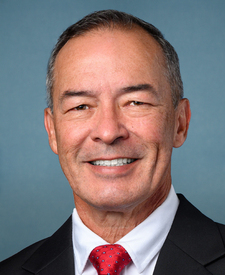
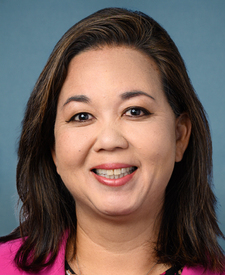
IntroducedMr. Case (for himself, Mr. Moylan, Mr. Larsen of Washington, …
Stakeholder Effects
cui bono?How this legislation distributes effects. Mention counts reflect frequency, not effect magnitude.
Freely Associated States (Palau, Marshall Islands, Micronesia), Pacific Island nations, Pacific Island nations and regional institutions
Congressional oversight committees, Department of Commerce, Department of State
Positive-direction: Federal agencies implementing the Act, Federal agencies reporting to Congress
Negative-direction: Department of Commerce, Department of State, Executive Branch - White House, Executive Branch agencies, U.S. International Development Finance Corporation, U.S. maritime enforcement agencies
Coastal engineering firms, Disinformation researchers and fact-checkers, International development consultants
Digital skills training providers, Pacific Islands educational institutions, Pacific Islands workers in construction, tourism, fisheries
Broadcasting infrastructure companies, Digital infrastructure providers, Pacific Islands telecommunications providers
Marine conservation organizations, Pacific Islands civil society organizations, Pacific Islands community organizations
Construction and tourism industries in Pacific Islands, Construction companies in Pacific Islands, Pacific Islands infrastructure developers
Pacific Islands exporters to U.S., U.S. businesses seeking Pacific Islands investment, U.S. exporters to Pacific Islands
Bill Structure & Actor Mappings
Who is "The Secretary" in each section?
- "the_president"
- → President of the United States
- "the_secretary"
- → Secretary of State
- "the_administrator"
- → Administrator of USAID
- "the_ceo"
- → Chief Executive Officer of U.S. International Development Finance Corporation
- "the_secretary"
- → Secretary of State
- "the_administrator"
- → Administrator of USAID
- "the_secretary"
- → Secretary of State
- "the_secretary_of_defense"
- → Secretary of Defense
- "the_secretary_of_homeland_security"
- → Secretary of Homeland Security
- "the_ustr"
- → United States Trade Representative
- "the_administrator"
- → Administrator of USAID
- "the_secretary_of_commerce"
- → Secretary of Commerce
- "the_ceo"
- → Chief Executive Officer of U.S. International Development Finance Corporation
- "the_secretary"
- → Secretary of State
- "the_administrator"
- → Administrator of USAID
- "the_secretary"
- → Secretary of State
- "the_administrator"
- → Administrator of USAID
- "the_secretary_of_commerce"
- → Secretary of Commerce
- "the_secretary"
- → Secretary of State
- "the_administrator"
- → Administrator of USAID
- "the_president"
- → President of the United States
Key Definitions
Terms defined in this bill
The Committee on Foreign Affairs and Committee on Appropriations of the House of Representatives; and the Committee on Foreign Relations and Committee on Appropriations of the Senate.
The Cook Islands, Republic of Fiji, Republic of Kiribati, Republic of Marshall Islands, Federated States of Micronesia, Republic of Nauru, Niue, Republic of Palau, Independent State of Papua New Guinea, Independent State of Samoa, Solomon Islands, Kingdom of Tonga, Tuvalu, and Republic of Vanuatu.
We use a combination of our own taxonomy and classification in addition to large language models to assess meaning and potential beneficiaries. High confidence means strong textual evidence. Always verify with the original bill text.
Learn more about our methodology