LAUNCH Act
Summary
What This Bill Does
The LAUNCH Act is a commercial-space permitting and regulatory streamlining bill. Within 120 days, the Transportation Secretary must evaluate implementation of 14 C.F.R. part 450 and its impact on the commercial spaceflight industry, including uncertainty, launch delays, review timelines, incremental review, and multiple reviews, and then report to Congress within 90 days after the evaluation with recommendations that do not rely solely on more personnel or funding. DOT must continue supporting an Aerospace Rulemaking Committee for established and emerging launch and reentry providers while avoiding duplication with the Commercial Space Transportation Advisory Committee. The bill requires a commercially available digital licensing, permitting, and approval system within 60 days to accept, track, publish, and notify applicants about launch and reentry license or permit status, completeness, interagency review, questions, agency responses, approvals, and denials. DOT must brief Congress annually by March 31 on processing times, tolling, missed statutory timelines, streamlining efforts, system data, and global competitiveness. The Secretary must use direct-hire authorities for commercial space launch and reentry licensing positions and report annually on that hiring. The bill establishes a Commercial Space Transportation Administration inside DOT, led by an Administrator reporting directly to the Secretary and exercising commercial launch and reentry authorities. It also requires a report on federal flight-safety analysis roles across DOT, DOD, and NASA and allows a memorandum of understanding for federal range personnel to support launch and reentry licensing. For private remote sensing, the bill excludes mission-assurance and technical instruments from remote-sensing licensing, requires a dedicated licensing officer to assist applicants, directs transparency on tiering and licensing conditions, and requires annual reevaluation of tiering criteria. GAO must report within one year on Commerce policies, regulations, and practices affecting private remote sensing, including industry restrictions, ground-station visits, material facts, industry feedback, guidance, application instructions, and written precedent.
Who Benefits and How
Commercial launch providers benefit from part 450 review, industry rulemaking input, digital status tracking, and more licensing staff. Emerging spaceflight companies benefit because the Aerospace Rulemaking Committee must include providers that have applied for but not yet received licenses. Private remote sensing companies benefit from mission-assurance instrument exclusions, dedicated licensing officers, tiering transparency, and GAO review of Commerce practices. Federal range operators benefit from a potential DOT-DOD-NASA memorandum of understanding for flight-safety analysis support.
Who Bears the Burden and How
DOT commercial space licensing staff must evaluate part 450, build a digital system, brief Congress, use direct hire, and support rulemaking committees. Commercial Space Transportation Administration leaders must assume launch and reentry authorities inside DOT. Commerce remote sensing licensing staff must provide applicant engagement, tiering explanations, and annual tiering reevaluation. GAO space policy analysts must report on private remote-sensing licensing practices within one year.
Key Provisions
- Requires DOT review of part 450 commercial launch and reentry rules and a congressional report with delay-reduction recommendations.
- Requires a digital licensing, permitting, and approval system with public quarterly status information and applicant notifications.
- Requires annual congressional briefings on launch and reentry licensing processing, tolling, missed timelines, and competitiveness.
- Establishes a Commercial Space Transportation Administration inside DOT and directs use of direct-hire authorities.
- Authorizes DOT, DOD, and NASA flight-safety workforce coordination for federal range support.
- Limits remote-sensing licensing for mission-assurance instruments and requires dedicated licensing officers and tiering transparency.
- Requires a GAO report on Commerce private remote-sensing policies, restrictions, guidance, and written precedent.
Evidence Chain:
This summary is generated from the full bill text using AI analysis. Expand "Detailed Analysis" below for identified beneficiaries/burden bearers with clause-level evidence links.
At a Glance
What This Bill Does
Streamlines commercial space launch, reentry, and private remote-sensing regulation by requiring DOT review of part 450, a digital licensing system, annual licensing briefings, direct-hire use, a Commercial Space Transportation Administration, flight-safety workforce coordination with DOD and NASA, mission-assurance remote-sensing exclusions, dedicated remote-sensing licensing officers, and a GAO report on Commerce remote-sensing practices.
Key Policy Areas
Commercial Space, Transportation, Remote Sensing, Federal Permitting
Primary Purpose
Streamlines commercial space launch, reentry, and private remote-sensing regulation by requiring DOT review of part 450, a digital licensing system, annual licensing briefings, direct-hire use, a Commercial Space Transportation Administration, flight-safety workforce coordination with DOD and NASA, mission-assurance remote-sensing exclusions, dedicated remote-sensing licensing officers, and a GAO report on Commerce remote-sensing practices.
Policy Domains
Resolution provisions
Identified Gains
- Commercial launch providers
- Emerging spaceflight companies
- Private remote sensing companies
- Federal range operators
Identified Costs
- DOT commercial space licensing staff
- Commercial Space Transportation Administration leaders
- Commerce remote sensing licensing staff
- GAO space policy analysts
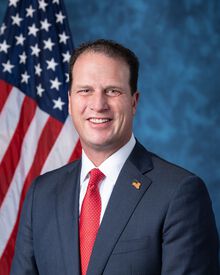
Sponsors

Legislative Progress
In CommitteeMr. Pfluger (for himself and Mr. Whitesides) introduced the following …
Referred to the House Committee on Science, Space, and Technology.
Introduced in House
Stakeholder Effects
cui bono?How this legislation distributes effects. Mention counts reflect frequency, not effect magnitude.
Commerce remote sensing licensing staff, Commerce remote sensing policy staff, Commercial Space Transportation Administration leaders
Commercial launch providers, Commercial space licensing applicants, Emerging spaceflight companies
DOD range personnel, Federal range operators
Positive-direction: Federal range operators
Negative-direction: DOD range personnel
Bill Structure & Actor Mappings
Who is "The Secretary" in each section?
We use a combination of our own taxonomy and classification in addition to large language models to assess meaning and potential beneficiaries. High confidence means strong textual evidence. Always verify with the original bill text.
Learn more about our methodology