LIFT AI Act
Summary
What This Bill Does
The LIFT AI Act creates a National Science Foundation award pathway for K-12 artificial intelligence literacy. The bill states that AI is transforming the economy, that U.S. leadership requires youth to understand and create AI technology, and that strategic competitors make an AI-literate public important. The NSF Director may make merit-reviewed, competitive awards to institutions of higher education, nonprofit organizations, or consortia to support research activities developing K-12 curricula, instructional materials, teacher professional development, and evaluation methods for AI literacy. Eligible activities include learner-centered and project-based formal and informal curriculum development, engagement with state and local educational agencies, superintendents, principals, educators, and school leaders, professional learning for K-12 educators to improve AI literacy and responsible use, AI literacy evaluation tools, professional development and mentoring, hands-on learning tools, and curriculum augmentation. The bill defines AI literacy as age-appropriate knowledge and ability to use AI effectively, critically interpret outputs, solve problems in an AI-enabled world, and mitigate risks.
Who Benefits and How
K-12 students benefit from curricula and hands-on tools that build age-appropriate AI literacy and responsible-use skills. K-12 educators benefit from professional development, mentoring, and evaluation tools for teaching AI literacy. Institutions of higher education benefit because they may compete for NSF awards to develop AI education materials and methods. Nonprofit education organizations benefit because they are eligible award recipients and consortium partners.
Who Bears the Burden and How
National Science Foundation education staff must run merit-reviewed competitions and oversee AI literacy awards. Award recipients must develop curricula, instructional materials, professional development, evaluation methods, and tools that match K-12 needs. State and local educational agencies must coordinate with award activities if they participate in curriculum or professional learning work. Federal taxpayers fund the competitive AI literacy awards through NSF programs.
Key Provisions
- Authorizes NSF competitive awards for K-12 AI literacy research and education activities.
- Provides support for curricula, instructional materials, teacher professional development, evaluation methods, and hands-on learning tools.
- Requires attention to responsible AI use, age-appropriate skills, output interpretation, problem solving, and risk mitigation.
- Allows awards through new or existing NSF programs to higher education institutions, nonprofits, or consortia.
Evidence Chain:
This summary is generated from the full bill text using AI analysis. Expand "Detailed Analysis" below for identified beneficiaries/burden bearers with clause-level evidence links.
At a Glance
What This Bill Does
Authorizes the National Science Foundation Director to make competitive merit-reviewed awards to higher education institutions, nonprofits, or consortia for K-12 AI literacy curricula, instructional materials, teacher professional development, evaluation tools, hands-on learning tools, and responsible AI integration.
Key Policy Areas
Artificial Intelligence, Education, STEM Workforce
Primary Purpose
Authorizes the National Science Foundation Director to make competitive merit-reviewed awards to higher education institutions, nonprofits, or consortia for K-12 AI literacy curricula, instructional materials, teacher professional development, evaluation tools, hands-on learning tools, and responsible AI integration.
Policy Domains
Resolution provisions
Identified Gains
- K-12 students
- K-12 educators
- Institutions of higher education
- Nonprofit education organizations
Identified Costs
- National Science Foundation education staff
- Award recipients
- State educational agencies
- Federal taxpayers
Sponsors



Legislative Progress
ReportedOrdered to be Reported (Amended) by the Yeas and Nays: …
Committee Consideration and Mark-up Session Held
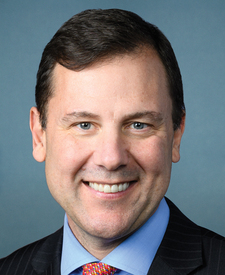
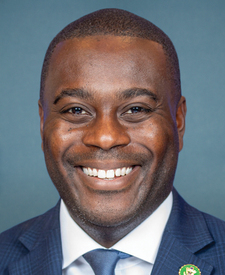
Mr. Kean (for himself and Mr. Amo) introduced the following …
Referred to the House Committee on Science, Space, and Technology.
Introduced in House
Stakeholder Effects
cui bono?How this legislation distributes effects. Mention counts reflect frequency, not effect magnitude.
Institutions of higher education, K-12 students, Nonprofit education organizations
Bill Structure & Actor Mappings
Who is "The Secretary" in each section?
We use a combination of our own taxonomy and classification in addition to large language models to assess meaning and potential beneficiaries. High confidence means strong textual evidence. Always verify with the original bill text.
Learn more about our methodology