Fraud Accountability and Recovery Act
Summary
What This Bill Does
The Fraud Accountability and Recovery Act uses foreign-assistance leverage to recover stolen U.S. taxpayer funds. It amends section 620 of the Foreign Assistance Act to prohibit assistance to any government the President determines has failed to extradite someone convicted of committing fraud against the United States or benefiting from its proceeds, or has failed to take appropriate legal, administrative, or enforcement measures to help recover fraudulently stolen federal funds by identifying, freezing, seizing, and repatriating them. The findings cite GAO estimates that the federal government lost between $233 billion and $521 billion annually to fraud from fiscal years 2018 through 2022 and the Feeding Our Future pandemic fraud scheme, in which more than $250 million intended to feed children was stolen and some proceeds were moved abroad, including to Kenya. The bill states that the United States lacks adequate tools when foreign jurisdictions do not cooperate. The Secretary of State must report within 180 days and annually thereafter to House Foreign Affairs and Senate Foreign Relations, listing noncompliant countries and describing stolen funds, court-ordered recoveries, restitution, fines, seizures, and forfeitures tied to each country's noncooperation.
Who Benefits and How
Federal taxpayers benefit because foreign aid becomes leverage for extradition and recovery of fraudulently stolen federal funds. Federal fraud prosecutors benefit because foreign governments would face aid consequences for refusing extradition or asset-recovery cooperation. Program beneficiaries such as child nutrition recipients benefit if stronger recovery tools deter diversion of federal program money. Congressional foreign affairs committees benefit from annual country lists and dollar amounts tied to noncooperation.
Who Bears the Burden and How
Noncooperating foreign governments lose Foreign Assistance Act aid if the President makes the required determination. State Department reporting staff must identify noncompliant countries and quantify unrecovered fraud proceeds and remedies each year. Presidential national security staff must make country determinations affecting foreign assistance. Foreign assistance program managers must withhold aid from covered governments once the prohibition applies.
Key Provisions
- Bars Foreign Assistance Act aid to governments that fail to extradite fraud convicts or fraud proceeds beneficiaries.
- Bars aid to governments that fail to identify, freeze, seize, and repatriate fraudulently stolen federal funds.
- Provides findings citing $233 billion to $521 billion in annual federal fraud losses and the $250 million Feeding Our Future scheme.
- Requires annual State Department reports listing noncompliant countries and unrecovered funds, recoveries, restitution, fines, seizures, and forfeitures.
Evidence Chain:
This summary is generated from the full bill text using AI analysis. Expand "Detailed Analysis" below for identified beneficiaries/burden bearers with clause-level evidence links.
At a Glance
What This Bill Does
Bars Foreign Assistance Act aid to governments that fail to extradite people convicted of defrauding the United States or fail to help identify, freeze, seize, and repatriate stolen federal funds, and requires annual State Department reports on noncompliant countries and unrecovered fraud amounts.
Key Policy Areas
Foreign Assistance, Fraud Recovery, Federal Spending
Primary Purpose
Bars Foreign Assistance Act aid to governments that fail to extradite people convicted of defrauding the United States or fail to help identify, freeze, seize, and repatriate stolen federal funds, and requires annual State Department reports on noncompliant countries and unrecovered fraud amounts.
Policy Domains
Resolution provisions
Identified Gains
- Federal taxpayers
- Federal fraud prosecutors
- Program beneficiaries
- Congressional foreign affairs committees
Identified Costs
- Noncooperating foreign governments
- State Department reporting staff
- Presidential national security staff
- Foreign assistance program managers
Sponsors
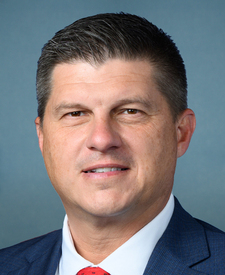
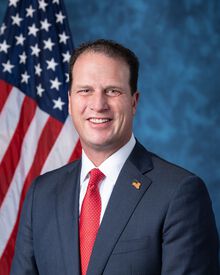
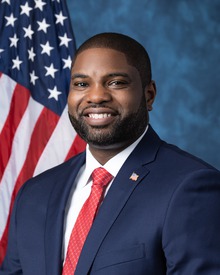


Legislative Progress
In CommitteeMr. Finstad introduced the following bill; which was referred to …
Referred to the House Committee on Foreign Affairs.
Introduced in House
Stakeholder Effects
cui bono?How this legislation distributes effects. Mention counts reflect frequency, not effect magnitude.
Noncooperating foreign governments, State Department reporting staff
Bill Structure & Actor Mappings
Who is "The Secretary" in each section?
We use a combination of our own taxonomy and classification in addition to large language models to assess meaning and potential beneficiaries. High confidence means strong textual evidence. Always verify with the original bill text.
Learn more about our methodology