Baltic Security Assessment Act of 2025
Summary
What This Bill Does
This bill combines a sense of Congress with a reporting requirement on Baltic security. It states that supporting Estonia, Latvia, and Lithuania is in the U.S. national security interest, that updating the U.S.-Baltic security cooperation roadmap is critical while Russia continues its war in Ukraine, that the Baltic countries are valued NATO members, and that improved economic ties can strengthen the strategic partnership and counter Chinese economic pressure.
Within 180 days, the Secretary of State, working with the Secretary of Defense, must report to Congress on emerging military, cyber, hybrid, and political threats to Estonia, Latvia, and Lithuania. The report must cover the roles of Russia, Belarus, China, Iran, and other malign actors; U.S. and NATO force posture in the region; opportunities for bilateral and multilateral defense cooperation; and recommendations for deterrence, cybersecurity infrastructure, and democratic resilience. The report is unclassified but may include a classified annex.
Who Benefits and How
Estonia benefits from congressional attention to threats and defense cooperation opportunities. Latvia benefits from the same assessment and recommendations. Lithuania benefits from the report's focus on deterrence, cybersecurity, and democratic resilience. NATO planners benefit from a U.S. assessment of allied posture in the region. Congressional foreign affairs and armed services committees benefit from a structured oversight report. Defense cooperation programs may benefit if the report identifies concrete gaps.
Who Bears the Burden and How
The Department of State must coordinate and submit the report within 180 days. The Department of Defense must provide force-posture, deterrence, and cooperation analysis. U.S. embassy and defense officials working on Baltic policy must gather threat and cooperation information. Russia, Belarus, China, Iran, and other malign actors face greater scrutiny in U.S. reporting. Congressional committee staff must evaluate any classified annex and follow up on recommendations.
Key Provisions
- Provides a sense of Congress that Baltic security is in the U.S. national security interest.
- Requires a State and Defense report within 180 days on threats to Estonia, Latvia, and Lithuania.
- Requires assessment of Russia, Belarus, China, Iran, and other malign actors.
- Requires analysis of U.S. and NATO force posture in the Baltic region.
- Requires recommendations for deterrence, cybersecurity infrastructure, democratic resilience, and defense cooperation.
- Provides for an unclassified report with an optional classified annex.
Evidence Chain:
This summary is generated from the full bill text using AI analysis. Expand "Detailed Analysis" below for identified beneficiaries/burden bearers with clause-level evidence links.
At a Glance
What This Bill Does
States congressional support for Estonia, Latvia, and Lithuania as U.S. security partners, then requires the State Department and Defense Department to report within 180 days on military, cyber, hybrid, and political threats to the Baltic countries and on opportunities to strengthen U.S.-Baltic deterrence, cybersecurity, democratic resilience, and defense cooperation.
Key Policy Areas
Foreign Affairs, National Defense, Cybersecurity, NATO
Primary Purpose
States congressional support for Estonia, Latvia, and Lithuania as U.S. security partners, then requires the State Department and Defense Department to report within 180 days on military, cyber, hybrid, and political threats to the Baltic countries and on opportunities to strengthen U.S.-Baltic deterrence, cybersecurity, democratic resilience, and defense cooperation.
Policy Domains
House resolution provisions
Identified Gains
- Estonia
- Latvia
- Lithuania
- NATO planners
- Congressional foreign affairs committees
- Congressional armed services committees
- Defense cooperation programs
Identified Costs
- Department of State
- Department of Defense
- U.S. embassy officials working on Baltic policy
- Defense officials working on Baltic policy
- Russian government
- Belarusian government
- Chinese government
- Iranian government
- Congressional committee staff
Sponsors

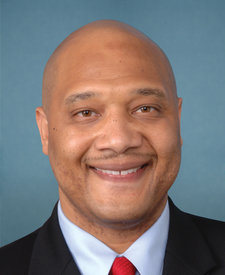
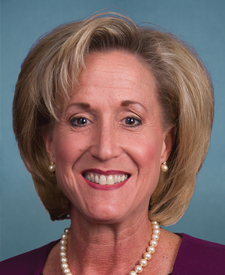
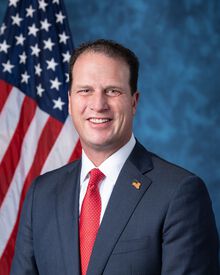

Legislative Progress
ReportedOrdered to be Reported by the Yeas and Nays: 41 …
Committee Consideration and Mark-up Session Held
Mr. Bell (for himself, Mr. Bacon, Mr. Carbajal, Ms. Ansari, …
Referred to the House Committee on Foreign Affairs.
Introduced in House
Stakeholder Effects
cui bono?How this legislation distributes effects. Mention counts reflect frequency, not effect magnitude.
Congressional oversight committees, Department of Defense, Department of State
Positive-direction: Congressional oversight committees
Negative-direction: Department of Defense, Department of State
Bill Structure & Actor Mappings
Who is "The Secretary" in each section?
- "state"
- → Department of State
- "defense"
- → Department of Defense
We use a combination of our own taxonomy and classification in addition to large language models to assess meaning and potential beneficiaries. High confidence means strong textual evidence. Always verify with the original bill text.
Learn more about our methodology