Dismantle Foreign Scam Syndicates Act
Summary
What This Bill Does
This bill targets transnational online scam compounds, especially in Southeast Asia, that use trafficking victims to run pig-butchering and other financial scams against Americans. Congress finds that Americans lost at least $10 billion to these operations in 2024 and that global losses may exceed $60 billion annually. The bill declares a U.S. policy to combat criminal organizations operating human-trafficking compounds that perpetrate large-scale online scams.
Within 30 days, the President must establish an interagency task force chaired by the Secretary of State. The task force includes State, DOJ, FBI, DHS, Secret Service, Homeland Security Investigations, Treasury, OFAC, FinCEN, and can include SEC, FTC, FCC, intelligence agencies, and other entities. It must produce a strategy within 180 days, consult state and local law enforcement, NGOs, and private actors such as banks, social media platforms, telecom carriers, cryptocurrency exchanges, app stores, and search companies, and terminate after seven years. The bill requires sanctions determinations for named foreign persons and entities, annual reports for five years, victim-support programs, and $30 million for State in each of fiscal years 2026 and 2027.
Who Benefits and How
American scam victims benefit from a coordinated federal effort to recover stolen assets and disrupt scam centers. Trafficking victims forced to work in scam compounds benefit from authorized trauma-informed care, shelter, reintegration, and support services. The Department of State benefits from funding and leadership authority to coordinate the strategy. DOJ, FBI, DHS, Secret Service, Treasury, OFAC, and FinCEN benefit from a formal structure for sharing data and targeting criminal networks. Banks, cryptocurrency exchanges, social media platforms, and telecom carriers benefit from clearer public-private coordination channels.
Who Bears the Burden and How
Foreign scam syndicates, traffickers, and corrupt officials face sanctions, investigations, asset recovery, and cyber disruption. Named foreign persons and entities such as Prince Group Holding Company, Huione Group, K99 Group, and Union Development Group face mandatory sanctions review. The Department of State must chair the task force, develop the strategy, run victim-support programs, and report to Congress. Federal law enforcement agencies must share data and coordinate plans before and after decisions. Private platforms and financial firms face pressure to disrupt scam infrastructure and cooperate with the task force.
Key Provisions
- Establishes a presidential interagency task force within 30 days to dismantle online scam centers.
- Requires a comprehensive strategy within 180 days covering sanctions, foreign-government pressure, cyber tools, law enforcement capacity, asset recovery, and victim protection.
- Requires annual reports to Congress for five years on sanctioned persons, scam-center activity, stolen funds, trafficking victims, and program needs.
- Requires sanctions determinations for named foreign persons and entities tied to online scam operations.
- Authorizes State Department programs for trauma-informed care, shelter, reintegration, and support services for trafficking victims.
- Authorizes $30 million for the Department of State in fiscal years 2026 and 2027.
Evidence Chain:
This summary is generated from the full bill text using AI analysis. Expand "Detailed Analysis" below for identified beneficiaries/burden bearers with clause-level evidence links.
At a Glance
What This Bill Does
Creates a seven-year interagency task force and strategy to dismantle Southeast Asia online scam compounds that use trafficking victims, target Americans with cryptocurrency and other cyberscams, sanction named foreign persons and entities, support victims of forced criminality, report annually to Congress, and authorize $30 million for the Department of State in each of fiscal years 2026 and 2027.
Key Policy Areas
Foreign Affairs, Cybercrime, Human Trafficking, Sanctions, Consumer Protection
Primary Purpose
Creates a seven-year interagency task force and strategy to dismantle Southeast Asia online scam compounds that use trafficking victims, target Americans with cryptocurrency and other cyberscams, sanction named foreign persons and entities, support victims of forced criminality, report annually to Congress, and authorize $30 million for the Department of State in each of fiscal years 2026 and 2027.
Policy Domains
House resolution provisions
Identified Gains
- American scam victims
- Trafficking victims in scam compounds
- Department of State
- Department of Justice
- Federal Bureau of Investigation
- Homeland Security Investigations
- Office of Foreign Assets Control
- Financial Crimes Enforcement Network
- Banks
- Cryptocurrency exchanges
Identified Costs
- Foreign scam syndicates
- Human traffickers operating scam compounds
- Corrupt foreign officials
- Prince Group Holding Company
- Huione Group
- Department of State task force staff
- Federal law enforcement agencies
- Private platforms hosting scam infrastructure
Sponsors


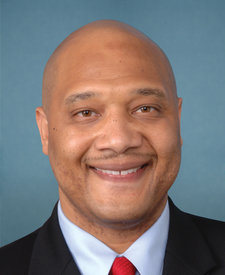
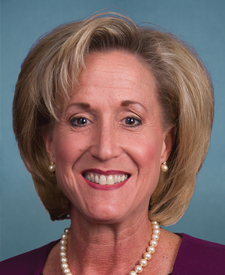
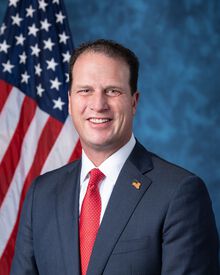
Legislative Progress
ReportedOrdered to be Reported in the Nature of a Substitute …
Committee Consideration and Mark-up Session Held
Mr. Shreve (for himself, Mr. Moolenaar, and Mr. Rulli) introduced …
Referred to the Committee on Foreign Affairs, and in addition …
Introduced in House
Stakeholder Effects
cui bono?How this legislation distributes effects. Mention counts reflect frequency, not effect magnitude.
Congressional oversight committees, Department of State, Government contractors supporting anti-scam operations
Department of State faces effects in multiple directions
Positive-direction: Congressional oversight committees, Government contractors supporting anti-scam operations
Negative-direction: Interagency Task Force and member agencies, U.S. intelligence and cyber operations agencies
Named entities (Huione Group, Prince Group, Union Development Group, etc.), Named foreign individuals (32 persons including Aik Paung, Chen Zhi, Hun To, etc.), Transnational criminal organizations in Southeast Asia
Cybersecurity and anti-fraud consulting firms, Digital forensics and anti-money laundering training providers
American scam victims seeking asset recovery, Trafficking victims forced to work in scam compounds
Foreign governments complicit in scam operations (Cambodia, Laos, Burma)
U.S. financial institutions processing transactions with sanctioned persons
NGOs providing anti-trafficking and victim support services
Bill Structure & Actor Mappings
Who is "The Secretary" in each section?
- "doj"
- → Department of Justice
- "state"
- → Department of State
- "treasury"
- → Department of the Treasury
We use a combination of our own taxonomy and classification in addition to large language models to assess meaning and potential beneficiaries. High confidence means strong textual evidence. Always verify with the original bill text.
Learn more about our methodology