To require the Secretary of Education to issue a rule requiring schools to implement protocols for suicide prevention, postvention, and trauma-informed care.
Analysis under review: This bill has generated analysis that may be too generic or incomplete. Clause-level evidence remains available below.
Summary
What This Bill Does
This bill requires the Department of Education to create new rules for middle and high schools (grades 6-12) that receive federal funding. Schools must implement evidence-based suicide prevention programs, create plans for responding after a suicide occurs, and adopt trauma-informed care practices.
Who Benefits and How
Students and Families: Students in grades 6-12 gain access to suicide prevention training, mental health resources, and referral systems. Parents receive reports when their children show signs of distress.
Mental Health Professionals and Counselors: Increased demand for school counselors, mental health services, and grief counseling creates new employment and contracting opportunities for mental health providers.
Training and Curriculum Providers: Organizations that provide evidence-based suicide prevention training programs and trauma-informed care curricula will see increased demand from schools seeking compliance.
Who Bears the Burden and How
School Districts and Educational Agencies: Must develop and implement new suicide prevention programs, conduct biennial staff training, establish referral systems, and submit to periodic audits and evaluations. These new compliance requirements add administrative and financial costs.
School Staff and Faculty: Required to participate in biennial training on identifying distress signs and risk factors, and must follow new reporting guidelines when students exhibit warning signs.
Federal Funding Recipients: Schools that fail to comply with the new requirements risk losing access to federal education funding under applicable programs.
Key Provisions
- Schools must provide biennial evidence-based training for staff to identify suicide risk factors and distress signs in students
- Schools must establish referral systems connecting students to mental health resources both at school and in the community
- Schools must develop postvention plans addressing communication, memorialization, and grief counseling after a suicide
- The Department of Education will conduct periodic assessments, evaluations, and audits to ensure compliance
Evidence Chain:
This summary is generated from the full bill text using AI analysis. Expand "Detailed Analysis" below for identified beneficiaries/burden bearers.
At a Glance
What This Bill Does
Requires the Secretary of Education to issue rules mandating suicide prevention programs, postvention plans, and trauma-informed approaches at educational agencies and institutions serving students in grades 6-12 as a condition of receiving federal education funding.
Key Policy Areas
Education, Mental Health, Youth Services
Primary Purpose
Requires the Secretary of Education to issue rules mandating suicide prevention programs, postvention plans, and trauma-informed approaches at educational agencies and institutions serving students in grades 6-12 as a condition of receiving federal education funding.
Policy Domains
Prevent Youth Suicide Act
Identified Gains
Contextual inference, no direct clause citation- Students in grades 6-12
- Mental health professionals
- Training and curriculum providers
- School counselors
Contextual inference, no direct clause citation
Identified Costs
Contextual inference, no direct clause citation- School districts
- Educational agencies
- School staff and faculty
Contextual inference, no direct clause citation
Sponsors
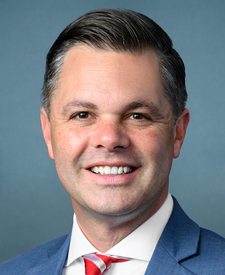
Zachary Nunn
R-IA | Primary Sponsor

Legislative Progress
IntroducedMr. Nunn of Iowa (for himself and Mr. Pappas) introduced …
Stakeholder Effects
cui bono?How this legislation distributes effects. Mention counts reflect frequency, not effect magnitude.
Educational agencies and institutions subject to the Act, K-12 school districts receiving federal funding, School administrators and staff required to implement new programs
Mental health professionals and counselors providing school-based services
Training providers offering evidence-based suicide prevention curricula
Bill Structure & Actor Mappings
Who is "The Secretary" in each section?
- "the_secretary"
- → Secretary of Education
Key Definitions
Terms defined in this bill
Has the meaning given in section 400 of the General Education Provisions Act (20 U.S.C. 1221)
An educational agency or institution serving students in any grade from grade 6 through grade 12, as determined under State law
Activities and support provided after a suicide has occurred, designed to help individuals cope with the loss, minimize potential negative impacts, and prevent contagion
Comprehensive strategies and actions aimed at identifying individuals at risk of suicide, providing appropriate interventions, and fostering a supportive environment to reduce the likelihood of suicidal behavior
An approach based on understanding vulnerabilities and triggers of individuals who have experienced trauma, recognizing trauma symptoms, supporting trauma recovery, and avoiding further traumatization
We use a combination of our own taxonomy and classification in addition to large language models to assess meaning and potential beneficiaries. High confidence means strong textual evidence. Always verify with the original bill text.
Learn more about our methodology