To support carbon dioxide removal research and development, and for other purposes.
Analysis under review: This bill has generated analysis that may be too generic or incomplete. Clause-level evidence remains available below.
Summary
What This Bill Does
This bill creates a coordinated federal research program to develop technologies that remove carbon dioxide from the atmosphere. It directs multiple federal agencies - including the Department of Energy, Department of Agriculture, EPA, NSF, NASA, Interior, Commerce, and Defense - to conduct research on methods like direct air capture, soil carbon sequestration, forest management, ocean-based removal, and mineralization.
Who Benefits and How
Research institutions and universities (especially land-grant colleges) benefit from new grant programs and authorized appropriations totaling hundreds of millions of dollars over 10 years. Clean technology companies developing carbon capture equipment, sorbents, and materials receive federal R&D support. Agricultural interests benefit from research into soil carbon practices and biomass conversion.
Who Bears the Burden and How
Taxpayers fund the authorized appropriations across all agencies. Federal agencies face new coordination mandates and reporting requirements. No significant regulatory burdens are imposed on private industry - this is primarily a research authorization bill.
Key Provisions
- Establishes Office of Fossil Energy and Carbon Management at DOE to coordinate all federal carbon removal R&D
- Authorizes $10M/year for USDA agricultural carbon removal research (2024-2033)
- Directs NSF to fund research on materials, biological processes, and social impacts
- Requires NASA to conduct satellite monitoring of forest carbon stocks
- Mandates lifecycle environmental and environmental justice analyses of all removal technologies
Evidence Chain:
This summary is generated from the full bill text using AI analysis. Expand "Detailed Analysis" below for identified beneficiaries/burden bearers.
At a Glance
What This Bill Does
Establishes a comprehensive federal research, development, and demonstration program for carbon dioxide removal technologies across multiple agencies including DOE, USDA, EPA, NSF, NASA, Interior, Commerce, and DOD.
Key Policy Areas
Energy, Environment, Agriculture, Research & Development, Climate Change
Primary Purpose
Establishes a comprehensive federal research, development, and demonstration program for carbon dioxide removal technologies across multiple agencies including DOE, USDA, EPA, NSF, NASA, Interior, Commerce, and DOD.
Policy Domains
Title I - Department of Energy
Identified Gains
Contextual inference, no direct clause citation- Clean technology companies
- National laboratories
- Direct air capture technology developers
Contextual inference, no direct clause citation
Identified Costs
Contextual inference, no direct clause citation- Federal taxpayers
- DOE staff
Contextual inference, no direct clause citation
Title V - Department of Interior
Identified Gains
Contextual inference, no direct clause citation- Mining companies
- Carbon storage project developers
Contextual inference, no direct clause citation
Identified Costs
Contextual inference, no direct clause citation- Federal taxpayers
Contextual inference, no direct clause citation
Title X - International Collaboration
Identified Gains
Contextual inference, no direct clause citation- International research collaborators
- US climate diplomacy
Contextual inference, no direct clause citation
Identified Costs
Contextual inference, no direct clause citation- OSTP staff
Contextual inference, no direct clause citation
Title II - Department of Agriculture
Identified Gains
Contextual inference, no direct clause citation- Agricultural researchers
- Land-grant universities
- Farmers adopting carbon practices
- Forestry sector
Contextual inference, no direct clause citation
Identified Costs
Contextual inference, no direct clause citation- Federal taxpayers
Contextual inference, no direct clause citation
Title IV - Department of Defense
Identified Gains
Contextual inference, no direct clause citation- Coastal restoration contractors
- Coastal communities
Contextual inference, no direct clause citation
Identified Costs
Contextual inference, no direct clause citation- Federal taxpayers
Contextual inference, no direct clause citation
Title IX - National Science Foundation
Identified Gains
Contextual inference, no direct clause citation- University researchers
- Materials scientists
- Social scientists studying climate policy
Contextual inference, no direct clause citation
Identified Costs
Contextual inference, no direct clause citation- Federal taxpayers
Contextual inference, no direct clause citation
Title VI - Department of Transportation
Identified Gains
Contextual inference, no direct clause citation- Green cement and concrete manufacturers
- Construction materials innovators
Contextual inference, no direct clause citation
Identified Costs
Contextual inference, no direct clause citation- Federal taxpayers
Contextual inference, no direct clause citation
Title III - Department of Commerce
Identified Gains
Contextual inference, no direct clause citation- Ocean research institutions
- Construction materials industry
- Carbon measurement technology providers
Contextual inference, no direct clause citation
Identified Costs
Contextual inference, no direct clause citation- Federal taxpayers
Contextual inference, no direct clause citation
Title VII - Environmental Protection Agency
Identified Gains
Contextual inference, no direct clause citation- Environmental research community
- Communities near carbon removal sites
Contextual inference, no direct clause citation
Identified Costs
Contextual inference, no direct clause citation- Federal taxpayers
- EPA staff
Contextual inference, no direct clause citation
Title VIII - NASA
Identified Gains
Contextual inference, no direct clause citation- Climate scientists
- Forest carbon monitoring researchers
Contextual inference, no direct clause citation
Identified Costs
Contextual inference, no direct clause citation- Federal taxpayers
Contextual inference, no direct clause citation
Sponsors
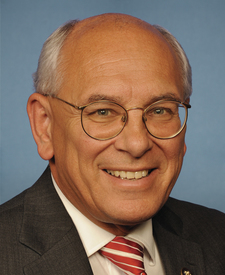

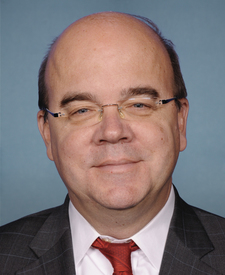
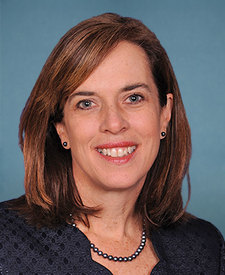

Legislative Progress
IntroducedMr. Tonko (for himself, Ms. Clark of Massachusetts, Mr. Peters, …
Stakeholder Effects
cui bono?How this legislation distributes effects. Mention counts reflect frequency, not effect magnitude.
Agricultural research institutions, Agricultural researchers, Bioenergy researchers
Agricultural Research Service, Army Corps of Engineers, Bureau of Land Management
Positive-direction: Agricultural Research Service, Army Corps of Engineers, EPA Office of Research and Development, Forest Service, NASA Earth Science Division, USGS
Negative-direction: Bureau of Land Management, Department of Agriculture, Department of Energy, NIST, NOAA, Natural Resources Conservation Service, Office of Science and Technology Policy
Carbon capture equipment manufacturers, Carbon capture technology companies, Carbon capture technology developers
Carbon-sequestering materials manufacturers, Coastal restoration contractors, Green cement and concrete manufacturers
Coastal communities, Communities near abandoned mines, Communities near potential carbon removal sites
Biochar producers, Farmers participating in conservation programs, Seed and crop genetics companies
1994 tribal institutions, Land-grant universities
Algae biofuel companies, Biomass processing companies
Bill Structure & Actor Mappings
Who is "The Secretary" in each section?
- "the_director"
- → Director of Office of Science
- "the_secretary"
- → Secretary of Energy
- "the_assistant_secretary"
- → Assistant Secretary for Fossil Energy and Carbon Management
- "the_secretary"
- → Secretary of Agriculture
- "the_under_secretary"
- → Under Secretary for Research, Education, and Economics
- "the_director"
- → Director of NIST
- "the_secretary"
- → Secretary of Commerce
- "the_under_secretary"
- → Under Secretary of Commerce for Oceans and Atmosphere
- "the_secretary"
- → Secretary of Defense
- "chief_of_engineers"
- → Chief of Engineers (Army Corps)
- "the_director"
- → Director of USGS
- "the_secretary"
- → Secretary of the Interior
- "assistant_secretary"
- → Assistant Secretary of Land and Minerals Management
- "the_secretary"
- → Secretary of Transportation
- "the_administrator"
- → Administrator of EPA
- "assistant_administrator"
- → Assistant Administrator of Research and Development
- "the_administrator"
- → Administrator of NASA
- "the_director"
- → Director of NSF
- "the_director"
- → Director of OSTP
Note: The Secretary refers to different Cabinet secretaries depending on the title: Energy (Title I), Agriculture (Title II), Commerce (Title III), Defense (Title IV), Interior (Title V), Transportation (Title VI)
Key Definitions
Terms defined in this bill
The Department of Agriculture
The Secretary of Agriculture (in Title II)
As defined in section 1404 of the National Agricultural Research, Extension, and Teaching Policy Act of 1977, including 1994 Institutions
A novel formulation of cement, concrete, or aggregate that allows captured carbon dioxide to be sequestered
We use a combination of our own taxonomy and classification in addition to large language models to assess meaning and potential beneficiaries. High confidence means strong textual evidence. Always verify with the original bill text.
Learn more about our methodology