Safe Streets for All Reauthorization and Improvement Act
Summary
What This Bill Does
The Safe Streets for All Reauthorization and Improvement Act changes and extends the Infrastructure Investment and Jobs Act's Safe Streets and Roads for All program. It requires that at least 20 percent of total program funds for fiscal year 2024 and each later fiscal year be awarded to eligible planning-grant projects under subsection (a)(3)(A). It also adds $5 billion in authorization for fiscal years 2027 through 2031. The practical effect is to reserve a larger, predictable share for communities doing safety action planning, complete-streets planning, crash-risk analysis, and project development before implementation funding, while continuing the program for another five-year authorization window.
Who Benefits and How
Local transportation safety planners benefit because at least 20 percent of Safe Streets funds must support eligible planning projects. Municipal governments benefit from a predictable planning-grant set-aside for roadway safety action plans. Pedestrians and cyclists benefit if more communities develop plans to reduce fatal and serious-injury crashes. Safe Streets grant applicants benefit from the $5 billion fiscal year 2027 through 2031 authorization.
Who Bears the Burden and How
DOT grant staff must administer the planning-grant set-aside and five-year reauthorization. Implementation-only applicants face more competition for the remaining program funds after the planning reserve. Federal taxpayers fund the $5 billion authorization for fiscal years 2027 through 2031. Local governments receiving planning grants must satisfy federal grant requirements and later project-development expectations.
Key Provisions
- Requires at least 20 percent of Safe Streets and Roads for All funds to support eligible planning projects.
- Applies the planning-grant reserve for fiscal year 2024 and later fiscal years.
- Authorizes $5 billion for fiscal years 2027 through 2031.
- Strengthens local roadway safety planning before implementation grants.
Evidence Chain:
This summary is generated from the full bill text using AI analysis. Expand "Detailed Analysis" below for identified beneficiaries/burden bearers with clause-level evidence links.
At a Glance
What This Bill Does
Modifies the Safe Streets and Roads for All program so at least 20 percent of program funds from fiscal year 2024 onward go to planning grants and authorizes $5 billion for fiscal years 2027 through 2031.
Key Policy Areas
Transportation, Public Safety, Grants
Primary Purpose
Modifies the Safe Streets and Roads for All program so at least 20 percent of program funds from fiscal year 2024 onward go to planning grants and authorizes $5 billion for fiscal years 2027 through 2031.
Policy Domains
Resolution provisions
Identified Gains
- Local transportation safety planners
- Municipal governments
- Pedestrians
- Safe Streets grant applicants
Identified Costs
- DOT grant staff
- Implementation-only applicants
- Federal taxpayers
- Local governments receiving planning grants
Sponsors



Legislative Progress
In CommitteeReferred to the Subcommittee on Highways and Transit.
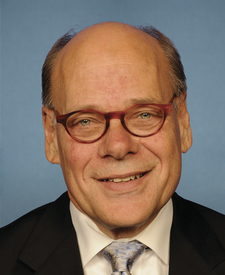
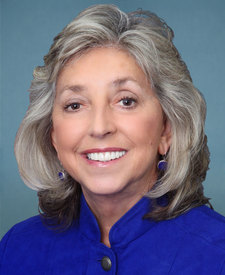
Mr. Cohen (for himself, Mr. Fitzpatrick, and Mr. Garcia of …
Referred to the House Committee on Transportation and Infrastructure.
Introduced in House
Stakeholder Effects
cui bono?How this legislation distributes effects. Mention counts reflect frequency, not effect magnitude.
Local transportation safety planners, Safe Streets grant applicants
Bill Structure & Actor Mappings
Who is "The Secretary" in each section?
We use a combination of our own taxonomy and classification in addition to large language models to assess meaning and potential beneficiaries. High confidence means strong textual evidence. Always verify with the original bill text.
Learn more about our methodology