To build on America’s spirit of service to nurture, promote, and expand a culture of service to secure the Nation’s future, address critical needs of the Nation, and strengthen the civic fabric of American society.
Summary
What This Bill Does
The bill establishes a Civic Education Fund within the Department of Education to provide grants to eligible entities for civic education programs, with priority for high-need schools, creates a Service-Learning Fund within the Corporation for National and Community Service to expand service-learning in K-12 schools, with goals of reaching all students by 2031, and adds civics to the required national assessments under the Elementary and Secondary Education Act alongside reading and mathematics. It relies on appropriations, exemptions, compliance mandates, and definition changes. The main policy areas are Federal Workforce, Education, National Service, and Technology.
Who Benefits and How
National Academy of Public Administration could gain revenue opportunities, National service participants could gain revenue opportunities, and Executive agencies could see lower costs.
Who Bears the Burden and How
Office of Personnel Management would take on compliance duties, Department of Defense could face higher costs, and Corporation for National and Community Service could face higher costs.
Key Provisions
- Establishes a Civic Education Fund within the Department of Education to provide grants to eligible entities for civic education programs, with priority for high-need schools.
- Creates a Service-Learning Fund within the Corporation for National and Community Service to expand service-learning in K-12 schools, with goals of reaching all students by 2031.
- Adds civics to the required national assessments under the Elementary and Secondary Education Act alongside reading and mathematics.
- Authorizes the Secretary of Education to award annual Excellence in Civics Awards to states, school districts, schools, teachers, and students for excellence in civic education and service-learning.
- Directs the Librarian of Congress, Director of IMLS, and Archivist to jointly develop and distribute civic education materials to libraries, polling locations, and schools.
Evidence Chain:
This summary is generated from the full bill text using AI analysis. Expand "Detailed Analysis" below for identified beneficiaries/burden bearers with clause-level evidence links.
At a Glance
What This Bill Does
The bill establishes a Civic Education Fund within the Department of Education to provide grants to eligible entities for civic education programs, with priority for high-need schools, creates a Service-Learning Fund within the Corporation for National and Community Service to expand service-learning in K-12 schools, with goals of reaching all students by 2031, and adds civics to the required national assessments under the Elementary and Secondary Education Act alongside reading and mathematics.
Key Policy Areas
Federal Workforce, Education, National Service, Technology
Primary Purpose
The bill establishes a Civic Education Fund within the Department of Education to provide grants to eligible entities for civic education programs, with priority for high-need schools, creates a Service-Learning Fund within the Corporation for National and Community Service to expand service-learning in K-12 schools, with goals of reaching all students by 2031, and adds civics to the required national assessments under the Elementary and Secondary Education Act alongside reading and mathematics.
Policy Domains
Title I - Civic Education and Service-Learning
Identified Gains
- National Academy of Public Administration
- National service participants
- Executive agencies
- Community colleges and vocational schools
- Federal agencies
Identified Costs
- Office of Personnel Management
- Department of Defense
- Corporation for National and Community Service
- Selective Service System
- Office of Management and Budget
Sponsors
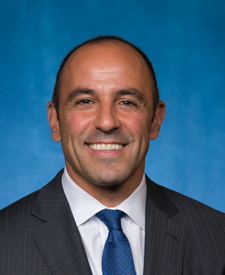
Jimmy Panetta
D-CA | Primary Sponsor
Legislative Progress
IntroducedMr. Panetta (for himself and Mr. Bacon) introduced the following …
Stakeholder Effects
cui bono?How this legislation distributes effects. Mention counts reflect frequency, not effect magnitude.
Coast Guard, Department of Defense, Department of Homeland Security
Department of Defense, Executive agencies, Office of Personnel Management face effects in multiple directions
Positive-direction: Coast Guard, Executive agencies and military departments, Executive agencies seeking cyber talent, Executive agencies with critical skills gaps, Executive agency heads, Federal agencies, Federal agencies facing hiring challenges, Federal agencies seeking entry-level talent, Federal agencies seeking experienced staff, Federal agencies seeking to hire, Federal agencies seeking trained employees, Federal employees in executive agencies, Federal employees seeking career changes, Federal health care institutions, Former national service participants who become federal employees, High-performing former federal employees, NASA, DOE, NSF, Commerce, Interior, EPA employees, New federal employees with less than 5 years service, Veterans Health Administration employees, Youth Conservation Corps
Negative-direction: Federal HR specialists, Federal government tax revenue, Federal retirement system, Government Accountability Office, Legislative branch offices, Military departments, Military service academies, National Guard, National Security Council, Office of Management and Budget, Selective Service System, Senate offices
Americans seeking service opportunities, At-risk youth, Disadvantaged youth in national service
Positive-direction: Americans seeking service opportunities, At-risk youth, Disadvantaged youth in national service, Ex-offenders seeking reintegration support, Family members of national service participants, Federal interns receiving academic credit, Federal scholarship and fellowship recipients, Fellowship applicants in areas of national need, Former national service participants, Interns in congressional offices, Job applicants for federal positions, Job seekers for critical federal positions, Job seekers for temporary federal positions, Legislative branch interns, Military applicants who are ineligible, National service participants, National service participants completing terms, National service participants in rural areas, National service participants receiving educational awards, National service participants with dependents, Non-veteran national service participants, Preference eligible applicants, Recent college graduates, Recently separated veterans and disabled veterans, Students and recent graduates with critical skills, Students committing to federal service, Students interested in military careers, Students interested in public service careers, Students pursuing technical degrees with military commitment, Students seeking civilian public service careers, Students seeking federal employment, Students seeking federal fellowships and scholarships, Veterans and service participants seeking federal jobs
Negative-direction: Veterans separated more than 10 years
Community colleges and vocational schools, High schools hosting JROTC programs, Institutions hosting cyber institutes
Positive-direction: Community colleges and vocational schools, High schools hosting JROTC programs, Institutions hosting cyber institutes, Institutions of higher education, Institutions of higher education offering civic programs, Local and state educational agencies, Public institutions of higher education, Schools excelling in civic education, State educational agencies and local school districts, Teachers providing civic education, Universities with federal partnerships
Negative-direction: Public elementary and secondary schools
Community-based organizations in target areas, Full-time national service participants, Incumbent Senior Corps grantees
Positive-direction: Community-based organizations in target areas, Full-time national service participants, National service participants, National service programs, New Senior Corps grant applicants, Nonprofit organizations in underserved areas, Nonprofit organizations providing civic education, Part-time national service participants, Third-party fellowship programs
Negative-direction: Incumbent Senior Corps grantees
Armed Forces members seeking credentials, Reserve component members with critical skills, Retired military officers at major rank or above
Positive-direction: Armed Forces members seeking credentials, Transitioning military service members
Negative-direction: Retired military officers at major rank or above
Advertising agencies serving military departments, Advertising and marketing agencies, Advertising and media agencies
Cybersecurity professionals, Former federal employees with cybersecurity expertise, STEM and cybersecurity professionals
Cybersecurity training providers, Educational testing companies, HR training and certification providers
Bill Structure & Actor Mappings
Who is "The Secretary" in each section?
- "the_director"
- → Director of Institute of Museum and Library Services
- "the_librarian"
- → Librarian of Congress
- "the_secretary"
- → Secretary of Education
- "the_director"
- → Director of the Council on Military, National, and Public Service (Assistant to the President)
- "the_corporation"
- → Corporation for National and Community Service (AmeriCorps)
- "chief_executive_officer"
- → Chief Executive Officer of the Corporation
- "the_director"
- → Director of the Office of Personnel Management
- "the_secretary"
- → Varies by section (Education, Defense, VA, etc.)
- "the_director"
- → Director of the Selective Service System
- "the_president"
- → President of the United States
- "the_secretary"
- → Secretary of Defense
Note: 'The Secretary' refers to Secretary of Education in Title I but varies in Title III (Education, Defense, VA depending on section).
Key Definitions
Terms defined in this bill
An educational program that provides participants with knowledge of law, government, and the rights and responsibilities of citizens and skills that enable participants to participate responsibly in democracy.
An eligible fellowship applicant who is awarded a national service fellowship and is designated a fellow.
An educational program applying service-learning methods to provide students with practical and experiential opportunities to apply their civic knowledge and skills.
Civilian employment in the Federal Government or a State, Tribal, or local government.
Active service or active status in one of the uniformed services as defined in title 10, United States Code.
Participation, other than military service or public service, in a program designed to enhance the common good and meet the needs of communities, the States, or the United States, funded by nonprofits, higher education, or government.
An appointment in the competitive service for a period of more than 1 year and not more than 5 years.
As defined in section 101(13) of the National and Community Service Act of 1990.
An appointment in the competitive service for a period of not more than 1 year.
We use a combination of our own taxonomy and classification in addition to large language models to assess meaning and potential beneficiaries. High confidence means strong textual evidence. Always verify with the original bill text.
Learn more about our methodology