Price Stability Act of 2026
Summary
What This Bill Does
This bill narrows the Federal Reserve's statutory monetary-policy mandate. Current law directs the Federal Reserve to maintain long-run growth of monetary and credit aggregates commensurate with the economy's long-run potential to increase production, so as to promote maximum employment, stable prices, and moderate long-term interest rates. The bill amends section 2A of the Federal Reserve Act by striking the phrase that names maximum employment and stable prices and replacing it with stable prices.
In practical terms, the bill would push the Federal Reserve toward a price-stability-first mandate and away from the current dual-mandate framing that explicitly includes maximum employment. It does not set a specific inflation target or change the Federal Open Market Committee's tools, but it changes the statutory objective that policymakers must use when explaining rate decisions and monetary policy.
Who Benefits and How
Inflation-focused monetary-policy advocates benefit because the statute would give price stability clearer primacy. Federal Reserve officials seeking a narrower mandate benefit from less statutory pressure to balance employment concerns against inflation control. Savers and fixed-income households benefit if a tighter price-stability mandate reduces inflation risk. Employers and consumers sensitive to inflation benefit if the Fed prioritizes stable purchasing power.
Who Bears the Burden and How
Workers relying on the maximum-employment side of the dual mandate bear the main burden because employment conditions would no longer be named in the operative mandate language. Labor advocates lose a statutory anchor for pressuring the Fed to consider job growth when setting rates. Federal Reserve governors and Reserve Bank presidents must defend monetary decisions under a changed mandate. Borrowers and rate-sensitive industries may face a greater risk of tighter monetary policy when inflation and employment goals conflict.
Key Provisions
- Amends section 2A of the Federal Reserve Act to remove the explicit maximum-employment objective.
- Requires the amended mandate language to refer to stable prices rather than maximum employment and stable prices.
- Leaves Federal Reserve monetary-policy tools intact while changing the statutory objective guiding their use.
- Shifts the legal framing of Federal Reserve accountability toward price stability.
Evidence Chain:
This summary is generated from the full bill text using AI analysis. Expand "Detailed Analysis" below for identified beneficiaries/burden bearers with clause-level evidence links.
At a Glance
What This Bill Does
Removes the Federal Reserve Act's maximum-employment objective from the monetary-policy mandate by replacing the dual reference to maximum employment and stable prices with a single stable-prices directive.
Key Policy Areas
Monetary Policy, Finance, Labor
Primary Purpose
Removes the Federal Reserve Act's maximum-employment objective from the monetary-policy mandate by replacing the dual reference to maximum employment and stable prices with a single stable-prices directive.
Policy Domains
House resolution provisions
Identified Gains
- Inflation-focused monetary-policy advocates
- Federal Reserve officials seeking a narrower mandate
- Savers
- Fixed-income households
- Employers sensitive to inflation
- Consumers sensitive to inflation
Identified Costs
- Workers relying on the maximum-employment mandate
- Labor advocates
- Federal Reserve governors
- Reserve Bank presidents
- Borrowers
- Rate-sensitive industries
Sponsors

Legislative Progress
ReportedPlaced on the Union Calendar, Calendar No. 616.
Reported (Amended) by the Committee on Financial Services. H. Rept. …
Ordered to be Reported (Amended) by the Yeas and Nays: …
Committee Consideration and Mark-up Session Held
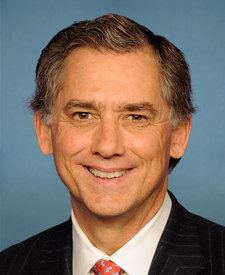
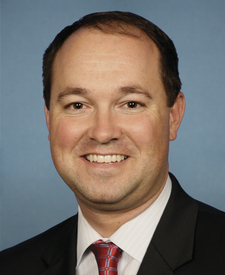
Mr. Hill of Arkansas (for himself, Mr. Stutzman, and Mr. …
Referred to the House Committee on Financial Services.
Introduced in House
Stakeholder Effects
cui bono?How this legislation distributes effects. Mention counts reflect frequency, not effect magnitude.
Labor advocates, Workers relying on maximum-employment policy
Bill Structure & Actor Mappings
Who is "The Secretary" in each section?
- "fed"
- → Federal Reserve
We use a combination of our own taxonomy and classification in addition to large language models to assess meaning and potential beneficiaries. High confidence means strong textual evidence. Always verify with the original bill text.
Learn more about our methodology