Impacts and Outcomes for Health Career Training Act
Summary
What This Bill Does
The Impacts and Outcomes for Health Career Training Act adds an evidence-building requirement to Social Security Act section 2008. HHS must study short-, medium-, and long-term impacts of Health Profession Opportunity Grant demonstration projects, including employment and earnings of participants. At least 4 percent of the total amount available for section 2008 each fiscal year must support the study, evaluations, and associated staffing. The evaluation may include experimental methods, but the bill does not require a randomized controlled trial. Grant recipients must submit interim and final reports with participant outcomes, including graduation rate, graduation timeliness, credential attainment, health-profession employment, overall employment, earnings, demographics, and other data specified by HHS.
Who Benefits and How
Health career trainees benefit because the program will measure which training designs improve credentials, employment, and earnings. Health workforce grant recipients benefit from clearer evidence expectations and feedback on project performance. Administration for Children and Families evaluators benefit from a dedicated 4 percent funding set-aside for evaluation and staffing. Congressional health workforce committees benefit from participant-outcome data for future program decisions.
Who Bears the Burden and How
Health workforce grant recipients must collect and report interim and final participant outcome data. HHS evaluation staff must conduct impact studies and manage evaluation funding. Program applicants must operate with more rigorous evidence and reporting expectations. Federal taxpayers fund the evaluation set-aside from existing section 2008 resources.
Key Provisions
- Requires HHS to study short-, medium-, and long-term Health Profession Opportunity Grant impacts.
- Uses at least 4 percent of annual section 2008 funding for studies, evaluations, and staffing.
- Requires interim and final grantee reports on graduation, credentials, employment, earnings, and demographics.
- Allows randomized controlled trials but does not require them.
Evidence Chain:
This summary is generated from the full bill text using AI analysis. Expand "Detailed Analysis" below for identified beneficiaries/burden bearers with clause-level evidence links.
At a Glance
What This Bill Does
Requires HHS to study short-, medium-, and long-term impacts of Health Profession Opportunity Grant demonstrations, reserve at least 4 percent of annual program funding for rigorous evaluation and staffing, and report participant outcomes such as employment, earnings, credentials, demographics, and graduation measures.
Key Policy Areas
Health Workforce, Program Evaluation, Social Welfare
Primary Purpose
Requires HHS to study short-, medium-, and long-term impacts of Health Profession Opportunity Grant demonstrations, reserve at least 4 percent of annual program funding for rigorous evaluation and staffing, and report participant outcomes such as employment, earnings, credentials, demographics, and graduation measures.
Policy Domains
Resolution provisions
Identified Gains
- Health career trainees
- Health workforce grant recipients
- Administration for Children and Families evaluators
- Congressional health workforce committees
Identified Costs
- Health workforce grant recipients
- HHS evaluation staff
- Program applicants
- Federal taxpayers
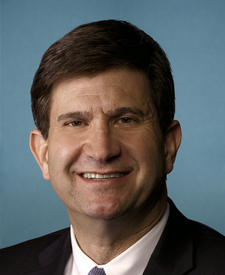
Legislative Progress
In CommitteeMr. Schneider introduced the following bill; which was referred to …
Referred to the House Committee on Ways and Means.
Introduced in House
Stakeholder Effects
cui bono?How this legislation distributes effects. Mention counts reflect frequency, not effect magnitude.
Health career trainees, Health workforce grant recipients
Positive-direction: Health career trainees
Negative-direction: Health workforce grant recipients
Congressional health workforce committees, HHS evaluation staff
Positive-direction: Congressional health workforce committees
Negative-direction: HHS evaluation staff
Bill Structure & Actor Mappings
Who is "The Secretary" in each section?
We use a combination of our own taxonomy and classification in addition to large language models to assess meaning and potential beneficiaries. High confidence means strong textual evidence. Always verify with the original bill text.
Learn more about our methodology