To provide low-income individuals with opportunities to enter and follow a career pathway in the health professions, and for other purposes.
Summary
What This Bill Does
The Pathways to Health Careers Act rebuilds the Health Profession Opportunity Grants program around career pathways for low-income individuals. Eligible entities must describe adult basic education, literacy, work readiness, training, case management, career coaching, employer connections, job placement, and staff plans. HHS, consulting Labor and Education, must award grants for health professions such as allied health, health information technology, physician assistants, nursing assistants, registered nurses, advanced practice nurses, emergency medical technicians, paramedics, and other health-care pathways. The bill requires at least two grants per state where enough qualified applications exist, at least ten grants each year to Indian tribes, tribal organizations, or Tribal Colleges and Universities from the tribal reserve, and at least two awards to territories from the territory reserve. Demonstration projects must last at least five years and cover either health-care pathways for people with arrest or conviction records or pregnancy, childbirth, and postpartum career pathways in states that recognize and pay doulas or midwives. Projects must include basic-skills support, affordable child care support, emergency cash assistance, participant stipends or wage supplements when prioritized, mentoring, job placement, and employer partnerships. HHS must provide technical assistance, run rigorous evaluations, collect outcome data on graduation, credentials, employment, earnings, demographics, and related measures, and publish reports. The bill appropriates $435 million annually for fiscal years 2026 through 2030, including $10 million annually for at least 25 Administration for Children and Families career civil servants, with remaining funds allocated among state grants, tribal grants, territory grants, demonstrations, technical assistance, and evaluation.
Who Benefits and How
Low-income health career trainees benefit from grant-funded education, work readiness, case management, career coaching, child care supports, emergency assistance, and job placement. Tribal Colleges benefit from a reserved funding stream for Indian tribes, tribal organizations, and Tribal Colleges and Universities. People with arrest records benefit from demonstration grants designed to open credentialing, licensing, and employment pathways in health professions. Doula and midwife workforce programs benefit from demonstrations for pregnancy, childbirth, and postpartum career pathways in states that recognize and pay those services.
Who Bears the Burden and How
ACF program staff must administer grants, technical assistance, evaluations, reports, and outcome data systems. Health workforce grant recipients must report participant outcomes including graduation, credentials, employment, earnings, demographics, and other HHS-specified data. State health career applicants must compete under detailed application criteria and project requirements. Federal taxpayers fund $435 million per year for fiscal years 2026 through 2030.
Key Provisions
- Appropriates $435 million annually for fiscal years 2026 through 2030 for health profession opportunity grants.
- Requires at least two grants per state, at least ten tribal or Tribal College grants, and at least two territory grants when applications qualify.
- Creates five-year demonstrations for people with arrest or conviction records and for doula, midwife, pregnancy, childbirth, and postpartum career pathways.
- Requires child care, basic-skills education, mentoring, job-placement, technical-assistance, evaluation, and outcome-reporting components.
- Reserves $10 million annually for at least 25 Administration for Children and Families career civil servants.
Evidence Chain:
This summary is generated from the full bill text using AI analysis. Expand "Detailed Analysis" below for identified beneficiaries/burden bearers with clause-level evidence links.
At a Glance
What This Bill Does
Rewrites Social Security Act section 2008 to fund health profession opportunity grants at $435 million per year for fiscal years 2026 through 2030, supporting low-income health-care career pathways, state grants, Indian tribe and Tribal College awards, territory awards, demonstrations for people with arrest or conviction records and birth-workforce careers, technical assistance, evaluations, and participant-outcome reporting.
Key Policy Areas
Health Workforce, Social Welfare, Education
Primary Purpose
Rewrites Social Security Act section 2008 to fund health profession opportunity grants at $435 million per year for fiscal years 2026 through 2030, supporting low-income health-care career pathways, state grants, Indian tribe and Tribal College awards, territory awards, demonstrations for people with arrest or conviction records and birth-workforce careers, technical assistance, evaluations, and participant-outcome reporting.
Policy Domains
Resolution provisions
Identified Gains
- Low-income health career trainees
- Tribal Colleges
- People with arrest records
- Doula workforce programs
Identified Costs
- ACF program staff
- Health workforce grant recipients
- State health career applicants
- Federal taxpayers
Sponsors
Legislative Progress
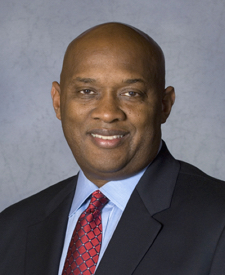
In CommitteeMr. Davis of Illinois (for himself, Mr. Neal, Mr. Doggett, …
Referred to the House Committee on Ways and Means.
Introduced in House
Stakeholder Effects
cui bono?How this legislation distributes effects. Mention counts reflect frequency, not effect magnitude.
Doula workforce programs, Health workforce grant recipients, Low-income health career trainees
Positive-direction: Doula workforce programs, Low-income health career trainees
Negative-direction: Health workforce grant recipients
Bill Structure & Actor Mappings
Who is "The Secretary" in each section?
We use a combination of our own taxonomy and classification in addition to large language models to assess meaning and potential beneficiaries. High confidence means strong textual evidence. Always verify with the original bill text.
Learn more about our methodology