Doug LaMalfa Federal Disaster Tax Relief Certainty Act
Summary
What This Bill Does
This bill amends the Internal Revenue Code to extend and codify disaster tax relief. For qualified net disaster losses, it creates a special personal casualty-loss rule for losses arising in presidentially declared major disaster areas during covered incident periods. The rule covers qualified disaster-related personal casualty losses, offsets personal casualty gains, defines qualified disaster areas by Stafford Act major disaster declarations, and applies to incident periods beginning after December 28, 2019 and before January 1, 2027 in the reported version.
The bill also creates or extends a gross-income exclusion for qualified wildfire relief payments. Individuals do not include in gross income payments compensating them for losses, expenses, or damages from a qualified wildfire disaster, including additional living expenses, lost wages other than employer-paid wages, personal injury, death, or emotional distress, to the extent insurance or another source has not already compensated the loss. The bill prevents double tax benefits by denying deductions, credits, or basis increases for expenditures covered by excluded payments.
Who Benefits and How
Individuals in presidentially declared disaster areas benefit because qualified disaster-related casualty losses receive special tax treatment. Property owners with disaster damage benefit from clearer casualty-loss rules for covered incident periods. Wildfire survivors benefit because qualified relief payments for living expenses, lost wages, injury, death, emotional distress, and property losses can be excluded from gross income. Tax preparers and disaster-relief attorneys benefit from codified definitions and effective periods. State disaster recovery offices benefit if federal tax treatment makes relief payments more useful to survivors.
Who Bears the Burden and How
The Federal Treasury bears a revenue cost from casualty-loss relief and wildfire-payment exclusions. IRS forms and guidance staff must update publications, forms, instructions, and processing systems. Taxpayers claiming relief must document qualified disaster areas, incident periods, losses, insurance reimbursements, and relief payments. Insurance companies and settlement administrators may face information-reporting and documentation questions. Tax compliance staff must police the no-double-benefit rule for deductions, credits, and basis increases.
Key Provisions
- Adds a special rule for qualified net disaster losses under Internal Revenue Code section 165.
- Provides definitions for qualified disaster-related personal casualty losses, qualified disaster areas, qualified disasters, and incident periods.
- Extends disaster casualty-loss relief to covered presidentially declared major disasters through the end of 2026.
- Provides a gross-income exclusion for qualified wildfire relief payments covering uncompensated losses, expenses, damages, lost wages, injury, death, or emotional distress.
- Establishes qualified wildfire disasters as federally declared forest or range fire disasters.
- Prohibits double benefits by denying deductions, credits, and basis increases for expenses covered by excluded payments.
Evidence Chain:
This summary is generated from the full bill text using AI analysis. Expand "Detailed Analysis" below for identified beneficiaries/burden bearers with clause-level evidence links.
At a Glance
What This Bill Does
Codifies and extends federal disaster tax relief by allowing special casualty-loss treatment for qualified net disaster losses in presidentially declared major disaster areas and excluding qualified wildfire relief payments from gross income for uncompensated losses, living expenses, lost wages, injury, death, or emotional distress from federally declared wildfire disasters.
Key Policy Areas
Tax, Disaster Recovery, Wildfire, Housing, Finance
Primary Purpose
Codifies and extends federal disaster tax relief by allowing special casualty-loss treatment for qualified net disaster losses in presidentially declared major disaster areas and excluding qualified wildfire relief payments from gross income for uncompensated losses, living expenses, lost wages, injury, death, or emotional distress from federally declared wildfire disasters.
Policy Domains
House resolution provisions
Identified Gains
- Individuals in presidentially declared disaster areas
- Property owners with disaster damage
- Wildfire survivors
- Tax preparers
- Disaster-relief attorneys
- State disaster recovery offices
Identified Costs
- Federal Treasury
- IRS forms staff
- IRS guidance staff
- Taxpayers claiming disaster relief
- Insurance companies
- Settlement administrators
- Tax compliance staff
Sponsors



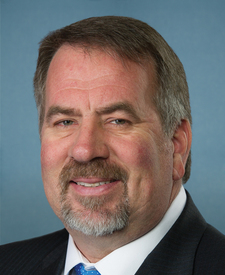

Legislative Progress
ReportedReceived in the Senate and Read twice and referred to …
Received; read twice and referred to the Committee on Finance
Motion to reconsider laid on the table Agreed to without …
On motion to suspend the rules and pass the bill, …
Passed/agreed to in House: On motion to suspend the rules …
DEBATE - The House proceeded with forty minutes of debate …
Considered under suspension of the rules. (consideration: CR H3107-3110)
Mr. Smith (MO) moved to suspend the rules and pass …
Placed on the Union Calendar, Calendar No. 525.
Reported (Amended) by the Committee on Ways and Means. H. …
Stakeholder Effects
cui bono?How this legislation distributes effects. Mention counts reflect frequency, not effect magnitude.
Individuals in presidentially declared disaster areas, Settlement administrators, Tax preparers
Positive-direction: Individuals in presidentially declared disaster areas, Tax preparers, Wildfire survivors
Negative-direction: Settlement administrators
Federal Treasury, IRS forms staff, IRS guidance staff
Property owners with disaster damage, Property owners with wildfire damage
Bill Structure & Actor Mappings
Who is "The Secretary" in each section?
- "irs"
- → Internal Revenue Service
- "stafford"
- → Robert T. Stafford Disaster Relief and Emergency Assistance Act
We use a combination of our own taxonomy and classification in addition to large language models to assess meaning and potential beneficiaries. High confidence means strong textual evidence. Always verify with the original bill text.
Learn more about our methodology