George Floyd Justice in Policing Act of 2025
Summary
What This Bill Does
The George Floyd Justice in Policing Act of 2025 is a comprehensive federal policing reform package. It limits good-faith and clearly-established-law immunity defenses in civil-rights suits against local law enforcement officers and federal investigative or law enforcement officers. It expands DOJ pattern-or-practice authority to include prosecutors, gives the Attorney General subpoena power, allows state attorneys general to bring similar civil actions, requires annual public DOJ reporting, and authorizes grants for state pattern-or-practice investigations. It authorizes grants for independent investigations of law enforcement deadly-force cases. It directs DOJ to analyze and recommend accreditation standards, requires some grant applicants to spend portions of awards on management, training, hiring, oversight, accreditation, racial-profiling best practices, and body-camera policies, and authorizes $25 million for DOJ civil-rights enforcement, $3.3 million for Community Relations Service conflict resolution, and $5 million annually for a Task Force on Law Enforcement Oversight. It requires broad federal, state, tribal, and local law enforcement data collection; creates a National Police Misconduct Registry; conditions Byrne grants on certification and decertification programs and registry checks; creates quarterly use-of-force reporting and small-agency grants; bars racial profiling and creates private enforcement; requires racial-profiling complaint procedures, data collection, publication, privacy limits, regulations, and reports; requires racial bias and duty-to-intervene training; conditions COPS or Byrne funds on bans for no-knock drug warrants and chokeholds; sets federal force standards through the PEACE Act; restricts transfer of certain military equipment; authorizes public-safety innovation grants; imposes federal body-camera and patrol-vehicle camera rules while banning facial recognition use on required cameras; funds state, local, and tribal body-camera programs; and criminalizes sexual acts under color of law while conditioning COPS grants on state laws covering that misconduct.
Who Benefits and How
Civil rights plaintiffs benefit because officers cannot defeat covered claims merely by invoking good faith or lack of clearly established law. Communities affected by police misconduct benefit from stronger DOJ pattern-or-practice investigations, misconduct registries, use-of-force data, racial-profiling enforcement, and camera policies. State attorneys general benefit from authority and grant support to pursue pattern-or-practice investigations. Community-based organizations benefit from grant programs, accreditation consultation, public-safety innovation task forces, and racial-profiling complaint procedures.
Who Bears the Burden and How
Local law enforcement officers face greater civil liability, registry reporting, certification review, use-of-force restrictions, and misconduct transparency. State law enforcement agencies must report data, adopt certification and decertification systems, satisfy grant conditions, and enforce bans on no-knock drug warrants, chokeholds, and sexual misconduct under color of law. Federal law enforcement agencies must complete training, wear body cameras, follow force standards, report use-of-force data, and follow camera and facial-recognition restrictions. Department of Justice staff must write regulations, run registries, administer grants, audit compliance, conduct studies, publish data, and report annually to Congress.
Key Provisions
- Limits qualified immunity defenses for covered local and federal law enforcement civil-rights claims.
- Expands DOJ and state attorney general pattern-or-practice authority and funds independent deadly-force investigations.
- Creates a National Police Misconduct Registry and conditions Byrne grants on officer certification and decertification systems.
- Requires use-of-force, racial-profiling, and law-enforcement-practices data collection, publication, privacy rules, audits, and reports.
- Conditions federal grants on bans or policies for racial profiling, no-knock drug warrants, chokeholds, duty-to-intervene training, body cameras, and sexual misconduct under color of law.
Evidence Chain:
This summary is generated from the full bill text using AI analysis. Expand "Detailed Analysis" below for identified beneficiaries/burden bearers with clause-level evidence links.
At a Glance
What This Bill Does
Expands civil-rights accountability for law enforcement by limiting qualified immunity defenses, broadening DOJ pattern-or-practice tools, funding independent deadly-force investigations, requiring accreditation and data reporting, creating a National Police Misconduct Registry, conditioning Byrne and COPS grants on certification, use-of-force reporting, racial-profiling bans, no-knock warrant bans, chokehold bans, duty-to-intervene training, body-camera policies, and state laws against sexual acts under color of law.
Key Policy Areas
Civil Rights, Law Enforcement, Criminal Justice
Primary Purpose
Expands civil-rights accountability for law enforcement by limiting qualified immunity defenses, broadening DOJ pattern-or-practice tools, funding independent deadly-force investigations, requiring accreditation and data reporting, creating a National Police Misconduct Registry, conditioning Byrne and COPS grants on certification, use-of-force reporting, racial-profiling bans, no-knock warrant bans, chokehold bans, duty-to-intervene training, body-camera policies, and state laws against sexual acts under color of law.
Policy Domains
Resolution provisions
Identified Gains
- Civil rights plaintiffs
- Communities affected by police misconduct
- State attorneys general
- Community-based organizations
Identified Costs
- Local law enforcement officers
- State law enforcement agencies
- Federal law enforcement agencies
- Department of Justice staff
Sponsors
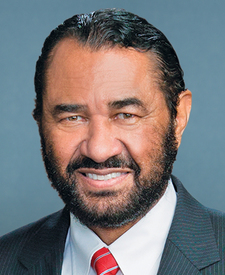
Legislative Progress
In CommitteeMr. Ivey (for himself, Ms. Adams, Ms. Ansari, Ms. Balint, …
Referred to the Committee on the Judiciary, and in addition …
Introduced in House
Stakeholder Effects
cui bono?How this legislation distributes effects. Mention counts reflect frequency, not effect magnitude.
Federal investigative officers, Federal law enforcement agencies, Federal law enforcement officers
State law enforcement agencies faces effects in multiple directions
Positive-direction: Law enforcement accreditation organizations, Small law enforcement agencies, Use-of-force researchers
Negative-direction: Federal investigative officers, Federal law enforcement agencies, Federal law enforcement officers, Law enforcement agencies receiving grants, Law enforcement agencies seeking military equipment, Law enforcement officers committing sexual misconduct, Law enforcement officers under investigation, Law enforcement officers with misconduct records, Local law enforcement officers, Local police departments
Civil rights plaintiffs, Civil rights researchers, Civilian review boards
Bureau of Justice Statistics staff, Department of Justice Civil Rights Division staff, Department of Justice data staff
Positive-direction: Department of Justice Civil Rights Division staff
Negative-direction: Bureau of Justice Statistics staff, Department of Justice data staff, Department of Justice reporting staff, Department of Justice staff
Civil rights organizations, Community-based organizations
Body camera vendors, Facial recognition vendors
Positive-direction: Body camera vendors
Negative-direction: Facial recognition vendors
State attorneys general, State governments without covered laws, State police certification boards
Positive-direction: State attorneys general
Negative-direction: State governments without covered laws, State police certification boards
Bill Structure & Actor Mappings
Who is "The Secretary" in each section?
We use a combination of our own taxonomy and classification in addition to large language models to assess meaning and potential beneficiaries. High confidence means strong textual evidence. Always verify with the original bill text.
Learn more about our methodology