NSF AI Education Act of 2025
Summary
What This Bill Does
The NSF AI Education Act expands the National Artificial Intelligence Initiative Act's education authorities. NSF may support undergraduate and graduate AI scholarships and fellowships through institutions of higher education, including community colleges, for students studying AI design, research, assessment, development, deployment, integration, or application. NSF may prioritize AI teaching, advanced manufacturing, and agriculture tracks, cover tuition, education-related fees, stipends, and professional development for up to five years, and conduct outreach to rural-located, rural-serving, emerging research, Tribal College or University, and EPSCoR institutions. NSF may also fund one-year AI fellowships for students, faculty, industry professionals, teachers, school counselors, and school professionals, plus a nationwide outreach campaign. In coordination with Commerce's Regional Technology Hubs program, NSF may designate up to eight geographically diverse Community College and Area Career and Technical Education Centers of AI Excellence. The bill also authorizes competitive merit-reviewed awards for research on AI teaching models, tools, instructional materials, K-12 teacher preparation, professional development, student outcomes, and regional educator cohorts.
Who Benefits and How
AI undergraduate students benefit from NSF scholarships covering tuition, education-related fees, stipends, and professional development funds for up to five years. K-12 teachers benefit from NSF fellowships and research programs that build AI teaching skills and classroom tools. Community colleges benefit from eligibility for AI Excellence Center designations and AI scholarship administration. Rural-serving institutions benefit from NSF outreach that encourages applications from rural, Tribal, EPSCoR, and emerging research institutions.
Who Bears the Burden and How
National Science Foundation program officers must administer scholarships, fellowships, AI Excellence Centers, outreach, research awards, and public reports. Institutions of higher education must receive and administer scholarship or fellowship funds paid directly by NSF. AI education grant applicants must document partnerships, ethics concerns, workforce demand, and research designs. Federal taxpayers fund the expanded AI education awards if appropriations are provided.
Key Provisions
- Authorizes NSF AI scholarships and fellowships for undergraduate and graduate students for up to five years.
- Expands AI fellowships to faculty, industry professionals, teachers, school counselors, and school professionals.
- Creates up to eight Community College and Area Career and Technical Education Centers of AI Excellence.
- Funds merit-reviewed research on AI teaching models, tools, materials, K-12 integration, and learning outcomes.
- Requires NSF outreach and reporting on AI education opportunities and fellowship outcomes.
Evidence Chain:
This summary is generated from the full bill text using AI analysis. Expand "Detailed Analysis" below for identified beneficiaries/burden bearers with clause-level evidence links.
At a Glance
What This Bill Does
Expands NSF artificial-intelligence education programs by authorizing scholarships and fellowships for AI students, teachers, school counselors, faculty, and industry professionals, creating up to eight community college or career-technical AI excellence centers, and funding competitive research on AI teaching models for pre-K through grade 12.
Key Policy Areas
Artificial Intelligence, Education, Workforce Development
Primary Purpose
Expands NSF artificial-intelligence education programs by authorizing scholarships and fellowships for AI students, teachers, school counselors, faculty, and industry professionals, creating up to eight community college or career-technical AI excellence centers, and funding competitive research on AI teaching models for pre-K through grade 12.
Policy Domains
Resolution provisions
Identified Gains
- AI undergraduate students
- K-12 teachers
- Community colleges
- Rural-serving institutions
Identified Costs
- National Science Foundation program officers
- Institutions of higher education
- AI education grant applicants
- Federal taxpayers
Sponsors

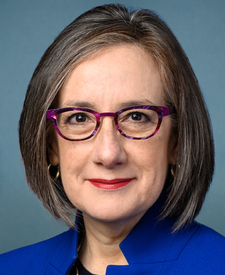

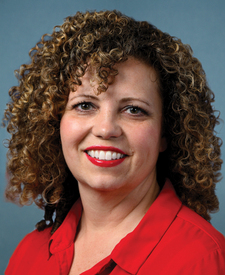

Legislative Progress
ReportedOrdered to be Reported in the Nature of a Substitute …
Committee Consideration and Mark-up Session Held
Mr. Fong (for himself, Ms. Salinas, and Ms. Pettersen) introduced …
Referred to the House Committee on Science, Space, and Technology.
Introduced in House
Stakeholder Effects
cui bono?How this legislation distributes effects. Mention counts reflect frequency, not effect magnitude.
AI undergraduate students, Community colleges, K-12 teachers
Bill Structure & Actor Mappings
Who is "The Secretary" in each section?
We use a combination of our own taxonomy and classification in addition to large language models to assess meaning and potential beneficiaries. High confidence means strong textual evidence. Always verify with the original bill text.
Learn more about our methodology