Inaugural Fund Integrity Act
Summary
What This Bill Does
The Inaugural Fund Integrity Act adds inaugural committee restrictions and disclosure duties to the Federal Election Campaign Act and ties official Inaugural Committee status under title 36 to compliance. Inaugural Committees may not solicit, accept, or receive donations from anyone other than an individual, or from a foreign national. Foreign nationals may not directly or indirectly make or promise inaugural donations. Straw donations, knowingly accepting straw donations, and converting inaugural donations to personal use are prohibited. Personal use means using donated funds for commitments, obligations, or expenses that would exist regardless of inaugural committee duties, while unused funds may still go to tax-exempt 501(c)(3) charities. Individuals may not donate more than $50,000 in the aggregate, with inflation adjustments beginning in the 2032 presidential election year rounded to the nearest $1,000. Inaugural Committees must report individual donations of $1,000 or more within 24 hours and file a report within 90 days after the inaugural ceremony disclosing donations of $200 or more, total disbursements by category, operating expenses, loan repayments, donation refunds, offsets, other disbursements over $200, and recipient names and addresses. A committee is not treated as the Inaugural Committee unless it agrees to and meets these FECA requirements.
Who Benefits and How
Small-dollar individual donors benefit because corporations, nonprofits, foreign nationals, and other non-individual donors are barred from inaugural committee donations. Federal Election Commission staff benefit from clearer statutory reporting requirements for inaugural donations and disbursements. Government ethics advocates benefit from a $50,000 individual cap, straw-donation ban, and personal-use ban. Charitable organizations may receive unused inaugural funds because the bill preserves transfers to tax-exempt 501(c)(3) organizations.
Who Bears the Burden and How
Inaugural Committees must reject non-individual and foreign-national donations, track the $50,000 cap, and file rapid and post-event reports. Corporate donors lose the ability to donate to inaugural committees. Foreign nationals face an explicit ban on direct or indirect inaugural donations or promises. Large individual donors are capped at $50,000 in aggregate inaugural donations.
Key Provisions
- Prohibits inaugural committee donations from non-individuals and foreign nationals.
- Limits individual inaugural donations to $50,000 with inflation adjustments beginning in 2032.
- Bars straw donations, knowing acceptance of straw donations, and conversion of inaugural donations to personal use.
- Requires 24-hour disclosure of individual donations of $1,000 or more.
- Requires a 90-day post-inaugural report covering donations of $200 or more and detailed disbursement categories.
Evidence Chain:
This summary is generated from the full bill text using AI analysis. Expand "Detailed Analysis" below for identified beneficiaries/burden bearers with clause-level evidence links.
At a Glance
What This Bill Does
Bars inaugural committees from taking donations from non-individuals or foreign nationals, caps individual inaugural donations at $50,000 with future inflation adjustments, prohibits straw donations and personal use, requires 24-hour disclosure of donations of $1,000 or more, and requires post-inaugural donation and disbursement reports.
Key Policy Areas
Campaign Finance, Presidential Transition, Ethics
Primary Purpose
Bars inaugural committees from taking donations from non-individuals or foreign nationals, caps individual inaugural donations at $50,000 with future inflation adjustments, prohibits straw donations and personal use, requires 24-hour disclosure of donations of $1,000 or more, and requires post-inaugural donation and disbursement reports.
Policy Domains
Resolution provisions
Identified Gains
- Small-dollar individual donors
- Federal Election Commission staff
- Government ethics advocates
- Charitable organizations
Identified Costs
- Inaugural Committees
- Corporate donors
- Foreign nationals
- Large individual donors
Sponsors
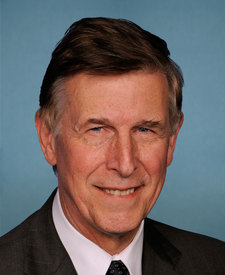
Legislative Progress
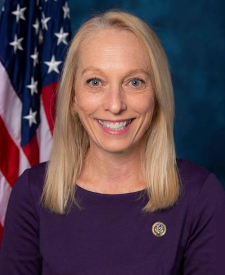
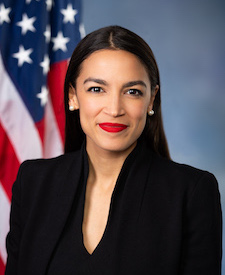
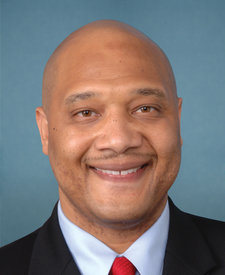
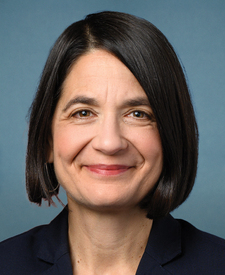
In CommitteeMs. Scanlon (for herself, Ms. Norton, Ms. Tlaib, Mr. Tonko, …
Referred to the Committee on House Administration, and in addition …
Introduced in House
Stakeholder Effects
cui bono?How this legislation distributes effects. Mention counts reflect frequency, not effect magnitude.
Inaugural Committees, Small-dollar individual donors
Positive-direction: Small-dollar individual donors
Negative-direction: Inaugural Committees
Bill Structure & Actor Mappings
Who is "The Secretary" in each section?
We use a combination of our own taxonomy and classification in addition to large language models to assess meaning and potential beneficiaries. High confidence means strong textual evidence. Always verify with the original bill text.
Learn more about our methodology