Department of State Policy Provisions Act
Summary
What This Bill Does
This bill is a large State Department policy package. It terminates pre-September 30, 2025 recurring State Department report requirements unless preserved by the bill or later law, creates a State Sponsor of Unlawful or Wrongful Detention designation process, and authorizes a Center for Strategy and Solutions in the Office of the Under Secretary for Management to improve data access, strategic governance, resource alignment, and enterprise management. It also sets procurement policy, consolidates information technology functions, creates congressional notification for retained consular fees, addresses passport denial or revocation for terrorism or trafficking support, and changes embassy, consulate, overseas pay, art, and construction policies.
The bill includes many regional and national-security provisions: Taiwan visa treatment, Somaliland travel and investment, African commercial diplomacy, Pacific partnership strategy, Korean American divided families, Central Asia connectivity, Georgia sovereignty, Belarus dialogue, Nicaragua human-rights policy, Haiti criminal-collusion transparency, Honduran democracy protections, Caribbean Basin Security Initiative strategy, Global Fragility Act modifications, undersea cable policy, conventional weapons destruction, Southeast Asia demining, Jordan FMF, Cyprus arms embargo reform, counterterrorism information access, synthetic-opioid trafficking diplomacy, firearms trafficking in the Western Hemisphere, nuclear cooperation, and annual trafficking-in-persons report changes.
The economic, technology, and global-health titles create or modify an investment screening initiative, advanced AI geopolitical and verification studies, science and communication infrastructure coordination, Global Small Business Network and grants programs, reports on international organization participation, U.N. voting practices, malign influence operations, and U.S. citizen employment in international organizations. The bill also addresses international religious freedom programs, corruption and kleptocracy, malnutrition, CEPI, WHO data sharing, the Global Fund, Pandemic Fund, global health compacts, maternal and child health policy, safe passages, cultural heritage coordination, mega-decade sports diplomacy, foreign exchange programs, and reports on foreign suppression of U.S. speech.
Who Benefits and How
State Department management offices benefit from authority to centralize data, technology, procurement, and change-management work. U.S. nationals at risk of wrongful detention benefit from a public designation process and punitive-measure review. U.S. embassies and consulates benefit from construction, art, pay, staffing, and regional technology provisions. Taiwan officials, Somaliland engagement supporters, Pacific partner countries, Caribbean security partners, Georgia, Belarus democracy advocates, Nicaraguan civil society, Haitian anti-corruption investigators, Honduran democracy advocates, and Central Asian partners benefit from targeted diplomatic strategies or reporting. U.S. small businesses benefit from global small-business diplomacy and grants programs. Global health implementers, religious freedom advocates, anti-corruption investigators, demining partners, and sports diplomacy partners benefit from program authorizations or reporting structures.
Who Bears the Burden and How
State Department bureaus must absorb many new strategies, designations, reports, briefings, consultations, pilot programs, staffing changes, and policy restrictions. Foreign governments that wrongfully detain U.S. nationals, support trafficking, undermine democracy, engage in malign influence, restrict U.S. speech, or participate in corruption face designation, reporting, sanctions, or diplomatic pressure. State procurement and IT offices must implement buy-American, office consolidation, consular-fee notification, and technology-management changes. International organization affairs staff must produce U.N. voting, malign influence, participation-metrics, and U.S. employment reports. Global health offices must coordinate new or revised work on malnutrition, CEPI, WHO data sharing, the Global Fund, Pandemic Fund, compact models, maternal and child health, and safe passages.
Key Provisions
- Terminates older recurring State Department report requirements while preserving new and later-created reports.
- Creates a State Sponsor of Unlawful or Wrongful Detention designation process and public list.
- Authorizes a Center for Strategy and Solutions for State Department data, management, governance, and change management.
- Changes State procurement, information technology, consular fee, passport, embassy construction, overseas pay, and art collection policies.
- Establishes regional strategies and accountability provisions for the Pacific, Africa, Central Asia, Georgia, Belarus, Nicaragua, Haiti, Honduras, the Caribbean, the Eastern Mediterranean, and other areas.
- Modifies global fragility, undersea cable, counterterrorism, firearms trafficking, investment screening, AI, and science-communication programs.
- Creates global small-business diplomacy and grant programs and expands reporting on international organizations.
- Updates international religious freedom, anti-corruption, malnutrition, global health, cultural heritage, sports diplomacy, exchange, and foreign-speech suppression provisions.
Evidence Chain:
This summary is generated from the full bill text using AI analysis. Expand "Detailed Analysis" below for identified beneficiaries/burden bearers with clause-level evidence links.
At a Glance
What This Bill Does
Creates a broad Department of State policy package covering report termination, wrongful-detention designations, State management reforms, procurement, consular and passport rules, embassy construction and pay, regional strategies, global fragility, counterterrorism, investment screening, artificial intelligence, small-business diplomacy, international organizations, global health, cultural heritage, sports diplomacy, and foreign suppression of U.S. speech.
Key Policy Areas
Foreign Policy, Diplomacy, International Development, National Security, Government Operations
Primary Purpose
Creates a broad Department of State policy package covering report termination, wrongful-detention designations, State management reforms, procurement, consular and passport rules, embassy construction and pay, regional strategies, global fragility, counterterrorism, investment screening, artificial intelligence, small-business diplomacy, international organizations, global health, cultural heritage, sports diplomacy, and foreign suppression of U.S. speech.
Policy Domains
House resolution provisions
Identified Gains
- State Department management offices
- U.S. nationals at risk of wrongful detention
- U.S. embassies
- U.S. consulates
- Taiwan officials
- Pacific partner countries
- Caribbean security partners
- Belarus democracy advocates
- Nicaraguan civil society
- Haitian anti-corruption investigators
- Honduran democracy advocates
- U.S. small businesses
- Global health implementers
- Religious freedom advocates
- Deminers
- Sports diplomacy partners
Identified Costs
- State Department bureaus
- Foreign governments that wrongfully detain U.S. nationals
- Foreign trafficking supporters
- Foreign corruption networks
- Foreign malign influence operators
- State procurement offices
- State information technology offices
- International organization affairs staff
- Global health offices
- Congressional foreign affairs committee staff
Sponsors
Legislative Progress
ReportedOrdered to be Reported (Amended) by the Yeas and Nays: …
Committee Consideration and Mark-up Session Held
Committee Consideration and Mark-up Session Held
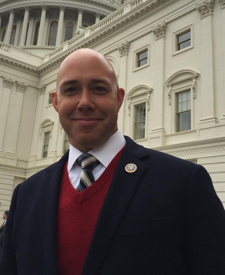
Mr. Mast introduced the following bill; which was referred to …
Referred to the House Committee on Foreign Affairs.
Introduced in House
Stakeholder Effects
cui bono?How this legislation distributes effects. Mention counts reflect frequency, not effect magnitude.
Art in Embassies program, Assistant Secretary for Economic Growth, Bureau of African Affairs
Bureau of Counterterrorism, State Department financial operations face effects in multiple directions
Positive-direction: Bureau of Diplomatic Security, Bureau of Diplomatic Security personnel, Congressional committees, Foreign Service Officers seeking Africa postings, Greece, Israel partnership programs, Indo-Pacific partner nations, Pacific island nations, State Department personnel under investigation, State Department reporting offices, Taiwan government, Taiwan government officials, US Arctic policy and diplomacy, US development finance agencies (DFC, MCC, EXIM), US national security apparatus, US public diplomacy objectives, Ukraine
Negative-direction: Art in Embassies program, Assistant Secretary for Economic Growth, Bureau of African Affairs, Bureau of Consular Affairs, Bureau of Cyberspace and Digital Policy, Bureau of Diplomatic Technology, Bureau of East Asian and Pacific Affairs, Bureau of Emerging Threats, Bureau of International Narcotics and Law Enforcement, Bureau of International Organizations Affairs, Bureau of Near Eastern Affairs, Bureau of Overseas Buildings Operations, Bureau of Strategic Communications, China foreign policy interests, Consular affairs officers, Countries on Tier 3 trafficking watch list, Countries that wrongfully detain Americans, Cuban government, Development Finance Corporation, Global fragility oversight staff, Iranian government and entities, Maduro government, Nicaraguan government officials, Office of Opinion Research, Office to Monitor and Combat Trafficking, Russian government and oligarchs, Special Envoy to Monitor and Combat Antisemitism, State Department Pacific affairs office, State Department consular affairs, State Department global health office, State Department health office, State Department international security office, State Department procurement offices, State sponsors of terrorism, US public health agencies, USAID and State Department, Under Secretary for Political Affairs
American citizens detained abroad, At-risk populations in malaria-endemic regions, Diaspora communities facing foreign repression
Positive-direction: American citizens detained abroad, At-risk populations in malaria-endemic regions, Diaspora communities facing foreign repression, Families of American hostages, Food insecure populations globally, Foreign nationals seeking US visas, HIV/AIDS patients in developing countries, Korean American families separated by Korean War, Local populations in contaminated areas, Pregnant women in conflict-affected areas, Public diplomacy contractors, Trafficking victims, U.S. travelers, US citizens seeking international organization careers, US travelers abroad, Visa applicants, Women and children in developing countries, Wrongfully detained Americans
Negative-direction: Individuals supporting terrorist organizations
China, China and Russia Arctic activities, Foreign diplomatic missions from covered countries (likely China, Russia)
Positive-direction: High-ranking Taiwan government officials, Republic of Cyprus government, US, Japan, and South Korea diplomatic relations, US-India bilateral relationship, Vietnam, Laos, and Cambodia governments
Negative-direction: China, China and Russia Arctic activities, Foreign diplomatic missions from covered countries (likely China, Russia), Foreign governments engaging in wrongful detention, Foreign governments with trafficking issues, PEPFAR recipient countries
Anti-trafficking organizations, Anti-trafficking victim service organizations, Cuban democracy and civil society organizations
Positive-direction: Anti-trafficking organizations, Anti-trafficking victim service organizations, Cuban democracy and civil society organizations, Demining contractors and NGOs, Honduran civil society and democracy advocates, Human rights organizations in Nicaragua, Venezuelan democratic opposition
Negative-direction: Foreign assistance implementers, Foreign assistance implementing organizations, Global health implementing organizations
Coalition for Epidemic Preparedness Innovations, Global Fund to Fight AIDS, TB and Malaria, Global Health Worker Initiative programs
Positive-direction: Coalition for Epidemic Preparedness Innovations, International election monitoring organizations (OAS, EU, UN), World Health Organization
Negative-direction: Global Fund to Fight AIDS, TB and Malaria, Global Health Worker Initiative programs, World Bank Pandemic Fund
Defense contractors working with Taiwan, U.S. defense contractors in Mediterranean region, US defense industry
Global health NGOs and contractors, Malaria prevention organizations, Maternal health organizations in conflict zones
Foreign vendors, Foreign vendors and suppliers, US businesses seeking African markets
Positive-direction: US businesses seeking African markets, US private sector in Central Asia
Negative-direction: Foreign vendors, Foreign vendors and suppliers
Bill Structure & Actor Mappings
Who is "The Secretary" in each section?
- "state"
- → Department of State
- "usaid"
- → United States Agency for International Development
We use a combination of our own taxonomy and classification in addition to large language models to assess meaning and potential beneficiaries. High confidence means strong textual evidence. Always verify with the original bill text.
Learn more about our methodology