To modify and reauthorize the Better Utilization of Investments Leading to Development Act of 2018, and for other purposes.
Analysis under review: This bill has generated analysis that may be too generic or incomplete. Clause-level evidence remains available below.
Summary
What This Bill Does
The DFC Modernization Act of 2025 reauthorizes and substantially expands the U.S. International Development Finance Corporation (DFC), which was created by the BUILD Act of 2018. The bill extends DFC's authorization through December 31, 2031, quadruples its maximum contingent liability from $60 billion to $250 billion, raises its equity investment cap from 30% to 49%, and creates a revolving Equity Investments Account so DFC can reinvest equity earnings without new appropriations. It directs DFC to increase its risk tolerance, use more flexible financial instruments (equity, mezzanine debt, first-loss coverage, blended finance), and operate in high-risk countries to counter strategic competitors like China and Russia.
Who Benefits and How
U.S. private sector investors in emerging markets benefit from reduced risk through DFC's expanded use of equity, loan guarantees, first-loss coverage, and blended finance. Companies in critical minerals mining, energy, infrastructure, and telecommunications gain new revenue opportunities as DFC is explicitly directed to counter Chinese and Russian dominance in these sectors. The DFC itself gains significantly expanded operational capacity: a $250 billion liability ceiling (up from $60 billion), ability to hold up to 49% equity stakes (up from 30%), 100 administratively determined positions (up from 50), broader fee usage authority, and elimination of the Chief Development Officer position to consolidate authority under the CEO. Allied and partner countries benefit from U.S. development investment as an alternative to state-directed financing from adversarial nations.
Who Bears the Burden and How
China, Russia, and five other "countries of concern" (Venezuela, Cuba, North Korea, Iran, Belarus) are explicitly barred from receiving DFC support or partnering with DFC-backed projects. State-owned enterprises connected to countries of concern are prohibited from DFC financing. Companies engaged in anticompetitive practices are barred from DFC support. U.S. taxpayers bear the risk of DFC's substantially expanded financial exposure ($250 billion ceiling), though the bill notes that portfolio-level losses may be expected. USAID loses its role in DFC enterprise fund creation and certain coordination functions.
Key Provisions
- Extends DFC authorization through December 31, 2031
- Raises maximum contingent liability from $60 billion to $250 billion
- Increases equity investment cap from 30% to 49% of DFC portfolio
- Creates revolving Equity Investments Account for equity earnings reinvestment
- Defines seven "countries of concern" barred from DFC investment
- Allows DFC operations in high-income countries with Presidential certification
- Reduces Board private-sector members from 5 to 3
- Eliminates Chief Development Officer position, consolidating authority under CEO
- Doubles administratively determined positions from 50 to 100
- Raises congressional notification threshold from $10 million to $100 million
- Adds DFC authority for defense and strategic materials stockpiling coordination
- Prohibits DFC support for projects involving countries of concern or anticompetitive entities
- Repeals redundant European Energy Security and Diversification Act provisions
Evidence Chain:
This summary is generated from the full bill text using AI analysis. Expand "Detailed Analysis" below for identified beneficiaries/burden bearers.
At a Glance
What This Bill Does
Reauthorizes and substantially expands the U.S. International Development Finance Corporation (DFC) through 2031, quadrupling its maximum liability to $250 billion, raising its equity cap to 49%, and directing it to increase risk tolerance and counter strategic competitors in critical minerals, energy, infrastructure, and supply chains.
Key Policy Areas
Foreign Policy, Defense, Finance, Energy, Trade
Primary Purpose
Reauthorizes and substantially expands the U.S. International Development Finance Corporation (DFC) through 2031, quadrupling its maximum liability to $250 billion, raising its equity cap to 49%, and directing it to increase risk tolerance and counter strategic competitors in critical minerals, energy, infrastructure, and supply chains.
Policy Domains
Title I — Definitions and Geographic Focus
Identified Gains
Contextual inference, no direct clause citation- U.S. companies seeking DFC-backed investment in allied countries
- High-income allied countries seeking U.S. development investment alternatives to China
Contextual inference, no direct clause citation
Identified Costs
Contextual inference, no direct clause citation- Companies with projects in countries of concern (barred from DFC support)
- Entities in China, Russia, and five other designated countries
Contextual inference, no direct clause citation
Title II — Governance and Personnel
Identified Gains
Contextual inference, no direct clause citation- DFC CEO (consolidated authority and larger staff)
- DFC as institution (streamlined governance, more flexible hiring)
Contextual inference, no direct clause citation
Identified Costs
Contextual inference, no direct clause citation- USAID (loses coordination role with DFC)
- Chief Development Officer position (eliminated)
Contextual inference, no direct clause citation
Title IV — Corporate Operations, Restrictions, and Repeals
Identified Gains
Contextual inference, no direct clause citation- U.S. private sector investors in emerging markets (massively expanded DFC capacity)
- Critical minerals and strategic materials companies (new defense coordination)
- Infrastructure and energy companies in allied nations
Contextual inference, no direct clause citation
Identified Costs
Contextual inference, no direct clause citation- State-owned enterprises of adversarial nations (banned from DFC projects)
- Companies engaged in anticompetitive practices (barred from DFC support)
- Congressional oversight (10x higher notification threshold)
Contextual inference, no direct clause citation
Title III — Investment Tools and Reauthorization
Identified Gains
Contextual inference, no direct clause citation- Private equity and venture capital firms co-investing with DFC
- Emerging market project developers (larger DFC equity stakes available)
- DFC (self-funding equity cycle, extended authorization)
Contextual inference, no direct clause citation
Identified Costs
Contextual inference, no direct clause citation- U.S. taxpayers (expanded financial exposure)
- USAID (removed from enterprise fund role)
Contextual inference, no direct clause citation
Sponsors
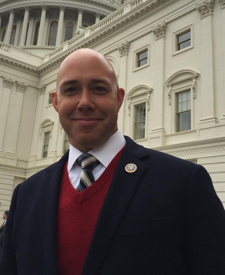
Legislative Progress
IntroducedMr. Mast introduced the following bill; which was referred to …
Stakeholder Effects
cui bono?How this legislation distributes effects. Mention counts reflect frequency, not effect magnitude.
DFC (autonomous enterprise fund authority), DFC (expanded fee and fund transfer authority), DFC (expanded geographic mandate)
Positive-direction: DFC (autonomous enterprise fund authority), DFC (expanded fee and fund transfer authority), DFC (expanded geographic mandate), DFC (expanded procurement and leasing authority), DFC (self-funding equity operations), DFC CEO (consolidated executive authority), DFC as institution, DFC as institution (streamlined operations)
Negative-direction: U.S. Treasury (forgoes equity earnings transfers), USAID (loses coordination role), USAID (loses enterprise fund role)
Chinese state-owned enterprises, Chinese state-owned enterprises and investors, Companies engaged in anticompetitive practices
Positive-direction: Private companies competing against adversarial SOEs, U.S. companies seeking DFC financing in allied high-income countries
Negative-direction: Chinese state-owned enterprises, Chinese state-owned enterprises and investors, Companies engaged in anticompetitive practices, Companies with projects in countries of concern, Russian state-owned enterprises, Russian state-owned enterprises and investors, State-owned enterprises from other countries of concern
DFC-supported sovereign wealth funds and parastatal entities (non-concern countries), Emerging market project developers, Non-designated development finance institutions
Positive-direction: Emerging market project developers, Non-designated development finance institutions
Negative-direction: DFC-supported sovereign wealth funds and parastatal entities (non-concern countries)
Critical minerals and rare earth mining companies, Critical minerals supply chain companies
Private equity and venture capital firms co-investing with DFC, U.S. private sector investors in emerging markets
High-income allied countries seeking U.S. development investment
Bill Structure & Actor Mappings
Who is "The Secretary" in each section?
- "the_president"
- → President of the United States
- "the_corporation"
- → United States International Development Finance Corporation (DFC)
- "the_president"
- → President of the United States
- "the_corporation"
- → United States International Development Finance Corporation (DFC)
- "chief_executive_officer"
- → CEO of the DFC
- "the_corporation"
- → United States International Development Finance Corporation (DFC)
- "the_board"
- → Board of Directors of the DFC
- "the_corporation"
- → United States International Development Finance Corporation (DFC)
Key Definitions
Terms defined in this bill
A country with a high-income economy as defined by the World Bank (IBRD and IDA).
Any enterprise established for commercial or business purpose directly owned or controlled by one or more governments at any level of jurisdiction.
Venezuela, Cuba, North Korea, Iran, China, Russia, and Belarus - barred from receiving DFC support.
The power by any means to control an enterprise regardless of ownership level or whether power is exercised.
We use a combination of our own taxonomy and classification in addition to large language models to assess meaning and potential beneficiaries. High confidence means strong textual evidence. Always verify with the original bill text.
Learn more about our methodology