Western Balkans Democracy and Prosperity Act
Summary
What This Bill Does
The Western Balkans Democracy and Prosperity Act is a broad U.S. foreign-policy package for Albania, Bosnia and Herzegovina, Croatia, Kosovo, Montenegro, North Macedonia, and Serbia. It codifies existing executive-order sanctions on persons destabilizing the Western Balkans while preserving presidential termination, waiver, humanitarian, U.N., law-enforcement, intelligence, and import-goods limits. It directs the State Department to develop anti-corruption, rule-of-law, public-procurement, independent-media, cyber-defense, and ICT-infrastructure assistance. State and USAID must produce a 180-day regional economic development and democratic-resilience strategy coordinating with the European Union, World Bank, and other partners, assessing trade and investment barriers, regional initiatives, infrastructure, and U.S. business opportunities. The bill authorizes assistance for U.S.-Western Balkans university partnerships, calls for a Peace Corps expansion report, expands BOLD into the Young Balkan Leaders Initiative with fellowships and American Spaces programming, requires a cybersecurity and cyber-resilience report with Defense and Homeland Security coordination, supports Kosovo-Serbia normalization based on mutual recognition and rejects ethnic-border redrawing, and requires recurring reports on Russian and Chinese malign influence campaigns in the region.
Who Benefits and How
Western Balkans civil society organizations benefit from U.S. anti-corruption, independent-media, rule-of-law, cyber, and economic-development support. Young Balkan leader organizations benefit from fellowships, training, American Spaces programming, and professional-development support through the Young Balkan Leaders Initiative. United States university researchers benefit from authorized partnerships with Western Balkans universities for research, teaching, language, and technical exchanges. United States business organizations benefit from a regional strategy that identifies trade, investment, infrastructure, and market barriers in the Western Balkans.
Who Bears the Burden and How
Sanctioned Western Balkans government officials remain subject to blocked-property and entry restrictions unless the President terminates or waives sanctions. Russian malign influence organizations face recurring U.S. reporting and counter-influence scrutiny in the Western Balkans. Chinese malign influence organizations face recurring U.S. reporting and counter-influence scrutiny in the Western Balkans. State Department program staff must produce strategies, administer youth and university initiatives, and coordinate cyber and malign-influence reports.
Key Provisions
- Codifies Western Balkans sanctions authorities from Executive Orders 13219, 13304, and 14033.
- Requires State and USAID to submit a regional economic development and democratic-resilience strategy within 180 days.
- Authorizes assistance for United States university partnerships with Western Balkans universities.
- Expands BOLD into the Young Balkan Leaders Initiative with fellowships, public diplomacy facilities, and leadership programming.
- Requires reports on Peace Corps expansion, cybersecurity, Kosovo-Serbia normalization, and Russian and Chinese malign influence.
Evidence Chain:
This summary is generated from the full bill text using AI analysis. Expand "Detailed Analysis" below for identified beneficiaries/burden bearers with clause-level evidence links.
At a Glance
What This Bill Does
Codifies Western Balkans sanctions authorities, directs State and USAID economic and democratic-resilience strategies, authorizes university partnerships and youth-leader fellowships, and requires reports on Peace Corps expansion, cybersecurity, Kosovo-Serbia normalization, and Russian and Chinese malign influence.
Key Policy Areas
Foreign Affairs, Democracy, Cybersecurity
Primary Purpose
Codifies Western Balkans sanctions authorities, directs State and USAID economic and democratic-resilience strategies, authorizes university partnerships and youth-leader fellowships, and requires reports on Peace Corps expansion, cybersecurity, Kosovo-Serbia normalization, and Russian and Chinese malign influence.
Policy Domains
Resolution provisions
Identified Gains
- Western Balkans civil society organizations
- Young Balkan leader organizations
- United States university researchers
- United States business organizations
Identified Costs
- Sanctioned Western Balkans government officials
- Russian malign influence organizations
- Chinese malign influence organizations
- State Department program staff
Sponsors


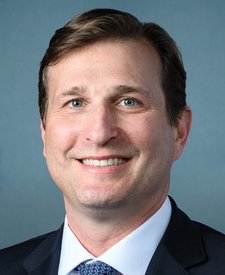
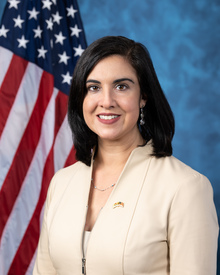
Legislative Progress
In CommitteeMr. Keating (for himself, Ms. Malliotakis, and Mr. Goldman of …
Referred to the Committee on Foreign Affairs, and in addition …
Introduced in House
Stakeholder Effects
cui bono?How this legislation distributes effects. Mention counts reflect frequency, not effect magnitude.
American Spaces staff, Director of National Intelligence staff, Homeland Security cyber staff
Positive-direction: NATO partner governments, President of the United States, Western Balkans democratic institutions, Western Balkans judicial institutions, Western Balkans law enforcement agencies
Negative-direction: American Spaces staff, Director of National Intelligence staff, Homeland Security cyber staff, Peace Corps Director, Sanctioned Western Balkans officials, State Department analysts, State Department cyber staff, State Department education program staff, State Department program staff, State Department public diplomacy staff, State Department sanctions staff, USAID administrators, United States mission staff
At-risk youth, United States universities, Western Balkans universities
Chinese malign influence networks, Russian malign influence networks
NATO ally cybersecurity offices, Western Balkans cyber agencies
Pluralistic democracy advocates, Western Balkans democratic reformers
Western Balkans independent media organizations
Bill Structure & Actor Mappings
Who is "The Secretary" in each section?
We use a combination of our own taxonomy and classification in addition to large language models to assess meaning and potential beneficiaries. High confidence means strong textual evidence. Always verify with the original bill text.
Learn more about our methodology