Strengthening Wildfire Resiliency Through Satellites Act of 2025
Summary
What This Bill Does
The Strengthening Wildfire Resiliency Through Satellites Act creates a competitive wildfire satellite-monitoring grant program at the Department of the Interior, acting through the Director of the United States Geological Survey. Within one year of enactment, the Secretary must make at least three grants to eligible entities, which are state foresters, emergency managers, or equivalent state officials. Grant recipients may use funds only to buy and integrate, through public-private partnerships, high-resolution multispectral and hyperspectral full-spectrum imaging from visible, near-infrared, shortwave infrared, thermal infrared, and radar data from latest-generation wildfire monitoring satellites, and to use that data to detect, assess, respond to, and manage wildfires. The bill emphasizes active fire behavior, burned area, intensity, severity, prescribed-fire safety and effectiveness, post-fire risk assessment, and disaster recovery. Interior must report to Congress after the second fiscal year on applications, awards, prevention impact, long-term program recommendations, and effectiveness. It authorizes $20 million for each of fiscal years 2026 through 2028.
Who Benefits and How
State foresters benefit from federal grants to purchase and integrate high-resolution wildfire satellite monitoring capabilities. State emergency managers benefit from better active-fire behavior, burned-area, intensity, and severity data during wildfire response. Satellite imagery providers benefit from public-private partnerships to supply multispectral, hyperspectral, thermal, and radar wildfire data. Communities in wildfire-prone areas benefit from improved detection, prescribed-fire safety, post-fire risk assessment, and disaster recovery information.
Who Bears the Burden and How
United States Geological Survey staff must administer the competitive grant program and report to Congress. Interior Department grant managers must review applications, make at least three awards, and evaluate program effectiveness. Federal taxpayers fund $20 million annually for fiscal years 2026 through 2028. State grant recipients must integrate satellite data and use it only for the wildfire monitoring purposes listed in the bill.
Key Provisions
- Creates an Interior Department competitive grant program for wildfire satellite monitoring.
- Authorizes at least three grants to state foresters, emergency managers, or equivalent state officials.
- Funds high-resolution visible, infrared, thermal, and radar satellite imaging through public-private partnerships.
- Requires use of the data for wildfire detection, response, prescribed-fire safety, post-fire risk, and disaster recovery.
- Appropriates $20 million annually for fiscal years 2026 through 2028.
Evidence Chain:
This summary is generated from the full bill text using AI analysis. Expand "Detailed Analysis" below for identified beneficiaries/burden bearers with clause-level evidence links.
At a Glance
What This Bill Does
Authorizes $20 million annually for fiscal years 2026 through 2028 for at least three Interior Department grants to state officials that use high-resolution satellite data to detect, assess, respond to, and manage wildfires.
Key Policy Areas
Wildfire, Remote Sensing, Appropriations
Primary Purpose
Authorizes $20 million annually for fiscal years 2026 through 2028 for at least three Interior Department grants to state officials that use high-resolution satellite data to detect, assess, respond to, and manage wildfires.
Policy Domains
Resolution provisions
Identified Gains
- State foresters
- State emergency managers
- Satellite imagery providers
- Communities in wildfire-prone areas
Identified Costs
- United States Geological Survey staff
- Interior Department grant managers
- Federal taxpayers
- State grant recipients
Sponsors


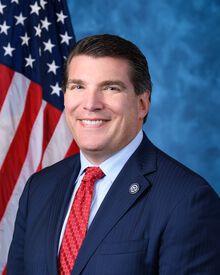
Legislative Progress
In CommitteeMs. Pettersen (for herself and Mr. Obernolte) introduced the following …
Referred to the House Committee on Natural Resources.
Introduced in House
Stakeholder Effects
cui bono?How this legislation distributes effects. Mention counts reflect frequency, not effect magnitude.
Bill Structure & Actor Mappings
Who is "The Secretary" in each section?
We use a combination of our own taxonomy and classification in addition to large language models to assess meaning and potential beneficiaries. High confidence means strong textual evidence. Always verify with the original bill text.
Learn more about our methodology