FAIR Trucking Act
Summary
What This Bill Does
The FAIR Trucking Act creates a new federal-court jurisdiction path for major interstate trucking crash cases. It amends 28 U.S.C. 1332 so district courts have original jurisdiction over civil actions alleging bodily harm or loss of life involving one or more commercial motor vehicles operating on a public road in interstate commerce, if the amount in controversy exceeds $5 million and the parties satisfy diversity or foreign-party citizenship requirements. The bill specifies when plaintiff citizenship is measured and treats unincorporated associations as citizens of both their principal-place-of-business state and their organizing state. The practical effect is to let large trucking-accident cases move into federal court more predictably when they involve interstate carriers and interstate or foreign-party diversity.
Who Benefits and How
Interstate motor carriers benefit because large crash lawsuits can be heard in federal court under a specific trucking-jurisdiction rule. Trucking insurers benefit from a more predictable forum for high-value bodily injury or wrongful-death claims. Commercial vehicle defendants benefit when diversity and amount-in-controversy requirements support federal jurisdiction. Federal district judges benefit from clearer statutory authority over qualifying trucking crash cases.
Who Bears the Burden and How
Highway crash plaintiffs may lose a preferred state-court forum when their claims meet the federal trucking jurisdiction test. State trial courts lose jurisdiction over some high-value interstate trucking crash cases. Federal district court clerks must docket and administer more qualifying motor-carrier crash suits. Plaintiff attorneys must litigate more of these claims under federal procedure and federal scheduling rules.
Key Provisions
- Creates federal original jurisdiction for qualifying interstate commercial motor vehicle crash lawsuits.
- Requires bodily harm or loss of life, public-road interstate commerce, and more than $5 million in controversy.
- Requires diversity or foreign-party citizenship for the federal jurisdiction path.
- Defines citizenship timing for plaintiffs and citizenship treatment for unincorporated associations.
Evidence Chain:
This summary is generated from the full bill text using AI analysis. Expand "Detailed Analysis" below for identified beneficiaries/burden bearers with clause-level evidence links.
At a Glance
What This Bill Does
Gives federal district courts original jurisdiction over high-value interstate trucking crash lawsuits involving bodily harm or death, commercial motor vehicles on public roads, more than $5 million in controversy, and diversity or foreign-party citizenship.
Key Policy Areas
Transportation, Civil Litigation, Trucking
Primary Purpose
Gives federal district courts original jurisdiction over high-value interstate trucking crash lawsuits involving bodily harm or death, commercial motor vehicles on public roads, more than $5 million in controversy, and diversity or foreign-party citizenship.
Policy Domains
Resolution provisions
Identified Gains
- Interstate motor carriers
- Trucking insurers
- Commercial vehicle defendants
- Federal district judges
Identified Costs
- Highway crash plaintiffs
- State trial courts
- Federal district court clerks
- Plaintiff attorneys
Sponsors




Legislative Progress
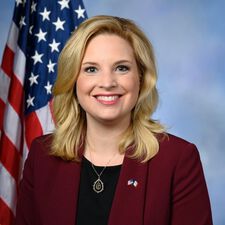
In CommitteeMrs. Hinson (for herself and Mr. Barrett) introduced the following …
Referred to the House Committee on the Judiciary.
Introduced in House
Stakeholder Effects
cui bono?How this legislation distributes effects. Mention counts reflect frequency, not effect magnitude.
Bill Structure & Actor Mappings
Who is "The Secretary" in each section?
We use a combination of our own taxonomy and classification in addition to large language models to assess meaning and potential beneficiaries. High confidence means strong textual evidence. Always verify with the original bill text.
Learn more about our methodology