American Franchise Act
Summary
What This Bill Does
The American Franchise Act creates a statutory joint-employer rule for franchise businesses. The findings describe franchising as a model with independent franchisees operating under shared brand standards, citing roughly $825 billion in economic output and about 8.4 million workers in 2022. The operative sections amend the National Labor Relations Act and Fair Labor Standards Act. A franchisor may be treated as a joint employer only if it possesses and exercises substantial direct and immediate control over one or more essential terms and conditions of employment. Essential terms are wages, benefits, hours, hiring, discharge, discipline, supervision, and direction. Direct and immediate control excludes ordinary franchise brand standards, operating hours, service-level staffing standards, basic hiring standards for law, safety, or brand protection, reporting misconduct to franchisees, opinions, training materials, minimum training requirements, and tools or resources offered to franchisees. Substantial control must be regular, continuous, and consequential rather than sporadic, isolated, or de minimis. The FLSA joint-employer test is tied to the same NLRA criteria.
Who Benefits and How
Franchise employer organizations benefit because brand standards, training materials, and ordinary franchise support do not by themselves create joint-employer liability. Franchise small business owners benefit because the bill reinforces their status as independent employers responsible for their own employment decisions. Franchise investment organizations benefit from a narrower and more predictable labor-liability standard across NLRA and FLSA claims. Restaurant brand organizations benefit because they can protect service quality and trademarks without automatically assuming employment liability.
Who Bears the Burden and How
Franchise workers bear the burden because the bill makes it harder to hold franchisors responsible for wages, hours, discipline, or working conditions. Labor unions lose leverage in organizing or bargaining strategies that depend on broader joint-employer theories. National Labor Relations Board staff must apply a narrower statutory test for franchise joint-employer findings. Wage and Hour Division investigators must use the NLRA-derived criteria for FLSA franchise joint-employer analysis.
Key Provisions
- Defines essential employment terms as wages, benefits, hours, hiring, discharge, discipline, supervision, and direction.
- Requires substantial direct and immediate control before a franchisor can be treated as a joint employer.
- Excludes brand standards, training materials, operating hours, basic safety or legal hiring standards, and franchise-support resources from direct control.
- Applies the same franchise joint-employer criteria to National Labor Relations Act and Fair Labor Standards Act analysis.
- Protects franchisors from liability based on sporadic, isolated, or de minimis involvement.
Evidence Chain:
This summary is generated from the full bill text using AI analysis. Expand "Detailed Analysis" below for identified beneficiaries/burden bearers with clause-level evidence links.
At a Glance
What This Bill Does
Narrows joint-employer liability for franchisors under the National Labor Relations Act and Fair Labor Standards Act by requiring substantial direct and immediate control over essential employment terms.
Key Policy Areas
Labor, Franchising, Business Regulation
Primary Purpose
Narrows joint-employer liability for franchisors under the National Labor Relations Act and Fair Labor Standards Act by requiring substantial direct and immediate control over essential employment terms.
Policy Domains
Resolution provisions
Identified Gains
- Franchise employer organizations
- Franchise small business owners
- Franchise investment organizations
- Restaurant brand organizations
Identified Costs
- Franchise workers
- Labor unions
- National Labor Relations Board staff
- Wage and Hour Division investigators
Sponsors



Legislative Progress
ReportedOrdered to be Reported (Amended) by the Yeas and Nays: …
Committee Consideration and Mark-up Session Held
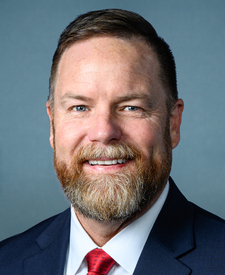
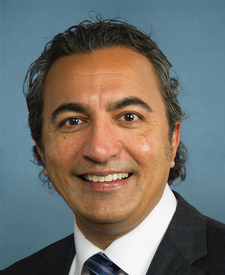
Mr. Hern of Oklahoma (for himself, Mr. Davis of North …
Referred to the House Committee on Education and Workforce.
Introduced in House
Stakeholder Effects
cui bono?How this legislation distributes effects. Mention counts reflect frequency, not effect magnitude.
National Labor Relations Board staff, Wage and Hour Division investigators
Bill Structure & Actor Mappings
Who is "The Secretary" in each section?
We use a combination of our own taxonomy and classification in addition to large language models to assess meaning and potential beneficiaries. High confidence means strong textual evidence. Always verify with the original bill text.
Learn more about our methodology