PROFIT Act of 2026
Summary
What This Bill Does
The PROFIT Act reorganizes economic diplomacy inside the Department of State. It creates an Under Secretary of State for Economic Growth, Energy, and the Environment and assigns that office responsibility for international economic policy, commercial expansion, energy exports, critical minerals, emerging technology standards, civil and commercial space policy, natural-resource protection, and sanctions policy. It also moves administration of the CHIPS Act International Technology Security and Innovation Fund under that under secretary.
The bill creates or redesignates several State Department offices. It establishes an Assistant Secretary and Bureau for Sanctions Policy, creates a Chief Economist and Office of the Chief Economist, replaces the existing economic and business affairs office with an Assistant Secretary and Bureau for Economic and Business Affairs, creates an Office of Subnational Diplomacy for work with state and local governments, creates an Assistant Secretary and Bureau for Energy Security and Diplomacy, and creates an Assistant Secretary and Bureau for Water, Environment, and Space Affairs. It also directs staffing rules for economic-affairs offices, updates statutory references to old office names, and allows Department of Energy or national-laboratory personnel to serve as energy advisers in embassies and other diplomatic missions.
Who Benefits and How
United States exporters, investors, and private sector companies benefit because the bill makes commercial advocacy, foreign market access, investment promotion, and contract support explicit State Department responsibilities. United States energy exporters and critical minerals companies gain dedicated diplomatic support for energy-security policy, international energy markets, and supply-chain diversification. Semiconductor and technology companies benefit from clearer State Department oversight of the International Technology Security and Innovation Fund. State governments, city governments, and municipal economic-development offices receive a dedicated Office of Subnational Diplomacy to help attract foreign direct investment, host international events, and assess foreign malign influence risks. United States commercial space companies, fisheries, maritime operators, and conservation organizations receive a clearer diplomatic bureau for space, oceans, fisheries, and environmental negotiations. Civil service employees with economic, legal, policy, and technical expertise gain expanded opportunities to fill director, deputy director, and special-assistant roles in economic-affairs offices.
Who Bears the Burden and How
The Secretary of State, the new Under Secretary, State Department bureaus, and State Department economic-affairs staff must implement the reorganization, coordinate new policy responsibilities, manage reports to Congress, and administer new office structures. Federal taxpayers bear the cost of funding the new offices and the appropriations directed to economic affairs, commercial diplomacy, sanctions policy, water and space affairs, and energy diplomacy. Foreign governments, sanctioned individuals, illicit finance networks, and people targeted for human-rights visa sanctions face higher enforcement exposure from the new sanctions-policy bureau. Foreign malign influence operators face more scrutiny from subnational-diplomacy support to state and local officials. Foreign Service officers may face tighter access to some economic-affairs director and deputy director jobs because the bill generally reserves those positions for civil service officers and caps Foreign Service appointments during the phase-in period. The Office of Law Revision Counsel receives classification and editorial-note duties for the new title 22 provisions.
Key Provisions
- Creates an Under Secretary of State for Economic Growth, Energy, and the Environment with authority over economic growth, commercial expansion, energy, technology, critical minerals, space, natural resources, and sanctions policy.
- Amends the CHIPS Act to place the International Technology Security and Innovation Fund under the new under secretary within the State Department.
- Establishes an Assistant Secretary and Bureau for Sanctions Policy to coordinate sanctions strategy, enforcement, foreign-partner coordination, and visa sanctions related to human rights violations.
- Creates a Chief Economist and Office of the Chief Economist to analyze supply-chain resilience, critical minerals, economic coercion, sanctions evasion, and market-access issues for State Department leaders.
- Establishes commercial diplomacy and subnational diplomacy offices to help United States businesses win foreign contracts, attract investment, and help state and local governments manage foreign engagement risks.
- Creates energy-security, water, environment, and space affairs offices to coordinate international energy policy, critical minerals, oceans, fisheries, Antarctica, conservation, and commercial space diplomacy.
- Requires a 180-day report to Congress on recruiting and retaining economic, policy, legal, and technical expertise in State Department civil-service roles.
- Authorizes Department of Energy and national-laboratory personnel to serve as energy advisers in United States embassies and diplomatic missions.
Evidence Chain:
This summary is generated from the full bill text using AI analysis. Expand "Detailed Analysis" below for identified beneficiaries/burden bearers with clause-level evidence links.
At a Glance
What This Bill Does
The bill reorganizes the State Department's economic-affairs structure by creating or renaming senior offices for economic growth, sanctions policy, commercial diplomacy, energy security, water and space affairs, and economic analysis, while shifting technology-security fund oversight and energy-advisor authorities into that structure.
Key Policy Areas
Foreign Affairs, Trade, Energy, Technology, Environment
Primary Purpose
The bill reorganizes the State Department's economic-affairs structure by creating or renaming senior offices for economic growth, sanctions policy, commercial diplomacy, energy security, water and space affairs, and economic analysis, while shifting technology-security fund oversight and energy-advisor authorities into that structure.
Policy Domains
Section 13 and section 931 - Department of Energy personnel in diplomatic missions
Identified Gains
Contextual inference, no direct clause citation- Department of Energy personnel assigned to embassies
- National laboratory energy experts
- United States embassy economic officers
Contextual inference, no direct clause citation
Identified Costs
Contextual inference, no direct clause citation- Secretary of Energy and Department of Energy managers
- Secretary of State and embassy administrators
Contextual inference, no direct clause citation
Sections 3-12 - State Department economic-affairs reorganization
Identified Gains
- United States exporters and contractors seeking foreign market access
- United States energy exporters
- United States critical minerals companies
- Semiconductor and technology manufacturers eligible for technology-security fund support
- State governments and city governments seeking foreign direct investment
- Civil service employees with economic and technical expertise at the Department of State
- United States commercial space companies
- United States fisheries and maritime operators
Identified Costs
- Secretary of State and State Department economic-affairs staff
- Federal taxpayers funding new State Department offices
- Foreign governments subject to United States sanctions coordination
- Individuals targeted for human-rights visa sanctions
- Illicit finance and sanctions-evasion networks
- Foreign malign influence operators engaging state and local governments
- Foreign Service officers seeking economic-affairs director positions
- Office of Law Revision Counsel staff
Sponsors
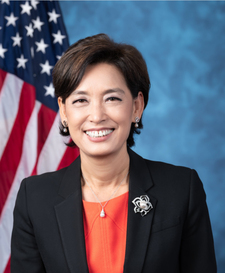
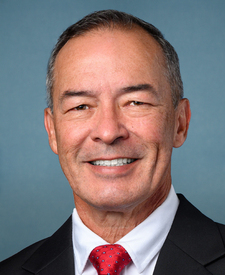
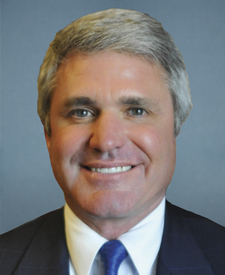
Legislative Progress
ReportedReceived in the Senate and Read twice and referred to …
Received; read twice and referred to the Committee on Foreign …
Motion to reconsider laid on the table Agreed to without …
On motion to suspend the rules and pass the bill, …
Passed/agreed to in House: On motion to suspend the rules …
DEBATE - The House proceeded with forty minutes of debate …
Considered under suspension of the rules. (consideration: CR H3970-3974)
Mr. Mast moved to suspend the rules and pass the …
Ordered to be Reported (Amended) by the Yeas and Nays: …
Committee Consideration and Mark-up Session Held
Stakeholder Effects
cui bono?How this legislation distributes effects. Mention counts reflect frequency, not effect magnitude.
Assistant Secretary for Sanctions Policy, Assistant Secretary for Water, Environment, and Space Affairs, Bureau for Water, Environment, and Space Affairs
Bureau of Energy Security and Diplomacy, Office of the Chief Economist face effects in multiple directions
Positive-direction: Bureau of Commercial Diplomacy, Bureau of Sanctions Policy, Bureau of Water, Environment, and Space Affairs, City governments seeking foreign investment, Civil service employees at the Department of State, Department of Energy personnel assigned to embassies, Municipal economic-development offices, State Department Under Secretary for Economic Affairs, State Department leadership, State Department policy leadership, State governments seeking foreign investment, United States embassy economic officers
Negative-direction: Bureau for Water, Environment, and Space Affairs, Federal budget, Foreign Service officers seeking economic-affairs director positions, Foreign governments subject to United States sanctions coordination, Foreign malign influence operators, Office of Law Revision Counsel staff, Secretary of State and State Department hiring managers, State Department sanctions-policy staff, State Department technology-security staff, State Department trade-promotion bureau staff
Critical minerals companies, Critical minerals mining companies, Critical minerals supply chain companies
US businesses affected by sanctions regimes, US businesses engaged in international trade, US businesses facing economic coercion abroad
Development finance institutions, Foreign investors in the US, Foreign investors targeting US localities
Positive-direction: Development finance institutions, Foreign investors in the US, Foreign investors targeting US localities
Negative-direction: Illicit finance networks, Sanctions-evasion networks
Foreign entities subject to US sanctions, Foreign governments and entities subject to US sanctions, Foreign governments conducting malign influence operations
Positive-direction: US allies and partners
Negative-direction: Foreign entities subject to US sanctions, Foreign governments and entities subject to US sanctions, Foreign governments conducting malign influence operations
US commercial space industry, United States commercial space companies
US fishing industry, United States fishing industry
US maritime shipping companies, United States maritime shipping companies
Bill Structure & Actor Mappings
Who is "The Secretary" in each section?
- "Secretary"
- → Secretary of State
- "Department"
- → Department of State
- "the Secretary"
- → Secretary of State
- "the Under Secretary"
- → Under Secretary of State for Economic Growth, Energy, and the Environment
- "the Assistant Secretary"
- → The relevant assistant secretary created or redesignated in the section
- "Secretary of State"
- → Secretary of State
- "Secretary of Energy"
- → Secretary of Energy
Key Definitions
Terms defined in this bill
Department means the Department of State, and Secretary means the Secretary of State.
The House Foreign Affairs and Appropriations Committees and the Senate Foreign Relations and Appropriations Committees.
We use a combination of our own taxonomy and classification in addition to large language models to assess meaning and potential beneficiaries. High confidence means strong textual evidence. Always verify with the original bill text.
Learn more about our methodology