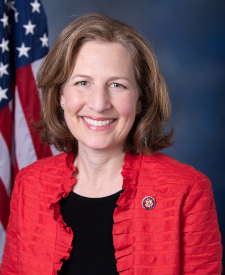
HR5234-119

In Committee

Local School Foods Expansion Act of 2025

119th Congress Introduced Sep 9, 2025

Summary

What This Bill Does

The Local School Foods Expansion Act of 2025 amends the Richard B. Russell National School Lunch Act to turn a pilot project for unprocessed fruit and vegetable procurement into a program for domestically grown unprocessed fruits and vegetables. It increases the number of participating states from 8 to 14 and changes selection criteria so USDA considers state commitments to small, local, socially disadvantaged, and Tribal agricultural producers, traditional foods, and service to a high proportion of children from socially disadvantaged backgrounds.

The bill expands recordkeeping, reporting, and evaluation. USDA must evaluate program impacts within two years, including the quantity and cost of procured fruits and vegetables, benefits to school food service, benefits to agricultural producers and regional food systems, participation by small, local, socially disadvantaged, and Tribal producers, and effects on children served. The bill also expands technical assistance and outreach for vendors, school food authorities, regional food hubs, state and local agencies, Indian Tribal organizations, agricultural producers, socially disadvantaged farmers, and other participants.

The bill authorizes $50 million for each of fiscal years 2026 through 2030. Each year, $10 million is reserved for participating states' administrative costs, coordination, technical assistance, and outreach, with each selected state receiving at least $500,000 while it participates. If fewer than 14 states participate, $1 million is reserved for technical assistance to states seeking eligibility.

Who Benefits and How

State child nutrition agencies and school food authorities benefit from expanded funding and technical assistance to buy domestically grown unprocessed fruits and vegetables. Small farmers, local farmers, socially disadvantaged farmers, Tribal agricultural producers, regional food hubs, and vendors benefit from procurement opportunities and outreach to help them participate. Students, especially children from socially disadvantaged backgrounds, benefit from school meals using more domestically grown fruits, vegetables, and traditional foods.

Who Bears the Burden and How

USDA Food and Nutrition Service staff must administer a larger program, choose states, evaluate impacts, reserve funds, and provide technical assistance. Participating states must manage procurement, recordkeeping, reporting, vendor certification, coordination among agencies, and outreach. Vendors and producers seeking to participate may need to satisfy certification and program requirements.

Key Provisions

  • Expands the fruit and vegetable procurement pilot into a program for domestically grown unprocessed fruits and vegetables.
  • Expands participating states from 8 to 14.
  • Adds selection criteria for state support of small, local, socially disadvantaged, and Tribal agricultural producers and children from socially disadvantaged backgrounds.
  • Requires USDA to evaluate procurement quantities, costs, school food service benefits, producer participation, regional food-system effects, and effects on children served.
  • Authorizes $50 million per year for fiscal years 2026 through 2030.
  • Directs $10 million per year for participating-state administrative costs, coordination, technical assistance, and outreach, with a $500,000 state minimum.
  • Provides $1 million for technical assistance to nonparticipating states when fewer than 14 states participate.

Evidence Chain:

This summary is generated from the full bill text using AI analysis. Expand "Detailed Analysis" below for identified beneficiaries/burden bearers with clause-level evidence links.

At a Glance

What This Bill Does

Expands the school-food procurement program for domestically grown unprocessed fruits and vegetables from a pilot to a larger permanent program, increases participating states, adds selection criteria for local, socially disadvantaged, and Tribal producers and disadvantaged children, requires evaluation, and authorizes $50 million annually for fiscal years 2026 through 2030 with reserved administrative and technical-assistance funding.

Key Policy Areas

Child Nutrition, Agriculture, School Food, Federal Grants

Primary Purpose

Expands the school-food procurement program for domestically grown unprocessed fruits and vegetables from a pilot to a larger permanent program, increases participating states, adds selection criteria for local, socially disadvantaged, and Tribal producers and disadvantaged children, requires evaluation, and authorizes $50 million annually for fiscal years 2026 through 2030 with reserved administrative and technical-assistance funding.

Policy Domains

Child Nutrition Agriculture School Food Federal Grants

Section 2 domestically grown fruit and vegetable procurement program

Identified Gains
  • State child nutrition agencies
  • School food authorities
  • Small local farmers
  • Socially disadvantaged farmers
  • Tribal agricultural producers
Model: codex-gpt-5 | Version: bill_summary_v2 | Source: ih
Small local farmers:
School food authorities:
Tribal agricultural producers:
Socially disadvantaged farmers:
State child nutrition agencies:
Identified Costs
  • USDA Food and Nutrition Service administrators
  • Participating state procurement offices
  • Food vendors seeking program certification
Model: codex-gpt-5 | Version: bill_summary_v2 | Source: ih
Participating state procurement offices:
Food vendors seeking program certification:
USDA Food and Nutrition Service administrators:

Legislative Progress

In Committee
Introduced Committee Passed
Sep 9, 2025

Ms. Jayapal (for herself, Ms. Norton, and Mr. Smith of …

Sep 9, 2025

Referred to the House Committee on Education and Workforce.

Sep 9, 2025

Introduced in House

Stakeholder Effects

cui bono?

How this legislation distributes effects. Mention counts reflect frequency, not effect magnitude.

Agriculture
3 mentions across 1 clause
+3 positive

Small local farmers, Socially disadvantaged farmers, Tribal agricultural producers

State & Local Government
1 mention across 1 clause
+1 positive

State child nutrition agencies

Education
1 mention across 1 clause
+1 positive

School food authorities

Government
1 mention across 1 clause
-1 negative

USDA Food and Nutrition Service administrators

1/2
sections analyzed
Full impact breakdown

Bill Structure & Actor Mappings

Who is "The Secretary" in each section?

Domains
Child Nutrition Agriculture School Food Federal Grants
Actor Mappings
"state"
→ State selected for the school food procurement program
"secretary"
→ Secretary of Agriculture
"tribal_producer"
→ Tribal agricultural producer
"school_food_authority"
→ School food authority
"socially_disadvantaged_farmer"
→ Socially disadvantaged farmer

Key Definitions

Terms defined in this bill

2 terms
"domestically grown unprocessed fruits and vegetables program" §2(f)

The amended National School Lunch Act program for state procurement of domestically grown unprocessed fruits and vegetables for school food service.

"technical assistance reserve" §2(f)(10)

$10 million per fiscal year reserved for participating states' administrative costs, coordination, technical assistance, and outreach, plus conditional $1 million support for nonparticipating states.

We use a combination of our own taxonomy and classification in addition to large language models to assess meaning and potential beneficiaries. High confidence means strong textual evidence. Always verify with the original bill text.

Learn more about our methodology