PART Act
Summary
What This Bill Does
The PART Act targets catalytic converter theft by combining vehicle-part marking, public VIN-stamping grants, seller-record requirements, and criminal penalties. It defines catalytic converters to include ordinary emissions converters, diesel oxidation catalysts, and diesel particulate filters. Within 180 days, NHTSA must revise the motor vehicle theft prevention standard to include catalytic converters and apply those marking requirements to vehicles covered by part 565, with unsold vehicles becoming subject six months after the rule update. The identifying number may be a unique part number in a law-enforcement-accessible database tied to the full VIN. DOT must also create grants for law enforcement agencies, auto dealers, centrally maintained vehicle fleets, repair shops, service centers, and nonprofits to die- or pin-stamp the VIN or unique part number on catalytic converters, in typed font, with high-visibility high-heat theft-deterrence paint, prioritizing high-theft areas and fleets subject to the new standard. Salvage, dismantling, recycling, and repair businesses dealing in motor vehicle parts containing precious metals must keep seller identification, vehicle make, model, VIN or part ID, and purchase date for at least two years. The bill makes catalytic converter theft or knowing purchase for interstate or foreign commerce a federal crime punishable by fine, up to five years imprisonment, or both.
Who Benefits and How
Consumers owning vehicles benefit because catalytic converters on new vehicles and voluntarily stamped vehicles become easier for police to trace after theft. Law enforcement agencies benefit from VIN and unique-part databases, public stamping grants, and a specific federal theft offense. Auto repair workers benefit from grant support for converter stamping services at shops, service centers, and public events. Auto insurers benefit if theft deterrence and traceability reduce catalytic converter theft claims.
Who Bears the Burden and How
Automobile manufacturers must add catalytic converters to theft-prevention marking requirements for covered vehicles. Vehicle recycling workers must retain seller ID, vehicle information, part identification, and purchase records for at least two years. Catalytic converter thieves and knowing downstream buyers face federal fines and up to five years imprisonment. NHTSA and DOT staff must update regulations, run grants, prioritize high-theft areas, and oversee public stamping services.
Key Provisions
- Requires NHTSA to add catalytic converters to the motor vehicle theft prevention marking standard within 180 days.
- Creates DOT grants for VIN or unique-part stamping, law-enforcement-accessible databases, and high-visibility theft-deterrence paint.
- Requires salvage, dismantling, recycling, and repair businesses to retain seller and vehicle records for at least two years.
- Creates a federal catalytic converter theft and knowing-purchase offense with up to five years imprisonment.
- Defines catalytic converters to include diesel oxidation catalysts and diesel particulate filters.
Evidence Chain:
This summary is generated from the full bill text using AI analysis. Expand "Detailed Analysis" below for identified beneficiaries/burden bearers with clause-level evidence links.
At a Glance
What This Bill Does
Requires catalytic converters on new vehicles to receive theft-prevention identifying numbers, creates DOT grants for VIN or unique-part stamping with high-visibility paint, requires salvage and recycling businesses to retain seller records, and creates a federal catalytic-converter theft offense with up to five years imprisonment.
Key Policy Areas
Transportation, Auto Theft, Criminal Justice
Primary Purpose
Requires catalytic converters on new vehicles to receive theft-prevention identifying numbers, creates DOT grants for VIN or unique-part stamping with high-visibility paint, requires salvage and recycling businesses to retain seller records, and creates a federal catalytic-converter theft offense with up to five years imprisonment.
Policy Domains
Resolution provisions
Identified Gains
- Consumers owning vehicles
- Law enforcement agencies
- Auto repair workers
- Auto insurers
Identified Costs
- Automobile manufacturers
- Vehicle recycling workers
- Catalytic converter thieves
- NHTSA staff
Sponsors
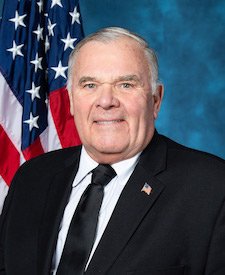




Legislative Progress
In CommitteeForwarded by Subcommittee to Full Committee by Voice Vote.
Subcommittee Consideration and Mark-up Session Held
Referred to the Subcommittee on Highways and Transit.
Mr. Baird (for himself, Ms. McCollum, Mrs. Dingell, Ms. Craig, …
Referred to the Subcommittee on Commerce, Manufacturing, and Trade.
Referred to the Committee on Energy and Commerce, and in …
Introduced in House
Stakeholder Effects
cui bono?How this legislation distributes effects. Mention counts reflect frequency, not effect magnitude.
Auto repair workers, Automobile manufacturers, Vehicle recycling workers
Positive-direction: Auto repair workers
Negative-direction: Automobile manufacturers, Vehicle recycling workers
Bill Structure & Actor Mappings
Who is "The Secretary" in each section?
We use a combination of our own taxonomy and classification in addition to large language models to assess meaning and potential beneficiaries. High confidence means strong textual evidence. Always verify with the original bill text.
Learn more about our methodology