To address maternity care shortages and promote optimal maternity outcomes by expanding access to birth centers and exploring more effective payment models for birth center care, and for other purposes.
Analysis under review: This bill has generated analysis that may be too generic or incomplete. Clause-level evidence remains available below.
Summary
What This Bill Does
This bill, To address maternity care shortages and promote optimal maternity outcomes by expanding access to birth centers and exploring more effective payment models for birth center care, and for other purposes., changes federal law or congressional policy affecting health care providers and patients. The main policy domain is Healthcare, Transportation, Government Operations.
Who Benefits and How
health care providers and patients may benefit from new authority, funding, eligibility, regulatory clarity, or reduced risk created by the bill.
Who Bears the Burden and How
federal implementing agencies, health care providers and patients may take on implementation duties, reporting obligations, compliance costs, or oversight responsibilities.
Key Provisions
- Section HD2710CE65CF048B087F1D50DF8B839E8: 1. Short title This Act may be cited as the Better Availability of Birth Centers Improves Outcomes and Expands Savings Act or the BABIES Act.
- Section H6C5605CE8DA14EEB950BA556E145AF67: 2. Grants to improve access to freestanding birth center services Part P of title III of the Public Health Service Act (42 U.S.C. 280g et seq.) is amended by...
- Section HA339BE7ABE7E4FF3980E24F23679BEFC: 399V–8. Strong start birth center grants to assist birth centers with start-up or expansion costs to expand access to birth center services in underserved...
- Section H7879F19B53674A1EBDFCD896F3BCE548: 3. Medicaid demonstration program to improve freestanding birth center services Section 1903 of the Social Security Act (42 U.S.C. 1396b) is amended by adding...
Evidence Chain:
This summary is generated from the full bill text using AI analysis. Expand "Detailed Analysis" below for identified beneficiaries/burden bearers with clause-level evidence links.
At a Glance
What This Bill Does
This bill, To address maternity care shortages and promote optimal maternity outcomes by expanding access to birth centers and exploring more effective payment models for birth center care, and for other purposes., changes federal law or congressional policy affecting health care providers and patients.
Key Policy Areas
Healthcare, Transportation, Government Operations
Primary Purpose
This bill, To address maternity care shortages and promote optimal maternity outcomes by expanding access to birth centers and exploring more effective payment models for birth center care, and for other purposes., changes federal law or congressional policy affecting health care providers and patients.
Policy Domains
Whole bill
Identified Gains
- health care providers and patients
Identified Costs
- federal implementing agencies
- health care providers and patients
Sponsors

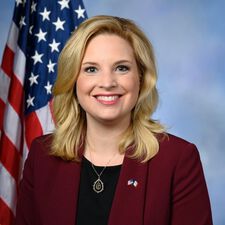
Legislative Progress
IntroducedMs. Morrison (for herself and Mrs. Hinson) introduced the following …
Stakeholder Effects
cui bono?How this legislation distributes effects. Mention counts reflect frequency, not effect magnitude.
Freestanding birth centers, Freestanding birth centers in underserved areas
Medicaid-eligible pregnant women with low-risk pregnancies, Pregnant women in maternity care deserts, Pregnant women in maternity care shortage areas
Health Resources and Services Administration, State Medicaid programs
Commission for the Accreditation of Birth Centers, Hospital obstetrical care units
Positive-direction: Commission for the Accreditation of Birth Centers
Negative-direction: Hospital obstetrical care units
Certified nurse-midwives and licensed midwives
Bill Structure & Actor Mappings
Who is "The Secretary" in each section?
- "the_secretary"
- → The Secretary identified in the operative section
- "the_commission"
- → The commission identified in the operative section
- "the_administrator"
- → The Administrator identified in the operative section
We use a combination of our own taxonomy and classification in addition to large language models to assess meaning and potential beneficiaries. High confidence means strong textual evidence. Always verify with the original bill text.
Learn more about our methodology