SOAR Act Improvements Act
Summary
What This Bill Does
This bill amends the Scholarships for Opportunity and Results Act, which supports the District of Columbia Opportunity Scholarship Program. It allows grants to run for five years and permits renewals for an additional period of up to five years without a new competitive process when continuity is appropriate. It changes geographic language from the District of Columbia to the Washington metropolitan region, defined to include D.C., Montgomery and Prince George's Counties in Maryland, and Arlington County, Fairfax County, Alexandria, and Falls Church in Virginia.
The bill updates participating-school rules. Existing participating schools must be recognized by a national or regional accrediting body or an accrediting body cited by ICE's Student and Visitor Exchange English Language Program. New participating schools must become fully accredited within five years after pursuing participation. The bill expands scholarship use from kindergarten to pre-kindergarten, gives the eligible entity sole authority to set a scholarship maximum below the statutory cap, adds tutoring expenses for participating students needing academic help, and prioritizes students from the lowest-performing D.C. schools if tutoring funds are insufficient. It increases parent assistance and student academic assistance funds from $2 million to $2.2 million and changes IES evaluation and reporting requirements.
Who Benefits and How
Opportunity Scholarship Program families benefit because scholarship use expands to pre-kindergarten and tutoring expenses. Participating private schools in the Washington metropolitan region benefit because the eligible school geography expands beyond D.C. Existing participating schools benefit from recognition of certain accrediting bodies tied to the ICE Student and Visitor Exchange English Language Program. Students from the lowest-performing D.C. schools benefit from priority when tutoring funds are insufficient. The eligible program entity benefits from sole authority to set a scholarship maximum below the statutory cap and from longer grant continuity. IES researchers benefit from a clearer seven-year evaluation cycle.
Who Bears the Burden and How
New participating schools must obtain full accreditation within five years after pursuing participation. Existing participating schools must maintain recognition by an approved accrediting body. The eligible entity must administer scholarship limits, tutoring priorities, parent-assistance funds, school-violence reports, suspension reports, and expulsion reports. The Department of Education and IES must carry out rigorous evaluations, publish reports by January 1, 2027 and every seven years, and disseminate results. D.C. public schools and charter schools may be used as comparison groups, which can create data-sharing and evaluation burden.
Key Provisions
- Extends SOAR grant duration to five years and authorizes noncompetitive renewals for up to five additional years.
- Expands program geography to the Washington metropolitan region.
- Requires accreditation recognition for existing schools and full accreditation within five years for new participating schools.
- Adds pre-kindergarten and tutoring expenses to allowable scholarship uses.
- Provides $2.2 million for parent assistance and student academic assistance.
- Requires IES evaluations and public reports beginning January 1, 2027 and recurring every seven years.
- Requires participating-entity reports on school violence, suspensions, and expulsions.
Evidence Chain:
This summary is generated from the full bill text using AI analysis. Expand "Detailed Analysis" below for identified beneficiaries/burden bearers with clause-level evidence links.
At a Glance
What This Bill Does
Updates the D.C. Opportunity Scholarship Program by allowing longer grant renewals, extending school eligibility across the Washington metropolitan region, revising accreditation and scholarship-use rules, adding tutoring expenses, increasing parent and student assistance funding, and changing testing, evaluation, and reporting requirements.
Key Policy Areas
Education, District of Columbia, School Choice
Primary Purpose
Updates the D.C. Opportunity Scholarship Program by allowing longer grant renewals, extending school eligibility across the Washington metropolitan region, revising accreditation and scholarship-use rules, adding tutoring expenses, increasing parent and student assistance funding, and changing testing, evaluation, and reporting requirements.
Policy Domains
House resolution provisions
Identified Gains
- Opportunity Scholarship Program families
- Participating private schools
- Existing participating schools
- Students from the lowest-performing D.C. schools
- Opportunity Scholarship Program eligible entity
- IES researchers
Identified Costs
- New participating schools
- Existing participating schools
- Opportunity Scholarship Program eligible entity
- Department of Education staff
- IES evaluation staff
- D.C. public schools
- D.C. charter schools
Sponsors
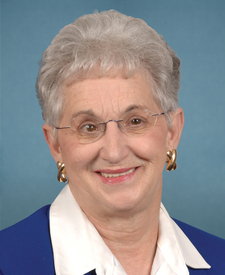
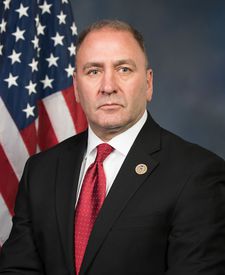
Legislative Progress
ReportedOrdered to be Reported (Amended) by the Yeas and Nays: …
Committee Consideration and Mark-up Session Held
Ms. Foxx introduced the following bill; which was referred to …
Referred to the House Committee on Oversight and Government Reform.
Introduced in House
Stakeholder Effects
cui bono?How this legislation distributes effects. Mention counts reflect frequency, not effect magnitude.
Existing participating private schools, New private schools seeking to participate, Participating private schools
Competing organizations that could apply for grants, Existing grant-administering organizations, Grant-administering entities
Positive-direction: Existing grant-administering organizations, Grant-administering entities
Negative-direction: Competing organizations that could apply for grants
Bill Structure & Actor Mappings
Who is "The Secretary" in each section?
- "ice"
- → Immigration and Customs Enforcement
- "ies"
- → Institute of Education Sciences
- "eligible_entity"
- → Opportunity Scholarship Program eligible entity
We use a combination of our own taxonomy and classification in addition to large language models to assess meaning and potential beneficiaries. High confidence means strong textual evidence. Always verify with the original bill text.
Learn more about our methodology