District of Columbia Attorney General Appointment Reform Act of 2025
Summary
What This Bill Does
This bill rewrites the District of Columbia Home Rule Act provision governing the Attorney General for the District of Columbia. Instead of the existing local structure, the Attorney General would be appointed by the President of the United States. The appointee would serve at the pleasure of the President, would not need Senate advice and consent, and would have a term that coincides with the President's term.
The bill also states that employees of the D.C. Office of the Attorney General who are appointed by the D.C. Attorney General are not treated as federal employees unless another law says so. It terminates the term of the individual serving as D.C. Attorney General the day before enactment. The practical effect is a major home-rule change: the chief legal officer for the District would shift from local electoral accountability to presidential appointment and removal.
Who Benefits and How
The President benefits from direct appointment and removal authority over the D.C. Attorney General. White House personnel staff benefit from a new appointment slot that does not require Senate confirmation. Federal officials who favor stronger congressional or presidential control over D.C. governance benefit because the bill makes D.C.'s chief legal officer responsive to the President. Future presidential appointees to the D.C. Attorney General role benefit from a defined term aligned with the President's term. Policy opponents of the current D.C. Attorney General benefit if presidential appointment changes enforcement priorities or litigation strategy.
Who Bears the Burden and How
D.C. voters bear the central burden because they would lose the ability to elect the District's Attorney General. The incumbent D.C. Attorney General bears an immediate burden because the bill terminates the current term on enactment. D.C. Office of Attorney General staff face leadership transition risk and uncertainty about priorities, litigation positions, and internal appointments. D.C. Council members and home-rule advocates bear institutional harm because local control over the District's chief legal office is reduced. Litigants relying on D.C. Attorney General independence may face changed enforcement or defense positions under a presidential appointee.
Key Provisions
- Amends the District of Columbia Home Rule Act Attorney General provision.
- Requires the President to appoint the Attorney General for the District of Columbia.
- Provides that the D.C. Attorney General serves at the pleasure of the President without Senate confirmation.
- Aligns the D.C. Attorney General's term with the President's term.
- Provides that D.C. Office of Attorney General employees are not federal employees solely because of the appointment structure.
- Terminates the incumbent D.C. Attorney General's term on enactment.
Evidence Chain:
This summary is generated from the full bill text using AI analysis. Expand "Detailed Analysis" below for identified beneficiaries/burden bearers with clause-level evidence links.
At a Glance
What This Bill Does
Replaces the elected District of Columbia Attorney General structure with a President-appointed Attorney General who serves at the President's pleasure without Senate confirmation, has a term aligned to the President's term, and ends the incumbent Attorney General's service on enactment.
Key Policy Areas
District of Columbia, Government Operations, Home Rule, Executive Power
Primary Purpose
Replaces the elected District of Columbia Attorney General structure with a President-appointed Attorney General who serves at the President's pleasure without Senate confirmation, has a term aligned to the President's term, and ends the incumbent Attorney General's service on enactment.
Policy Domains
House resolution provisions
Identified Gains
- President of the United States
- White House personnel staff
- Federal officials favoring D.C. oversight
- Future presidential appointees
- Policy opponents of the current D.C. Attorney General
Identified Costs
- D.C. voters
- Incumbent D.C. Attorney General
- D.C. Office of Attorney General staff
- D.C. Council members
- Home-rule advocates
- Litigants relying on D.C. Attorney General independence
Sponsors

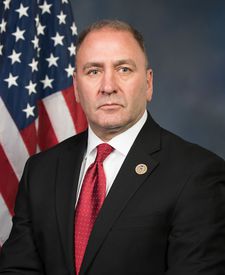
Pat Fallon
R-TX | Primary Sponsor
Legislative Progress
ReportedAdditional sponsor: Mr. Higgins of Louisiana
Reported with an amendment, committed to the Committee of the …
Placed on the Union Calendar, Calendar No. 270.
Reported (Amended) by the Committee on Oversight and Government Reform. …
Committee Consideration and Mark-up Session Held
Ordered to be Reported (Amended) by the Yeas and Nays: …
Introduced in House
Referred to the House Committee on Oversight and Government Reform.
Mr. Fallon introduced the following bill; which was referred to …
Stakeholder Effects
cui bono?How this legislation distributes effects. Mention counts reflect frequency, not effect magnitude.
D.C. Office of Attorney General staff, Future presidential appointees, Incumbent D.C. Attorney General
Positive-direction: Future presidential appointees, President of the United States
Negative-direction: D.C. Office of Attorney General staff, Incumbent D.C. Attorney General, White House personnel staff
Bill Structure & Actor Mappings
Who is "The Secretary" in each section?
- "oag"
- → Office of the Attorney General for the District of Columbia
- "dc_home_rule"
- → District of Columbia Home Rule Act
We use a combination of our own taxonomy and classification in addition to large language models to assess meaning and potential beneficiaries. High confidence means strong textual evidence. Always verify with the original bill text.
Learn more about our methodology