Strong Sentences for Safer D.C. Streets Act of 2025
Summary
What This Bill Does
This bill rewrites several District of Columbia sentencing provisions to impose longer mandatory minimum punishments for serious crimes. For first-degree murder, it replaces the current minimum language with life imprisonment without release and repeals the separate D.C. Code section tied to that sentencing structure. It also removes a parole-board reference to sentences in excess of 60 years for first-degree murder or first-degree murder while armed.
The bill raises the sentencing floor for other crimes. Second-degree murder would carry not less than 10 years and up to life. A covered violent offense after a prior crime-of-violence conviction would carry at least 25 years, or at least 30 years if the new offense follows a prior crime-of-violence conviction. First-degree sexual abuse would carry 25 years to life. Kidnapping would carry 10 to 30 years, armed robbery minimums would rise from 7 to 10 years and from 15 to 20 years depending on the subsection, and burglary minimums would rise from 5 to 10 years. The reported version applies the changes to criminal conduct after enactment.
Who Benefits and How
D.C. residents concerned about violent crime benefit if longer mandatory sentences deter offenses or keep convicted violent offenders incarcerated longer. Violent-crime victims and surviving families benefit from a sentencing framework that requires longer terms for murder, sexual abuse, kidnapping, armed robbery, and burglary. D.C. prosecutors benefit because statutory minimums give them stronger sentencing leverage in covered cases. Public safety advocates benefit from a federal legislative response to local violent-crime sentencing policy. Federal prison managers receive clearer sentencing ranges for D.C. offenders committed to federal custody.
Who Bears the Burden and How
Defendants convicted of covered D.C. violent crimes bear the direct burden because the bill raises mandatory minimums and removes release eligibility for first-degree murder. Federal Public Defender attorneys and D.C. criminal defense lawyers must advise clients under higher mandatory sentencing exposure and litigate charging, plea, and conduct-date issues. D.C. Superior Court judges lose sentencing discretion where new mandatory minimums apply. BOP sentence-management staff and D.C. corrections planners face longer custody terms and associated cost pressure. Individuals charged with pre-enactment conduct may need litigation to confirm whether the older sentencing rules still apply.
Key Provisions
- Requires life imprisonment without release for first-degree murder under D.C. law.
- Repeals the separate D.C. Code first-degree murder sentencing provision and removes related parole-board language.
- Increases the second-degree murder sentencing floor to 10 years.
- Raises minimum terms for repeat violent offenses to 25 or 30 years depending on prior convictions.
- Requires 25 years to life for first-degree sexual abuse.
- Raises minimum penalties for kidnapping, armed robbery, and burglary.
- Applies the amendments prospectively to post-enactment criminal conduct.
Evidence Chain:
This summary is generated from the full bill text using AI analysis. Expand "Detailed Analysis" below for identified beneficiaries/burden bearers with clause-level evidence links.
At a Glance
What This Bill Does
Raises D.C. criminal penalties by replacing the 30-year minimum for first-degree murder with life imprisonment without release, increasing minimum terms for repeat violent offenses, first-degree sexual abuse, kidnapping, armed robbery, and burglary, and applying the changes prospectively after enactment.
Key Policy Areas
Criminal Justice, District of Columbia, Sentencing, Public Safety
Primary Purpose
Raises D.C. criminal penalties by replacing the 30-year minimum for first-degree murder with life imprisonment without release, increasing minimum terms for repeat violent offenses, first-degree sexual abuse, kidnapping, armed robbery, and burglary, and applying the changes prospectively after enactment.
Policy Domains
House resolution provisions
Identified Gains
- D.C. residents concerned about violent crime
- Violent-crime victims in D.C.
- Surviving families of violent-crime victims
- D.C. prosecutors
- Public safety advocates
- Federal prison managers
Identified Costs
- Defendants convicted of D.C. violent crimes
- Federal Public Defender attorneys
- D.C. criminal defense lawyers
- D.C. Superior Court judges
- BOP sentence-management staff
- D.C. corrections planners
- Individuals charged with pre-enactment conduct
Sponsors

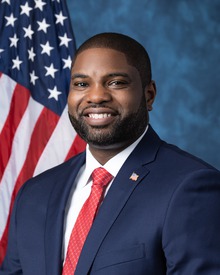
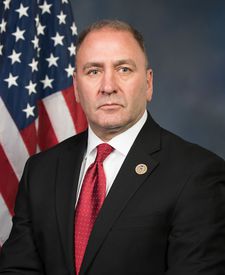
Legislative Progress
ReportedAdditional sponsor: Mr. Higgins of Louisiana
Reported with an amendment, committed to the Committee of the …
Placed on the Union Calendar, Calendar No. 279.
Reported (Amended) by the Committee on Oversight and Government Reform. …
Ordered to be Reported (Amended) by the Yeas and Nays: …
Committee Consideration and Mark-up Session Held
Mr. Biggs of Arizona (for himself and Mr. Donalds) introduced …
Referred to the House Committee on Oversight and Government Reform.
Introduced in House
Stakeholder Effects
cui bono?How this legislation distributes effects. Mention counts reflect frequency, not effect magnitude.
D.C. criminal defense lawyers, D.C. prosecutors, D.C. residents concerned about violent crime
D.C. prosecutors faces effects in multiple directions
Positive-direction: D.C. residents concerned about violent crime, Individuals charged with pre-enactment conduct, Violent-crime victims in D.C.
Negative-direction: D.C. criminal defense lawyers, Defendants convicted of D.C. violent crimes, Federal Public Defender attorneys
BOP sentence-management staff, D.C. Superior Court judges
Bill Structure & Actor Mappings
Who is "The Secretary" in each section?
- "bop"
- → Federal Bureau of Prisons
- "dc_code"
- → District of Columbia Official Code
We use a combination of our own taxonomy and classification in addition to large language models to assess meaning and potential beneficiaries. High confidence means strong textual evidence. Always verify with the original bill text.
Learn more about our methodology