WIRELESS Leadership Act
Summary
What This Bill Does
The WIRELESS Leadership Act rewrites section 332(c)(7) of the Communications Act for personal wireless service facility siting. It says state and local governments keep zoning authority, but that authority is bounded by federal rules: they may not discriminate among wireless facilities or communications providers, may not prohibit or effectively prohibit wireless service improvement, and may impose only objective, reasonable, nondiscriminatory engineering, safety, aesthetic, and concealment standards. It creates shot clocks of 90 or 150 days for non-small wireless facilities and 60 or 90 days for small wireless facilities, blocks moratoria from tolling those clocks, deems requests granted after missed deadlines and written notice, requires written denials supported by substantial evidence, bars regulation based on radiofrequency emissions when FCC standards are met, limits fees to actual and direct costs that are neutral and disclosed in advance, allows expedited court action or FCC petitions, gives the FCC 120 days to decide petitions, and defines when requests are complete or received. The practical shift is faster and more predictable wireless deployment, with less local discretion over timing, fees, moratoria, and denial grounds.
Who Benefits and How
Wireless carriers benefit because state and local siting requests receive firm shot clocks, deemed-granted remedies, and limits on discriminatory treatment. Tower infrastructure companies benefit because permit fees must be tied to actual direct costs and local moratoria cannot stop the federal review clock. Broadband providers benefit from clearer definitions covering licensed, unlicensed, mobile, fixed, and backhaul-related wireless facilities. Wireless customers benefit if faster facility approvals improve coverage, capacity, and service quality.
Who Bears the Burden and How
Local zoning boards bear the burden because they must meet federal deadlines, issue substantial-evidence denials, and accept deemed-granted outcomes after missed deadlines. State utility siting offices must align local wireless facility procedures with the new Communications Act limits. Municipal fee administrators must calculate and disclose only neutral actual-cost fees for review and right-of-way use. Federal Communications Commission staff must review petitions challenging local action or failure to act within 120 days.
Key Provisions
- Preserves state and local zoning authority but limits discrimination and effective prohibitions on wireless service.
- Requires 60-, 90-, and 150-day decision deadlines depending on facility size and request type.
- Creates a deemed-granted remedy when local governments miss shot clocks after written notice.
- Limits wireless siting fees to neutral, disclosed, actual and direct costs.
- Authorizes expedited court actions and FCC petition review for inconsistent local actions or failures to act.
Evidence Chain:
This summary is generated from the full bill text using AI analysis. Expand "Detailed Analysis" below for identified beneficiaries/burden bearers with clause-level evidence links.
At a Glance
What This Bill Does
Rewrites Communications Act wireless siting rules to preserve local zoning authority while imposing nondiscrimination, no-prohibition, shot-clock, deemed-granted, fee, FCC review, court review, and completeness rules for personal wireless service facility requests.
Key Policy Areas
Telecommunications, Local Government, Wireless Infrastructure
Primary Purpose
Rewrites Communications Act wireless siting rules to preserve local zoning authority while imposing nondiscrimination, no-prohibition, shot-clock, deemed-granted, fee, FCC review, court review, and completeness rules for personal wireless service facility requests.
Policy Domains
Resolution provisions
Identified Gains
- Wireless carriers
- Tower infrastructure companies
- Broadband providers
- Wireless customers
Identified Costs
- Local zoning boards
- State utility siting offices
- Municipal fee administrators
- Federal Communications Commission staff
Legislative Progress
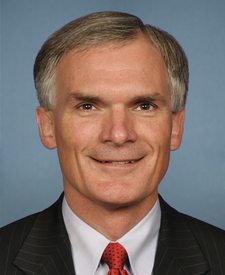
In CommitteeMr. Latta introduced the following bill; which was referred to …
Referred to the House Committee on Energy and Commerce.
Introduced in House
Stakeholder Effects
cui bono?How this legislation distributes effects. Mention counts reflect frequency, not effect magnitude.
Broadband providers, Tower infrastructure companies, Wireless carriers
Bill Structure & Actor Mappings
Who is "The Secretary" in each section?
We use a combination of our own taxonomy and classification in addition to large language models to assess meaning and potential beneficiaries. High confidence means strong textual evidence. Always verify with the original bill text.
Learn more about our methodology