Offshore Lands Authorities Act of 2025
Summary
What This Bill Does
The Offshore Lands Authorities Act of 2025 reopens or preserves access to unleased Outer Continental Shelf lands by nullifying several presidential withdrawals. It declares no force or effect for withdrawals covering the Chukchi Sea, Beaufort Sea, North Aleutian Basin, Northern Bering Sea climate resilience areas, Atlantic canyons, Gulf of Mexico, Atlantic, and Pacific areas. It then amends section 12(a) of the Outer Continental Shelf Lands Act to limit future presidential withdrawals. A withdrawal must be transmitted to Congress, may not exceed 150,000 acres or be contiguous with another withdrawal, may not last more than 20 years, and no President may withdraw more than 500,000 acres cumulatively without congressional approval. Before withdrawal, Interior must complete a geophysical and geological mineral resource assessment within the prior five years, assess economic, energy, and national security value in consultation with Commerce, Energy, Defense, and Agriculture, assess expected revenue reductions to Treasury, states, the Land and Water Conservation Fund, and the Historic Preservation Fund, and report to congressional committees. The bill creates expedited joint-resolution disapproval procedures, bars substantially similar reissued withdrawals after disapproval unless later authorized by law, bars judicial review of determinations or omissions, requires agency submission and Congressional Record notice for covered agency actions, and forbids withdrawals conflicting with lease sales scheduled under an approved oil and gas leasing program.
Who Benefits and How
Offshore oil and gas companies benefit because listed Arctic, Atlantic, Gulf, Pacific, and Bering Sea withdrawals lose effect. Coastal states receiving offshore revenue benefit if more lease activity increases allocations under revenue-sharing laws. Federal Treasury revenue offices benefit if offshore leasing and production increase royalty, bonus, or rental receipts. Congressional natural resources committees benefit from reports and expedited disapproval procedures over future withdrawals.
Who Bears the Burden and How
The President must satisfy acreage, duration, cumulative, assessment, reporting, and congressional review limits before withdrawing unleased offshore lands. Interior offshore resource staff must complete mineral resource, economic, energy, national security, and revenue assessments. Environmental organizations lose protection from several existing offshore withdrawal decisions. Coastal communities may face increased spill, industrial, or climate risk if more offshore leasing proceeds.
Key Provisions
- Repeals the legal effect of specified Arctic, Atlantic, Gulf, Pacific, and Northern Bering Sea offshore withdrawals.
- Limits future withdrawals to 150,000 acres, 20 years, and 500,000 cumulative acres absent congressional approval.
- Requires mineral, economic, energy, national security, and revenue assessments before withdrawal.
- Requires reports to congressional committees and expedited joint-resolution disapproval procedures.
- Bars judicial review of covered determinations, findings, actions, or omissions.
- Prohibits withdrawals that conflict with scheduled lease sales under an approved oil and gas leasing program.
Evidence Chain:
This summary is generated from the full bill text using AI analysis. Expand "Detailed Analysis" below for identified beneficiaries/burden bearers with clause-level evidence links.
At a Glance
What This Bill Does
Nullifies listed presidential offshore land withdrawals and limits future presidential withdrawals of unleased Outer Continental Shelf lands through acreage, duration, cumulative, assessment, reporting, congressional disapproval, no-judicial-review, and lease-sale restrictions.
Key Policy Areas
Energy, Offshore Drilling, Federal Lands
Primary Purpose
Nullifies listed presidential offshore land withdrawals and limits future presidential withdrawals of unleased Outer Continental Shelf lands through acreage, duration, cumulative, assessment, reporting, congressional disapproval, no-judicial-review, and lease-sale restrictions.
Policy Domains
Resolution provisions
Identified Gains
- Offshore oil and gas companies
- Coastal states receiving offshore revenue
- Federal Treasury revenue offices
- Congressional natural resources committees
Identified Costs
- President of the United States
- Interior offshore resource staff
- Environmental organizations
- Coastal communities
Sponsors




Legislative Progress
In CommitteeSubcommittee Hearings Held
Referred to the Subcommittee on Energy and Mineral Resources.
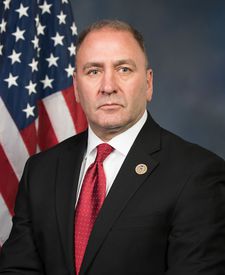
Mr. Higgins of Louisiana (for himself, Mr. Hunt, Mr. Weber …
Referred to the Committee on Natural Resources, and in addition …
Introduced in House
Stakeholder Effects
cui bono?How this legislation distributes effects. Mention counts reflect frequency, not effect magnitude.
Coastal states receiving offshore revenue
Bill Structure & Actor Mappings
Who is "The Secretary" in each section?
We use a combination of our own taxonomy and classification in addition to large language models to assess meaning and potential beneficiaries. High confidence means strong textual evidence. Always verify with the original bill text.
Learn more about our methodology