Indoor Air Quality and Healthy Schools Act of 2025
Summary
What This Bill Does
The Indoor Air Quality and Healthy Schools Act creates a broad EPA indoor air program. EPA must support assessment, reduction, and avoidance of indoor air contaminant exposure through research, contaminant lists and guidelines, training, education, outreach, technical assistance, voluntary certifications, school and childcare efforts, coordination with agencies including Labor, Energy, CDC, OSHA, NIOSH, HUD, HHS, Education, Defense, FEMA, and CPSC, public guidance, monitoring standards, building design practices, model building-code provisions, climate resilience, and attention to disadvantaged communities. EPA must list indoor contaminants of concern within five years, initially including particulate matter, carbon monoxide, nitrogen dioxide, ozone, formaldehyde, and radon, and publish science-based voluntary guidelines and health-based limits when evidence supports them. EPA must seek a National Academy of Sciences study within one year on a science-based indoor air quality index. EPA may provide technical assistance and grants to state, local, and tribal governments, local educational agencies, housing authorities, nonprofit organizations, labor organizations, and others. EPA must create voluntary healthy-building certifications, recommend model building design and maintenance provisions within one year, conduct a national assessment of indoor air in schools and childcare facilities, avoid preemption of other law, and receive $100,000,000 per year for fiscal years 2026 through 2030.
Who Benefits and How
Students benefit if EPA grants, school assessments, and model practices reduce indoor contaminants in school buildings. Childcare facility children benefit from assessment and assistance targeting early childhood education buildings. Building occupants benefit from guidelines for contaminants such as particulate matter, carbon monoxide, nitrogen dioxide, ozone, formaldehyde, and radon. State, local, and tribal governments benefit from EPA technical assistance and possible grants for indoor air strategies. Healthy building certification providers benefit from a federal voluntary certification framework.
Who Bears the Burden and How
EPA indoor air program staff must list contaminants, publish guidelines, manage grants, coordinate agencies, and update reviews every five years. Local educational agencies must participate in assessments or grant-funded improvements if they seek healthy school support. Building owners may face pressure to adopt model provisions, monitoring, ventilation, filtration, and source-control practices. Federal taxpayers bear the cost of the $100,000,000 annual authorization for fiscal years 2026 through 2030.
Key Provisions
- Establishes an EPA indoor air quality program for assessment, reduction, and avoidance of contaminants.
- Requires an initial indoor contaminants list including particulate matter, carbon monoxide, nitrogen dioxide, ozone, formaldehyde, and radon.
- Directs science-based voluntary contaminant guidelines and health-based limits when evidence permits.
- Authorizes EPA technical assistance and grants for governments, schools, housing authorities, nonprofits, labor organizations, and others.
- Creates voluntary healthy-building certifications and model building provisions.
- Requires a national school and childcare indoor air assessment.
- Authorizes $100,000,000 for each of fiscal years 2026 through 2030.
Evidence Chain:
This summary is generated from the full bill text using AI analysis. Expand "Detailed Analysis" below for identified beneficiaries/burden bearers with clause-level evidence links.
At a Glance
What This Bill Does
Creates an EPA indoor air quality program, contaminant guidelines, National Academy indoor air index study, grants and technical assistance, healthy building certifications, model code provisions, healthy schools assessment, and $100,000,000 annually for fiscal years 2026 through 2030.
Key Policy Areas
Environment, Public Health, Schools, Federal Grants
Primary Purpose
Creates an EPA indoor air quality program, contaminant guidelines, National Academy indoor air index study, grants and technical assistance, healthy building certifications, model code provisions, healthy schools assessment, and $100,000,000 annually for fiscal years 2026 through 2030.
Policy Domains
Resolution provisions
Identified Gains
- Students
- Childcare facility children
- Building occupants
- State governments
- Healthy building certification providers
Identified Costs
- EPA indoor air program staff
- Local educational agencies
- Building owners
- Federal taxpayers
Sponsors
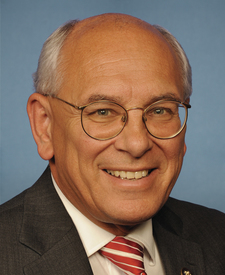



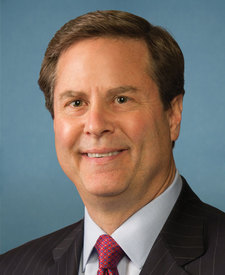
Legislative Progress
In CommitteeMr. Tonko (for himself and Mr. Fitzpatrick) introduced the following …
Referred to the House Committee on Energy and Commerce.
Introduced in House
Stakeholder Effects
cui bono?How this legislation distributes effects. Mention counts reflect frequency, not effect magnitude.
Local educational agencies, Students
Bill Structure & Actor Mappings
Who is "The Secretary" in each section?
We use a combination of our own taxonomy and classification in addition to large language models to assess meaning and potential beneficiaries. High confidence means strong textual evidence. Always verify with the original bill text.
Learn more about our methodology