To amend title 18, United States Code, to establish a criminal prohibition on the public release of the name of a Federal law enforcement officer with the intent to obstruct a criminal investigation or immigration enforcement operation.
Analysis under review: This bill has generated analysis that may be too generic or incomplete. Clause-level evidence remains available below.
Summary
What This Bill Does
This bill makes it a federal crime to publicly release the name of any federal law enforcement officer if done with the intent to obstruct a criminal investigation or immigration enforcement operation. Violators face up to 5 years in prison and fines. The bill also extends existing criminal obstruction laws - including RICO, wiretapping authority, and bail conditions - to cover immigration enforcement operations alongside criminal investigations.
Who Benefits and How
Federal law enforcement officers across all agencies gain identity protection from having their names publicly released in ways intended to interfere with their work. ICE agents, CBP officers, FBI agents, DEA agents, and all other federal law enforcement personnel are covered. Immigration enforcement operations specifically benefit from being added to existing obstruction-of-justice statutes, giving prosecutors more tools and making bail conditions stricter for those who attempt to obstruct these operations.
Who Bears the Burden and How
Journalists covering immigration enforcement could face criminal prosecution if authorities determine that publishing an officer's name was intended to obstruct operations, even though the intent element is required. Immigration advocacy organizations that track and report on enforcement activities face new legal risk. The "intent to obstruct" standard could have a chilling effect on press freedom and public accountability reporting, though the bill does require prosecutors to prove obstructive intent rather than criminalizing disclosure alone.
Key Provisions
- Creates a new federal offense under 18 U.S.C. 1510(f) for publicly releasing the names of federal law enforcement officers with obstructive intent
- Penalties of up to 5 years imprisonment and fines for violations
- Broadly defines "Federal law enforcement officer" to cover all federal agents, not just immigration officers
- Adds "immigration enforcement operations" to the RICO statute (18 U.S.C. 1961)
- Extends wiretap authorization (18 U.S.C. 2516) to cover obstruction of immigration enforcement
- Updates bail conditions (18 U.S.C. 3142) to include immigration enforcement obstruction
Evidence Chain:
This summary is generated from the full bill text using AI analysis. Expand "Detailed Analysis" below for identified beneficiaries/burden bearers with clause-level evidence links.
At a Glance
What This Bill Does
Criminalizes the public release of the names of federal law enforcement officers when done with intent to obstruct a criminal investigation or immigration enforcement operation, with penalties of up to 5 years in prison and fines. Also expands existing obstruction statutes (RICO, wiretap, and bail provisions) to cover immigration enforcement operations.
Key Policy Areas
Law Enforcement & Criminal Justice, Immigration
Primary Purpose
Criminalizes the public release of the names of federal law enforcement officers when done with intent to obstruct a criminal investigation or immigration enforcement operation, with penalties of up to 5 years in prison and fines. Also expands existing obstruction statutes (RICO, wiretap, and bail provisions) to cover immigration enforcement operations.
Policy Domains
Entire Bill - Prohibition on Releasing Names of Federal Law Enforcement Officers
Identified Gains
- Federal law enforcement officers (all agencies, not just ICE)
- Immigration enforcement operations (ICE, CBP, etc.)
Identified Costs
- Journalists and media organizations covering immigration enforcement
- Advocacy organizations tracking immigration enforcement
- Anyone who publicly shares names of federal law enforcement officers
Sponsors
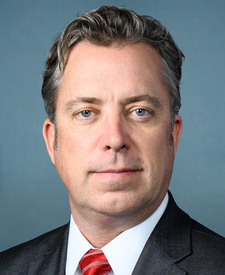
Legislative Progress
IntroducedMr. Ogles introduced the following bill; which was referred to …
Impact analysis is available but no clear stakeholder effects identified. View clause-level analysis →
Bill Structure & Actor Mappings
Who is "The Secretary" in each section?
Key Definitions
Terms defined in this bill
We use a combination of our own taxonomy and classification in addition to large language models to assess meaning and potential beneficiaries. High confidence means strong textual evidence. Always verify with the original bill text.
Learn more about our methodology