To amend the Internal Revenue Code of 1986 to provide a refundable tax credit for certain gun safes.
Analysis under review: This bill has generated analysis that may be too generic or incomplete. Clause-level evidence remains available below.
Summary
What This Bill Does
The SAFES Act (Storing All Firearms Effectively and Safely Act) amends the Internal Revenue Code to create a new refundable tax credit (Section 36C) that reimburses individual taxpayers for 90% of the cost of purchasing a new gun safe. The credit is capped at $500 per individual ($1,000 for married couples filing jointly) over any rolling 7-year period. After 2030, the credit narrows to cover only gun safes that HHS has certified as 'highly effective' at preventing unauthorized access. The bill also requires a report from the Secretary of Health and Human Services within 5 years identifying the most effective gun safe types.
Who Benefits and How
Gun owners benefit from a substantial subsidy to purchase secure storage for firearms. Gun safe manufacturers and retailers benefit from increased demand driven by the 90% tax credit. Public safety improves through reduced unauthorized access to firearms, particularly by children and unauthorized users. The privacy protection clause explicitly prohibits requiring gun owners to disclose firearm ownership to claim the credit.
Who Bears the Burden and How
The federal government bears the cost through reduced tax revenue from the refundable credit. All taxpayers indirectly bear this cost. The Secretary of Health and Human Services bears the responsibility of evaluating and reporting on gun safe effectiveness within 5 years.
Key Provisions
- 90% refundable tax credit for new gun safe purchases, effective for tax years beginning after December 31, 2025
- Cap of $500 individual / $1,000 joint return over any 7-year period
- After 2030, credit limited to safes HHS certifies as highly effective
- Privacy protection: no requirement to disclose firearm ownership to claim credit
- Requires HHS report on most effective gun safe types within 5 years
Evidence Chain:
This summary is generated from the full bill text using AI analysis. Expand "Detailed Analysis" below for identified beneficiaries/burden bearers.
At a Glance
What This Bill Does
Creates a refundable tax credit covering 90% of the cost of purchasing a new gun safe, capped at $500 per individual ($1,000 for joint filers) over a rolling 7-year period, to incentivize secure firearm storage and reduce unauthorized access to firearms.
Key Policy Areas
Taxation, Gun Safety, Public Health
Primary Purpose
Creates a refundable tax credit covering 90% of the cost of purchasing a new gun safe, capped at $500 per individual ($1,000 for joint filers) over a rolling 7-year period, to incentivize secure firearm storage and reduce unauthorized access to firearms.
Policy Domains
Whole Bill -- Gun Safe Tax Credit
Identified Gains
Contextual inference, no direct clause citation- Gun owners purchasing safes
- Gun safe manufacturers and retailers
- Public safety (reduced unauthorized firearm access)
Contextual inference, no direct clause citation
Identified Costs
Contextual inference, no direct clause citation- Federal government (reduced tax revenue)
- Department of Health and Human Services (effectiveness study)
Contextual inference, no direct clause citation
Sponsors


Legislative Progress
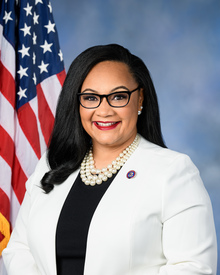
IntroducedMs. Williams of Georgia (for herself, Mr. Amo, and Mr. …
Stakeholder Effects
cui bono?How this legislation distributes effects. Mention counts reflect frequency, not effect magnitude.
Consumers (post-2030), Gun owners (privacy protection), Individual gun owners
Positive-direction: Gun owners (privacy protection), Individual gun owners, Individual taxpayers
Negative-direction: Consumers (post-2030)
Gun safe manufacturers, Gun safe manufacturers (post-2030)
Positive-direction: Gun safe manufacturers
Negative-direction: Gun safe manufacturers (post-2030)
Department of Health and Human Services, Federal treasury
Bill Structure & Actor Mappings
Who is "The Secretary" in each section?
- "secretary_hhs"
- → Secretary of Health and Human Services
Key Definitions
Terms defined in this bill
Any device designed and marketed to deny unauthorized access to a firearm or ammunition, or any safe, gun case, lock box, or device secured by combination lock, key lock, or biometric information that cannot be opened without proper credentials.
The term gun safe does not include any property unless the original use begins with the taxpayer (new safes only).
We use a combination of our own taxonomy and classification in addition to large language models to assess meaning and potential beneficiaries. High confidence means strong textual evidence. Always verify with the original bill text.
Learn more about our methodology