Western Hemisphere Nearshoring Act
Summary
What This Bill Does
The Western Hemisphere Nearshoring Act creates a trade and development-finance strategy to move supply chains from the People's Republic of China to Latin America or the Caribbean. It directs the U.S. International Development Finance Corporation to use at least 10 percent of certain financing each year for qualified moving costs, workforce development costs, and lower-interest loans for qualified corporations relocating from China, subject to a Commerce Department finding that the assistance will not hurt U.S. employment. It authorizes 15 years of duty-free or preferential treatment for goods and services made by assisted corporations in Latin America or the Caribbean. Corporations must create jobs in the host country, avoid ownership or headquarters control by China, Russia, or another foreign adversary, move covered assets out of China within two years unless extended, and retain those assets in the region. A trust fund uses tariffs collected on China-made goods to offset DFC assistance. The bill also amends the BUILD Act to prioritize U.S.-owned businesses and critical industries, limits support for foreign-government-controlled entities, directs USTR to seek trade agreements with qualifying regional countries, authorizes section 123 nuclear cooperation negotiations, permits USAID energy-grid technical assistance, and gives temporary 75 percent bonus depreciation through 2037 for qualified relocated manufacturing property.
Who Benefits and How
U.S. manufacturers relocating from China benefit from DFC financing, reduced interest rates, duty preferences, and temporary 75 percent expensing. Latin American partner countries benefit from new jobs, investment, trade negotiations, and possible nuclear or grid cooperation. Caribbean partner countries benefit from the same nearshoring incentives and U.S. development-finance attention. U.S. workers benefit if Commerce screens assistance to avoid negative employment effects in the United States. Critical industry supply chains benefit from reduced dependence on China-based production.
Who Bears the Burden and How
DFC investment staff must reserve financing, evaluate commercial viability, set repayment terms, and streamline approvals. U.S. Trade Representative staff must administer duty preferences and initiate negotiations with qualifying countries. Chinese exporters and China-based supply chains bear competitive pressure as production shifts to the Western Hemisphere. Qualified corporations must create host-country jobs, move assets within two years, avoid foreign-adversary control, and retain assets in the region. Treasury tax administrators must administer the China-tariff trust fund and relocated-manufacturing expensing rules.
Key Provisions
- Requires DFC to use at least 10 percent of certain financing for moving and workforce costs tied to China-to-region relocation.
- Authorizes 15 years of duty-free or preferential treatment for assisted goods and services from Latin America or the Caribbean.
- Requires job creation, anti-adversary-control commitments, asset relocation, and asset-retention conditions.
- Funds assistance through a trust fund backed by tariffs collected on China-made goods.
- Amends BUILD Act priorities and restricts support for foreign-government-controlled entities.
- Directs trade negotiations with qualifying regional countries and authorizes nuclear cooperation talks.
- Provides temporary 75 percent expensing for qualified manufacturing property relocated from China through 2037.
Evidence Chain:
This summary is generated from the full bill text using AI analysis. Expand "Detailed Analysis" below for identified beneficiaries/burden bearers with clause-level evidence links.
At a Glance
What This Bill Does
Uses DFC financing, duty-free treatment, tariff-funded support, BUILD Act changes, trade negotiations, nuclear cooperation, and temporary expensing to shift supply chains from China to Latin America or the Caribbean.
Key Policy Areas
Trade, Development Finance, Supply Chains, Taxation
Primary Purpose
Uses DFC financing, duty-free treatment, tariff-funded support, BUILD Act changes, trade negotiations, nuclear cooperation, and temporary expensing to shift supply chains from China to Latin America or the Caribbean.
Policy Domains
Resolution provisions
Identified Gains
- U.S. manufacturers relocating from China
- Latin American partner countries
- Caribbean partner countries
- U.S. workers
- Critical industry supply chains
Identified Costs
- DFC investment staff
- U.S. Trade Representative staff
- Chinese exporters
- Qualified corporations
- Treasury tax administrators
Sponsors
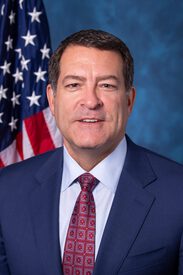
Legislative Progress
In CommitteeMr. Green of Tennessee introduced the following bill; which was …
Referred to the Committee on Ways and Means, and in …
Introduced in House
Stakeholder Effects
cui bono?How this legislation distributes effects. Mention counts reflect frequency, not effect magnitude.
Caribbean partner countries, DFC assistance programs, DFC investment staff
Positive-direction: Caribbean partner countries, DFC assistance programs, Latin American energy ministries, Latin American partner countries
Negative-direction: DFC investment staff, Energy security reviewers, Foreign-government-controlled entities, Treasury tax administrators, Treasury trust fund administrators, U.S. Trade Representative staff, U.S. customs administrators, USAID energy staff
Critical industry producers, Manufacturers relocating from China, Qualified corporations
Caribbean exporters, Chinese exporters, Latin American exporters
Positive-direction: Caribbean exporters, Latin American exporters, Taiwan commercial offices
Negative-direction: Chinese exporters
Bill Structure & Actor Mappings
Who is "The Secretary" in each section?
We use a combination of our own taxonomy and classification in addition to large language models to assess meaning and potential beneficiaries. High confidence means strong textual evidence. Always verify with the original bill text.
Learn more about our methodology